
What Does ‘Queued But No Chop’ Mean in Singlish?
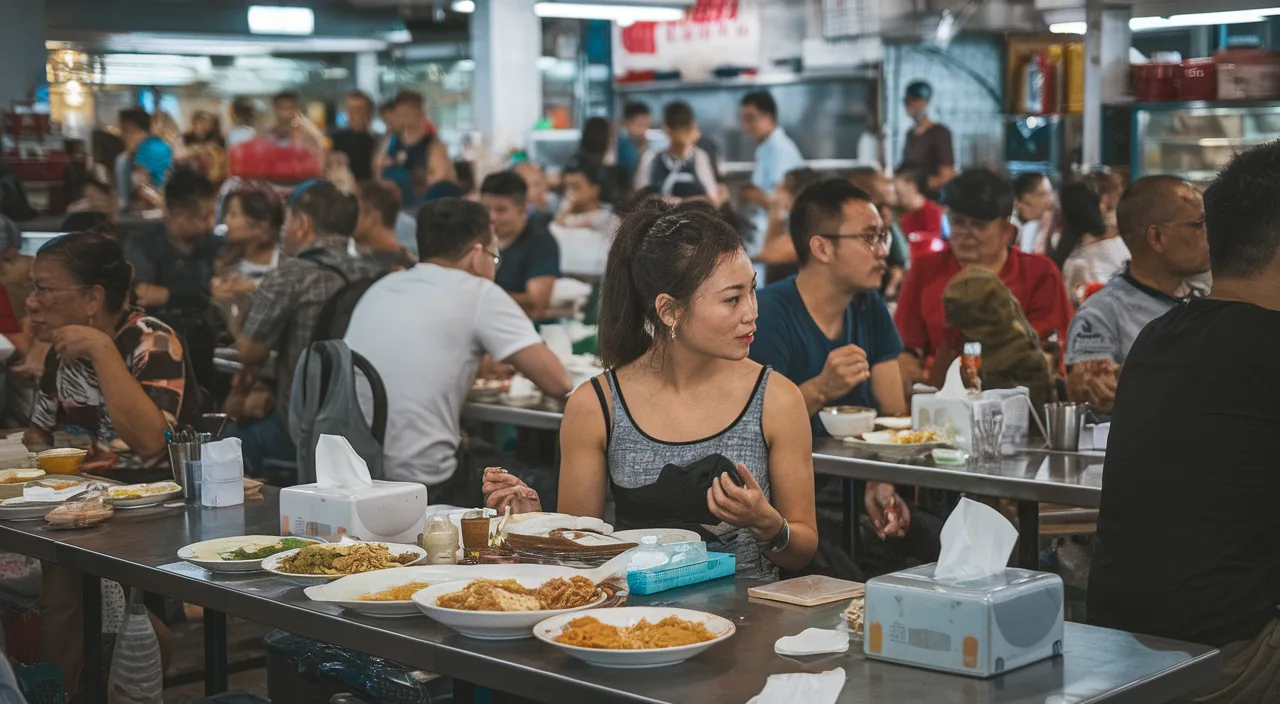
In simple terms: you stood in line but didn’t officially claim your spot. When things get crowded, someone else can rightfully take your place because you never chopped – never marked your territory with a tissue pack, bag, or any placeholder. You queued with your body, but you didn’t secure your claim. Game over.
Quick Summary: Everything You Need to Know
- ‘Queued but no chop’ describes someone who lined up but didn’t reserve their spot with a physical marker, ultimately losing it to someone else.
- This advanced Singlish expression perfectly captures Singapore’s sophisticated queue culture and understated humor.
- Singapore’s queuing system values clear territorial markers – chopping is essential, especially in hawker centres and food courts.
- Mastering this phrase takes your Singlish vocabulary beyond basics into culturally embedded social behaviors.
- You can apply it beyond physical queues – use it for work situations, relationships, or any missed opportunity due to lack of commitment.
- Understanding the queued vs chopped distinction helps you navigate Singapore’s unspoken social rules like a local.
Singapore’s Queue Culture: More Than Just Standing in Line
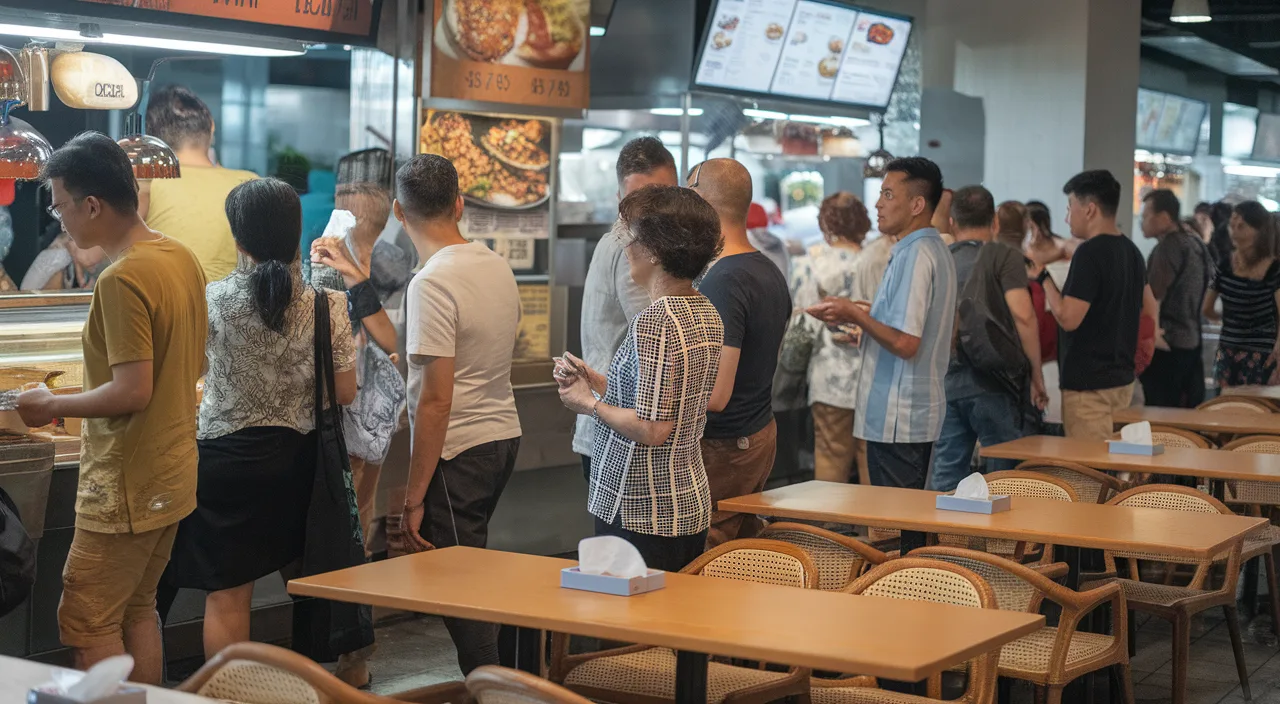
In Singapore, queuing isn’t just waiting – it’s an art form. We queue for everything: bubble tea, chicken rice, designer collaborations at Uniqlo, even free samples we don’t actually want. Before COVID put those floor stickers everywhere, we already knew proper queue spacing – one meter apart physically, but emotionally invested in the process.

But here’s where it gets interesting. In certain settings like hawker centres, physical presence isn’t enough. You need to chop – stake your claim, declare your intentions. The humble tissue packet becomes your flag of conquest, your deed of ownership.
This creates the fascinating dynamic between queuing and chopping – two distinct but related concepts that birth our legendary phrase ‘queued but no chop.’
Queued vs Chopped: Understanding the Critical Difference
Let’s break down these two concepts that every Singaporean intuitively understands:
-

-
Food, KaoBeiKing, Malay, Parody, Singlish/Hokkien, T-shirts, Typography
Price range: $30.00 through $43.00 Select options This product has multiple variants. The options may be chosen on the product page
Queuing means you’re physically present in line – standing there, usually scrolling your phone, mentally calculating if the other queue moves faster, occasionally sighing when the person in front orders half the menu.
Chopping means claiming territory by placing a marker – tissue packet, water bottle, umbrella, even your grandmother’s coin purse. Almost anything can serve as a valid chop marker in Singapore’s social contract.
When someone says, “You queued but no chop leh,” they’re essentially saying, “Too bad, you showed interest but didn’t demonstrate commitment.” And commitment is everything in our efficiency-obsessed society.
Mastering ‘Queued But No Chop’: Advanced Singlish in Action
This phrase represents Singlish at its most sophisticated. Why? Because it encapsulates multiple layers of social meaning:
- Social observation: You participated but someone else succeeded because they followed proper protocol.
- Gentle mockery: Next time, learn the rules before jumping in.
- Cultural lesson: Singapore operates on subtle but firm social conventions. Respect them.
Here’s how locals use it in context:
“Walao, I waited at that stall for twenty minutes, but when I returned with my food, someone took my table!”
“You queued but no chop lor. What did you expect?”
The phrase extends beyond food courts into other life scenarios. Dating, for example:
“Bro, I texted her every day for months. Thought we had something special. Then she suddenly announces her engagement to someone else.”
“Aiyah, you queued but no chop lah.”
It’s brutally accurate social commentary wrapped in humor.
Singapore Queue Etiquette: Essential Rules to Follow
Want to avoid becoming the subject of ‘queued but no chop’ stories? Follow these unwritten but universally understood guidelines:
-
Chinese, Chinese New Year, Ladies, Mens, T-shirts
Price range: $35.00 through $43.00 Select options This product has multiple variants. The options may be chosen on the product page -
Graphic, Ladies, Mens, Oversize, T-shirts, Typography
Price range: $30.00 through $38.00 Select options This product has multiple variants. The options may be chosen on the product page

- Always chop before queuing: At hawker centres, secure your seat first with a tissue packet. Otherwise, you’ll be wandering around with hot laksa, looking desperately for somewhere to sit.
- Don’t ghost your chop: You can’t just place a marker and disappear for an hour. That’s chop abuse, and karma will catch up.
- Respect marker hierarchy: Tissue packets are the gold standard, but people get creative – laptop bags, wet wipes, even phone chargers work. Just make sure it’s obviously intentional.
- Know the no-chop zones: MRT queues, concert tickets, bubble tea lines – these require physical presence. You cannot chop your way out of these.
- Don’t over-chop: One person, one chop. Don’t send your friend to reserve tables for your entire extended family reunion.
Using ‘Queued But No Chop’ Like a Local
Ready to incorporate this advanced Singlish phrase into your vocabulary? Here’s how to deploy it effectively:
- Workplace scenarios: “I suggested that idea months ago, but he got the promotion for implementing it.” → “Aiyah, you queued but no chop.”
- Romance situations: “I thought we had a connection, but she’s with someone else now.” → “Bro… you queued but no chop. Next time, make your intentions clear.”
- Casual conversations: “I was eyeing that last curry puff, but uncle took it.” → “You queued but no chop what!”
Remember: use this phrase with good humor, not to kick someone when they’re down. It’s meant to be playfully educational, not cruel.
Advanced Tips: Elevating Your Singlish Mastery
Now that you’ve mastered ‘queued but no chop,’ here’s how to take your Singlish skills to the next level:
- Master the tone: Delivery is everything in Singlish. A sympathetic ‘queued but no chop’ feels completely different from a sarcastic one.
- Combine phrases: Mix with other expressions like “blur like sotong” or “suay until cannot” for maximum local authenticity.
- Apply metaphorically: Use it beyond literal queuing – office politics, social dynamics, even investment opportunities. Suddenly you sound like a philosophical uncle.
- Practice restraint: Don’t overuse it, or people will think you’re trying too hard to sound local.
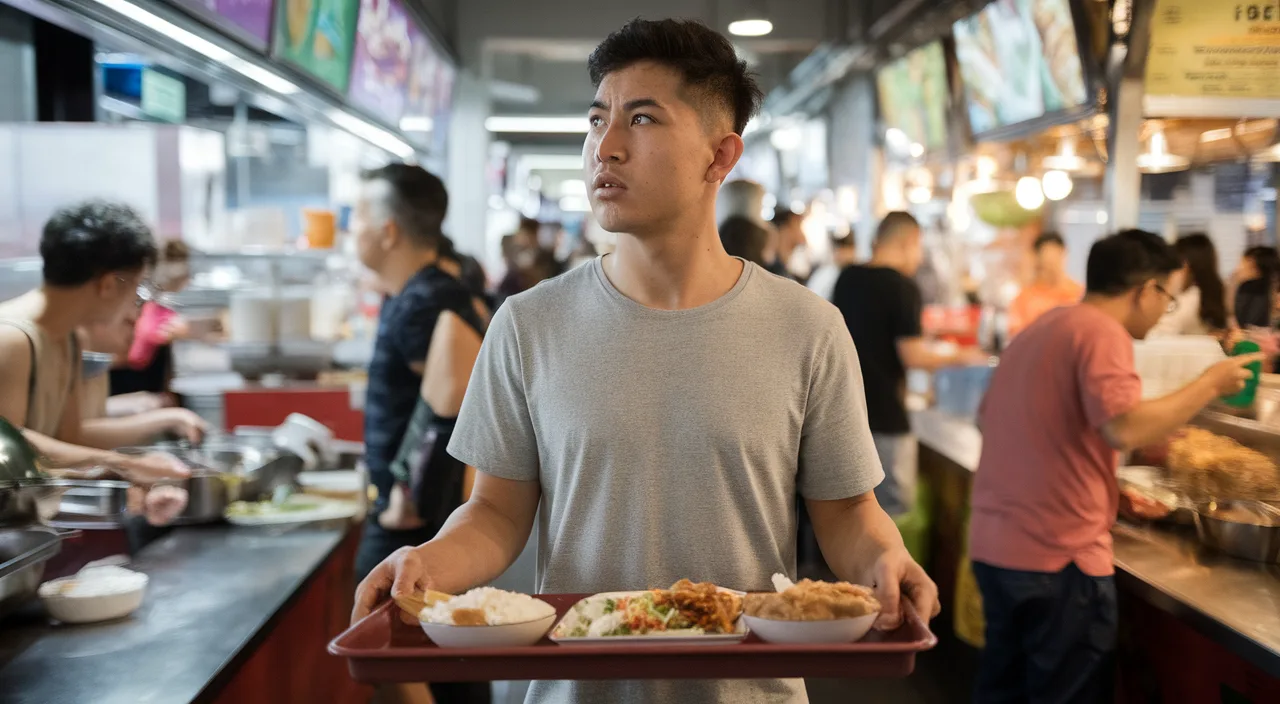
- Observe and learn: Spend time in hawker centres during lunch rush. Watch how aunties and uncles execute their chop strategies. It’s like studying chess masters.
Remember: the tissue packet isn’t just paper – it’s your declaration of intent, your social contract, your small but significant claim on Singapore society. Don’t be the person who queued but no chop.
Frequently Asked Questions
- What counts as a valid ‘chop’ in Singapore?
Any small object you leave to mark a seat — tissue packet, umbrella, water bottle, even a name card — is usually accepted. - Can you override someone else’s chop?
Wah, cannot lah. That’s like stepping on someone’s HDB toes. Socially unacceptable and sometimes can start one kind of drama. - Do all Singaporeans use ‘Queued but no chop’?
Mostly younger and middle-aged locals, especially those who enjoy playful, passive-aggressive Singlish. It’s less common with older generations. - Is it rude to not chop and expect your seat to be there?
Not rude, but naive lor. Expect disappointment. - Can foreigners use this Singlish phrase?
Sure! But use it wisely and with the right tone — learn first, then use lah. - Is ‘chopping’ a uniquely Singaporean phenomenon?
Yes. Other countries queue, but the tissue-pack-as-chop is classic, iconic Singapore. - What’s the worst-case scenario of forgetting to chop?
You end up holding your char kway teow with no seat, circling the hawker centre like a hungry ghost. So tragic.
Final Thought: To truly understand Singapore, you must first understand our queues — and those tissue packets that speak louder than words. So, next time you’re out dining or vying for life’s metaphorical spots, don’t forget the golden rule: queue, and chop. Trust me, future-you will thank you.