
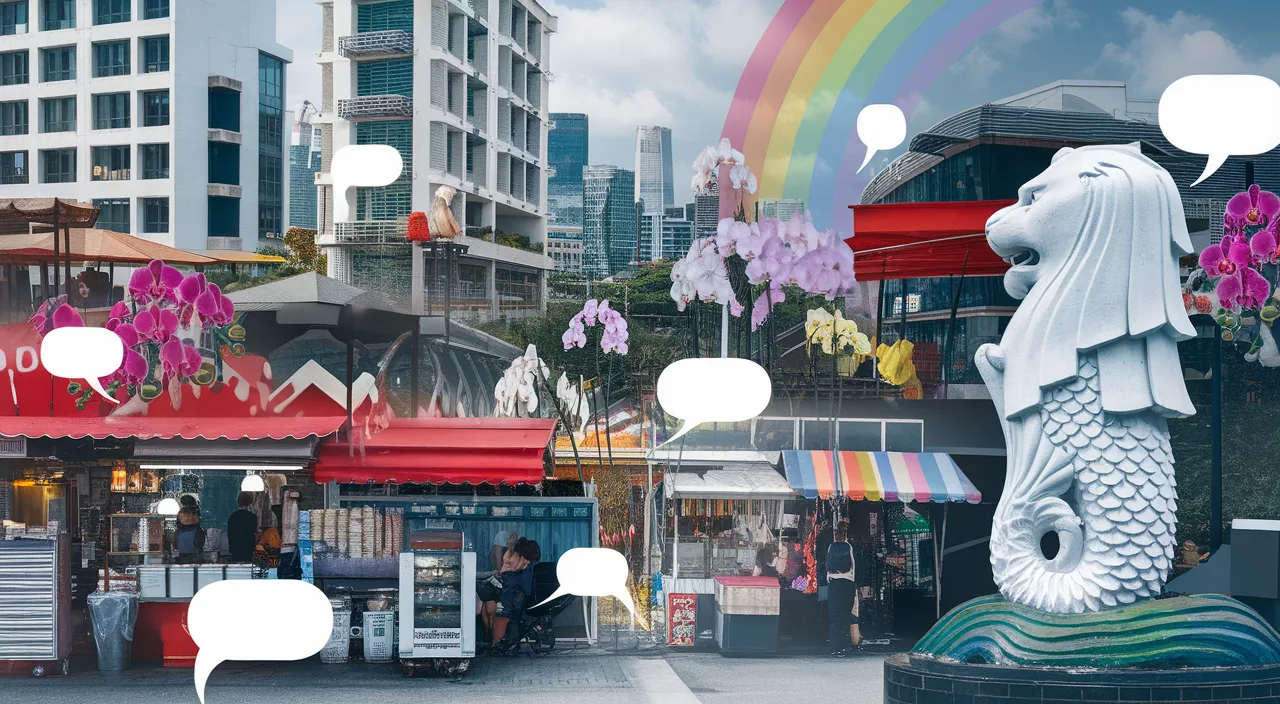
Why is Singlish more than just words, why is it a whole mood for us Singaporeans?
Lah, because Singlish isn’t just a language; it’s the very soul of our conversations, a vibrant, living expression of who we are, where we’ve come from, and how we feel. It’s our linguistic soul, a blend of heritage, humour, and shared experience that defines how we connect and what it means to be truly Singaporean.
-

KaoBeiKing, Quote, Singlish/Hokkien, T-shirts, Typography
Price range: $30.00 through $38.00 Select options This product has multiple variants. The options may be chosen on the product page

TL;DR: The Vibe Check on Singlish
You know that feeling, right? When someone drops a perfectly timed "Aiyoh!" or a resounding "Shiok!" in a conversation, and suddenly, everything just *clicks*? That’s Singlish for you. It’s not just about communicating; it’s about conveying a whole spectrum of emotions, a shared understanding that transcends mere definitions. For us local cultural bloggers, who’ve breathed, lived, and loved Singlish since young, it’s an undeniable truth: Singlish is not just a word, it’s a whole mood.
- A Linguistic Mosaic: Singlish is a beautiful, chaotic, and utterly brilliant blend of English, Malay, various Chinese dialects, and Tamil. It’s a testament to our multicultural roots, a living archive of our collective history.
- More Than Grammar: Forget your English teacher’s red pen. Singlish thrives on context, intonation, and those indispensable particles like ‘lah’, ‘lor’, ‘meh’, and ‘mah’, which add layers of meaning and emotion that Standard English just can’t touch.
- Our Identity, Our Pride: Once dismissed as ‘broken English’, Singlish has blossomed into a symbol of Singaporean identity. It’s the secret handshake that binds us, differentiating us on the global stage and uniting us at home.
- From Streets to Screens: You’ll hear it everywhere – from hawker centres to high-rise offices, in local dramas, and even in marketing campaigns. Singlish is embedded in our daily lives, reflecting its dynamic evolution and widespread acceptance among Gen Z and Millennials.
- Connecting Through Mood: Ultimately, Singlish captures our moods – whether it’s exasperation, excitement, disbelief, or pure contentment. It’s the language of our feelings, making every conversation a richer, more authentic experience.
Singlish: More Than Just Words, It’s a Whole Vibe – What Makes Our Lingo So Special, Lah?
Growing up in Singapore, Singlish wasn’t just how my friends and I spoke; it was how we breathed. It was the background hum of our childhoods, the soundtrack to our everyday lives, from the scolding of our parents to the excited chatter over bubble tea. You see, for us, Singlish is not just a word; it’s a whole mood. It’s the way our voices rise and fall, the subtle inflections that convey layers of meaning, and the shared understanding that binds us together. Why Singlish is unique isn’t just about its grammatical quirks or vocabulary; it’s about its soul, its ability to capture the Singaporean experience in a way no other language can.
Think about it: you’re at a hawker centre, jostling for a table, and someone accidentally bumps into you. A quick, empathetic "Aiyoh! Never mind, lah!" instantly diffuses the tension. The "Aiyoh" expresses mild alarm and sympathy, while "lah" softens the command, making it friendly and dismissive of the minor mishap. Try translating that into pure Standard English without losing the warmth and casualness. You’d probably end up with something like "Oh dear, it’s quite alright, don’t worry about it," which, while grammatically correct, completely misses the *vibe*.
This is where the magic of Singlish truly lies. It’s a language built on efficiency and emotional nuance. We don’t just state facts; we imbue them with feeling. A simple "Can, lah" isn’t just an affirmation; depending on the tone, it could mean "Yes, definitely," "Reluctantly, yes," or even "Are you serious? Of course I can!" This capacity to pack so much into so few words is a hallmark of Singaporean communication. It’s like our very own linguistic shorthand, understood implicitly by anyone who’s grown up navigating the complexities and delights of this island nation.
-
Food, KaoBeiKing, Malay, Parody, T-shirts
Price range: $30.00 through $38.00 Select options This product has multiple variants. The options may be chosen on the product page -
Chinese, Quote, Romper, Typography
$25.00 Select options This product has multiple variants. The options may be chosen on the product page
In practice, you’ll notice that Singlish acts as an immediate identifier. When you’re overseas and you hear someone drop a "Wah, so expensive!" or "Got space not?" your ears perk up. There’s an instant camaraderie, a shared cultural heritage that bypasses all formalities. This isn’t just about speaking the same words; it’s about sharing the same rhythm, the same humour, the same way of seeing the world. It evokes a feeling of home, of belonging, of knowing you’re among your own kind. That’s the mood of Singlish – a deep, comforting sense of cultural kinship that makes it so much more than just a linguistic tool.
For Singaporean Gen Z and Millennials, Singlish isn’t something relegated to informal settings; it’s woven into the fabric of our digital lives, our memes, and our everyday banter. It’s a dynamic, evolving language that keeps pace with our changing world, adapting new slang and incorporating fresh expressions while holding onto its core essence. It embodies our collective spirit – a blend of pragmatism, humour, and an unapologetic sense of self. It’s a language that says, "This is us, take it or leave it." And honestly, most of us wouldn’t have it any other way.
From Market Stalls to Modern Malls: Tracing the Roots and Evolution of Singlish
To truly appreciate why Singlish is such a mood, we need to take a step back and understand where it came from. The history of Singlish is a fascinating journey, a linguistic melting pot that mirrors Singapore’s own vibrant heritage. When the British arrived in the 19th century, English became the administrative language. But it didn’t exist in a vacuum. It collided with the myriad tongues already spoken by the diverse immigrant populations – Malay, Hokkien, Teochew, Cantonese, Tamil, and more.
Imagine the bustling streets of old Singapore: hawkers haggling in a mix of Hokkien and Malay, traders negotiating deals in English peppered with Tamil phrases, neighbours chatting across alleyways in a glorious linguistic mishmash. This wasn’t a deliberate creation; it was an organic phenomenon, born out of necessity and proximity. People needed to communicate, and from this necessity, a new lingua franca emerged, borrowing words, grammatical structures, and intonations from every corner of the community.
The evolution of Singlish language wasn’t always a smooth path. For many years, especially in the latter half of the 20th century, Singlish was often seen as "bad English." The government launched campaigns like the Speak Good English Movement, urging citizens to ditch Singlish in favour of Standard English. I remember teachers in school correcting our "Can or not?" to "Can you do it?" and our "Wah lau eh!" to "Oh my goodness!" There was a genuine concern that Singlish would hinder Singaporeans’ ability to compete on the global stage.
However, what these campaigns perhaps underestimated was the resilience and deeply ingrained nature of Singlish. It wasn’t just a haphazard collection of words; it was a deeply personal, culturally resonant way of expressing oneself. It continued to thrive in homes, playgrounds, and hawker centres, adapting and incorporating new elements as Singapore modernised. My grandparents’ generation might have used more Hokkien or Malay loanwords, while my parents’ generation saw a greater infusion of English grammar, even if twisted. My generation, Gen Z and Millennials, are seeing it evolve further, integrating internet slang and new cultural references, proving its dynamic nature.
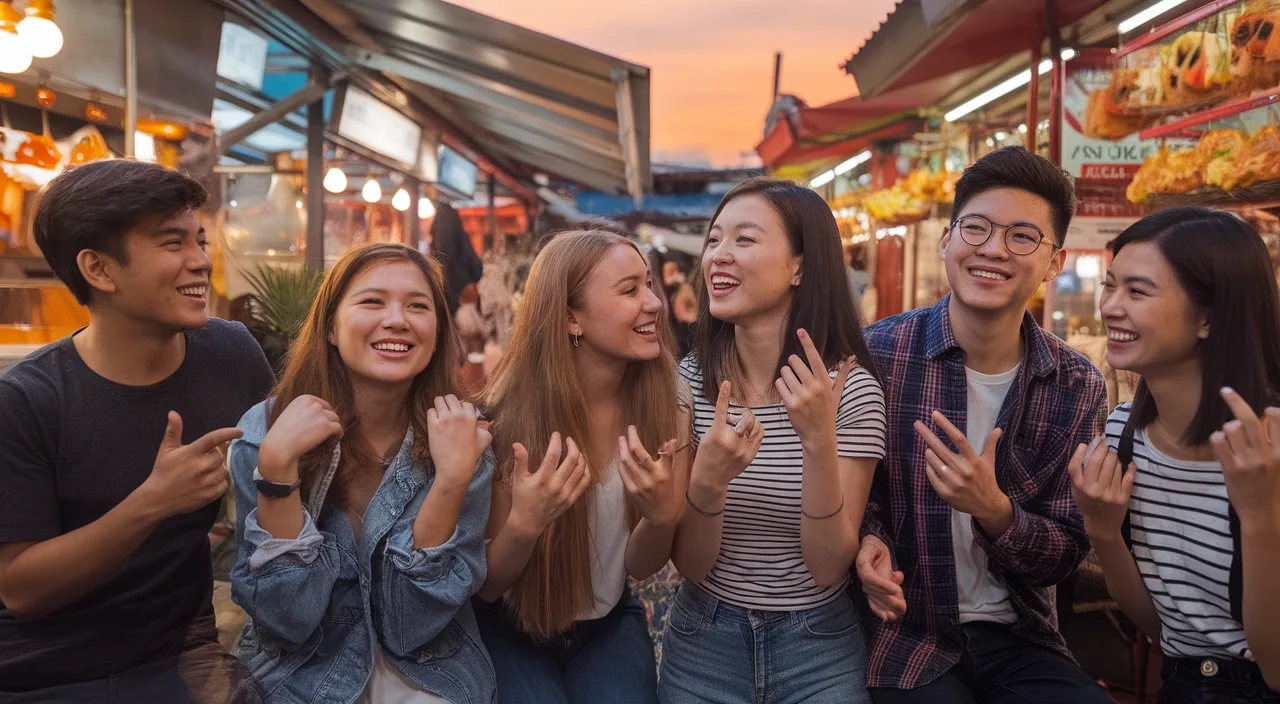
Here’s what often happens: even those who diligently try to speak Standard English in formal settings find themselves effortlessly slipping into Singlish the moment they’re with close friends or family. It’s like a linguistic reflex, a comfortable pair of slippers after a long day in stiff shoes. This speaks volumes about its power – it’s not just a language we *use*, but a language we *feel*. It’s a testament to the fact that language is not static; it’s a living entity that grows and changes with its people, reflecting their collective experiences and identity. From the old market stalls where dialects mingled freely to the sleek modern malls echoing with youthful Singlish slang, our unique language has weathered storms and emerged stronger, proving that it’s an indispensable part of our heritage.
-
KaoBeiKing, Parody, Singapore, T-shirts, Typography
Price range: $30.00 through $38.00 Select options This product has multiple variants. The options may be chosen on the product page -
Graphic, KaoBeiKing, T-shirts, Valentines
Price range: $30.00 through $38.00 Select options This product has multiple variants. The options may be chosen on the product page

“Wah, Shiok Ah!” – Decoding Popular Singlish Phrases and Slang that Capture Our Mood
Now, let’s get to the juicy bits – the Singlish expressions and meanings that truly encapsulate our collective mood. This is where the vibrancy of our language shines, transforming mundane conversations into colourful exchanges. When we say Singlish is a mood, it’s often these specific phrases and Singlish slang that do all the heavy lifting, delivering context, emotion, and humour in one neat package.
Let’s break down a few classics:
Shiok (Meaning, Tone, Usage, Situations, Misunderstandings, Variations, Responses)
- Meaning: Utterly delightful, fantastic, extremely pleasurable. It’s the ultimate expression of satisfaction.
- Tone: Enthusiastic, contented, sometimes bordering on euphoric. It’s usually exclaimed with gusto.
- Usage: Used when experiencing something extremely pleasant, often related to food, but also applicable to good weather, a satisfying outcome, or a great experience.
- Situations: "Wah, this char kway teow so shiok, I can eat two plates!" or "Finally holiday, so shiok lah!"
- Misunderstandings: Non-Singaporeans might think it’s just a simple "nice," but "shiok" carries a much stronger, almost sensual, feeling of bliss. It’s not just nice; it’s *heavenly*.
- Variations: "So shiok!", "Shiok ah!", "Super shiok!"
- Responses: "I know, right?", "Sure shiok!", "More, please!"
Kiasu (Meaning, Tone, Usage, Situations, Misunderstandings, Variations, Responses)
- Meaning: Literally "fear of losing" in Hokkien. It describes a competitive, often self-serving, attitude driven by a fear of missing out or being at a disadvantage.
- Tone: Can be used humorously to describe oneself or others, or critically when observing excessively competitive behaviour.
- Usage: "Don’t be so kiasu, lah, plenty for everyone." or "He queued up two hours just for a free pen, so kiasu!"
- Situations: Queuing for limited-edition items, grabbing the last piece of food, trying to get ahead in any competitive scenario.
- Misunderstandings: Outsiders might see it as mere competitiveness. However, "kiasu" implies a unique blend of anxiety, pragmatism, and a slightly comical extreme. It’s more than just wanting to win; it’s about avoiding failure and maximising gain at all costs.
- Variations: Often used as an adjective: "kiasu Singaporeans," "that’s so kiasu."
- Responses: "Cannot, lah, later no." (Cannot, later there’s none left), "Got to be kiasu, what!"
Lah, Lor, Meh, Mah (The Particle Powerhouses)
These aren’t just filler words; they’re emotional punctuation marks that define the mood of a sentence.
- Lah: Softens a command, confirms a statement, expresses exasperation or resignation. "Go eat, lah." (Go eat, already). "Can, lah." (Yes, can). "No space, lah!" (No space, obviously!).
- Lor: Implies resignation or something obvious. "It’s like that, lor." (That’s just how it is). "Don’t want then don’t want, lor." (If you don’t want, then don’t).
- Meh: Expresses doubt, indifference, or unimpressed sentiment. "Only like that, meh?" (Is that all?). "Don’t want to go, meh." (I don’t really want to go).
- Mah: Asserts something as obvious or self-evident. "Of course good, mah!" (Of course it’s good, it’s clear!). "He always like that, mah." (He’s always like that, it’s expected).
In practice, you’ll notice how these particles are incredibly flexible, shifting the entire emotional weight of a sentence without changing its core words. This rich tapestry of Singlish phrases isn’t just about communication; it’s about sharing a laugh, expressing annoyance, or finding common ground with a linguistic nuance that only fellow Singaporeans truly grasp. It’s the ultimate insider code, making our conversations lively, efficient, and deeply personal.
Beyond Grammar: How Singlish Shapes Our Unique Singaporean Identity
The impact of Singlish on Singaporean identity is profound, extending far beyond simple linguistics. It’s a key ingredient in our collective self-definition, a linguistic anchor that roots us to this small island with big dreams. For many of us, Singlish is the first language we learned, the sounds and rhythms of home that resonate deep within our being. It’s what makes us feel uniquely Singaporean, especially for Gen Z and Millennials who have grown up in an increasingly globalised world.
Think about the feeling of instant connection you get when you meet another Singaporean overseas and they casually drop a "How are you, lah?" or a "Power, man!" It’s more than just recognising a dialect; it’s recognising a shared heritage, a common way of navigating the world. That’s Singapore language culture at its finest – an immediate sense of kinship and understanding that transcends geographical distance. It’s a subtle but powerful signal that says, "We understand each other, without even needing to explain."
This cultural significance of Singlish is something competitors often miss when they analyse our unique linguistic landscape. They might focus on its origins or its grammatical structure, but they often fail to capture the emotional resonance, the sense of belonging it fosters. Singlish isn’t just a code; it’s a community-builder. It creates an inclusive space where nuances of humour, sarcasm, and affection are perfectly understood, often with just a glance or an intonation. It’s the language of our shared inside jokes, our collective complaints, and our triumphs.
Here’s what often happens: when discussing local issues or sharing personal experiences, Singlish allows for a level of expressiveness and emotional honesty that Standard English can sometimes feel too formal to convey. For example, complaining about a long queue with "Wah lau, this queue so long until siao!" carries far more exasperation and relatable humour than "Oh dear, this queue is excessively long to the point of absurdity." The former captures the collective sigh, the shared annoyance, the very *mood* of the situation.
Moreover, Singlish has played a crucial role in forging a common identity amongst our multicultural population. While we come from diverse ethnic backgrounds, speaking different mother tongues, Singlish acts as a linguistic glue. It’s a neutral ground where everyone can meet, blending elements from all our heritage languages into something entirely new and uniquely Singaporean. It’s a testament to our ability to adapt, to synthesise, and to create something beautiful and functional from diverse influences. It is a daily reminder that despite our differences, we are all part of the same "kampung" (village).
In practice, you’ll notice how seamlessly Singlish integrates into our national narratives. It appears in local films, TV shows, songs, and literature, often used to lend authenticity and relatability to Singaporean characters and stories. When a character speaks Singlish, we instantly recognise them as "one of us." This representation reinforces its role as a key component of our identity, cementing its place as a cherished, indispensable aspect of our cultural fabric. It’s the voice of our nation, unfiltered and undeniably ours.
Singlish in the Wild: Embracing Our Colloquial Charm in a Global World
In a world increasingly dominated by global English, the question of embracing Singlish culture in Singapore becomes even more pertinent. Far from being relegated to the fringes, Singlish is thriving. It exists in a dynamic equilibrium with Standard English, demonstrating our unique bilingualism. We often code-switch effortlessly, employing Standard English in formal settings and with non-Singaporeans, and then slipping into the comfort of Singlish the moment we’re among friends, family, or fellow locals.
This phenomenon of code-switching isn’t a sign of linguistic confusion; it’s a testament to our linguistic dexterity. It shows that we understand the appropriate context for each language, using Singlish to foster intimacy and local connection, and Standard English for broader communication and professional engagement. It’s a practical, pragmatic approach to language, reflecting the very nature of Singaporean adaptability. You’ll hear it everywhere: a business meeting conducted in precise English, followed by a lunch discussion where "Can you do it?" becomes "Can or not?" and "That’s fantastic!" becomes "Wah, shiok!"
The shift in public perception towards Singlish has been remarkable. What was once discouraged is now, for many, a source of pride. Local artists, writers, and filmmakers actively incorporate Singlish into their work, celebrating its authenticity and humour. Stand-up comedians use Singlish to connect deeply with their audiences, knowing that every "Alamak!" or "Don’t play play!" will land with a ripple of knowing laughter. This isn’t just about using words; it’s about celebrating a unique language of Singapore that embodies our colloquial charm.
However, embracing Singlish in modern Singapore also comes with its challenges. There’s a constant debate about finding the right balance – ensuring that while we celebrate our unique linguistic heritage, we also maintain a strong command of Standard English. For Gen Z and Millennials, who are digital natives, Singlish has found new avenues of expression online. Memes, social media posts, and instant messages are often peppered with Singlish slang, creating a vibrant, often humorous, online dialect that further strengthens our community bonds.
Here’s what often happens: when Singlish is used outside Singapore, particularly in international forums, it can sometimes lead to misunderstandings or, worse, a perception of a lack of English proficiency. This is why the ability to code-switch effectively is so crucial. It’s about being multilingual in a truly Singaporean way – knowing when to flex our linguistic muscles and when to soften them for a broader audience. Our youth, in particular, are adept at this, effortlessly navigating global platforms while retaining their distinctly local flavour.
Ultimately, embracing Singlish isn’t about abandoning Standard English; it’s about acknowledging and cherishing a vital part of our cultural identity. It’s about understanding that our unique language is a strength, a testament to our history, and a powerful tool for connection. It’s a celebration of our ability to create, adapt, and make something truly our own, a language that truly captures the mood and spirit of our island home.
Why Singlish Is Truly a Mood: Personal Stories and the Future of Our Linguistic Soul
We’ve talked about its history, its phrases, and its impact on identity, but let’s circle back to the core idea: Singlish is not just a word, it’s a whole mood. For me, growing up in Singapore, Singlish was always more than a means to an end; it was the emotional bedrock of my interactions. I remember late-night study sessions with friends, fueled by kopi and cheap instant noodles, where the stress would be punctuated by "Wah lao, this assignment so hard! Siao ah!" followed by an empathetic "Never mind, lah, jia you!" (meaning "push on/keep going"). That collective sigh, that shared frustration, and the subsequent encouragement – all perfectly conveyed in a few short Singlish phrases, creating a mood of camaraderie and shared struggle.
Another memory: my grandmother, speaking to me predominantly in Hokkien and a smattering of Malay, would always punctuate her advice with a firm "Hah! Listen, lah!" The "hah" was a gentle chiding, the "lah" softened it into a loving command. It wasn’t just her words; it was the warmth in her tone, the wisdom in her eyes, all inseparable from the Singlish she used. That’s the mood – a blend of familial love, respect, and a distinct cultural flavour that transcends literal translation. It’s these lived experiences, these small, everyday moments, that truly highlight why Singlish is so deeply woven into our emotional landscape.
The unique language of Singapore isn’t static; it’s a constantly evolving entity. For Gen Z and Millennials, Singlish continues to adapt, reflecting our digital lives, our global exposures, and our local quirks. New slang emerges, old phrases get repurposed, and the rhythm of our speech subtly shifts. We see influencers using it, musicians singing in it, and everyday conversations reflecting its continued vitality. The future of Singlish isn’t about rigid rules or academic definitions; it’s about its continued organic growth, its ability to capture the ever-changing mood of Singaporeans.
It acts as a cultural anchor, giving us a distinctive voice in a globalised world. While we might speak international English in boardrooms or on Zoom calls with overseas colleagues, the moment we hang up, we effortlessly revert to "Alamak, so tired!" This isn’t just a switch in language; it’s a switch in headspace, a return to comfort, authenticity, and shared identity. It’s the language that allows us to be our most genuine selves, without the formality or stiffness that can sometimes accompany Standard English. That feeling of liberation, of being truly understood, is the ultimate mood Singlish provides.
Ultimately, Singlish is a testament to our resilience, our ability to blend disparate elements into something unique and meaningful. It carries our history, our humour, our frustrations, and our joys. It’s the language of our shared past, our vibrant present, and our evolving future. It’s not just a collection of words; it’s the unfiltered, heartfelt expression of being Singaporean – a whole mood that continues to define and connect us, one "lah" and "lor" at a time.
Final Thoughts
Singlish isn’t merely a dialect or a colloquialism; it’s the heartbeat of Singaporean communication, a vibrant reflection of our multicultural heritage and our collective spirit. For us, who have grown up steeped in its unique charm, it’s more than just a linguistic tool – it’s an emotional currency, a source of shared identity, and indeed, a whole mood. From its humble origins to its present-day embrace by Gen Z and Millennials, Singlish continues to evolve, reflecting our stories, our humour, and our uniquely Singaporean way of life. So the next time you hear a "Wah, so shiok!" or a "Alamak!", remember that you’re not just hearing words; you’re experiencing a piece of our soul, a true Singaporean mood.
FAQ
What does it mean that Singlish is “a whole mood”?
It means Singlish isn’t just about the literal meaning of words; it conveys a wide range of emotions, shared cultural understanding, and a distinct atmosphere or feeling among Singaporeans. It’s a language that captures collective sentiments and experiences.
Is Singlish proper English?
No, Singlish is a creole language that blends English with elements from Malay, Chinese dialects (Hokkien, Teochew, Cantonese), and Tamil. While it has English as its base, its grammar, vocabulary, and sentence structures differ significantly from Standard English.
Why is Singlish so important to Singaporean identity?
Singlish fosters a sense of belonging and shared heritage among Singaporeans. It acts as a unique cultural identifier, creating an immediate connection and understanding between locals, reflecting our multicultural background and shared experiences.
How did Singlish evolve over time?
Singlish evolved organically from the need for communication among diverse immigrant communities in colonial Singapore. It blended English with existing local languages, adapting over generations to incorporate new words, slang, and expressions, reflecting the changing social landscape.
Can non-Singaporeans learn to speak Singlish?
While non-Singaporeans can learn some Singlish phrases and slang, truly understanding and speaking Singlish with its correct intonations and particles (like ‘lah’, ‘lor’) often requires immersion in the culture and an appreciation for its subtle emotional nuances. It’s more than just vocabulary; it’s a way of feeling.
Is Singlish used in formal settings?
Generally, Singlish is used in informal settings among friends and family. In formal or professional environments, Standard English is preferred. However, many Singaporeans fluidly code-switch between Singlish and Standard English depending on the context and audience.
What are some common Singlish phrases and their moods?
Phrases like "Shiok!" convey delight, "Alamak!" expresses dismay, "Kiasu" describes a competitive mood, and particles like "lah" or "lor" add emotional weight, softening commands or indicating resignation respectively. Each phrase carries a specific emotional connotation beyond its literal meaning.