
Your Cart

KAOBEIKING | SINGAPORE STREETWEAR T-SHIRT DESIGNER

FREE SHIPPING ABOVE S$88 IN SINGAPORE

How to Order at Singapore Hawker Centres: Rojak & More

Ordering at a Singapore hawker centre is easy once you know the basic rhythm: choose your stall, note the dish and size, queue, state your order clearly, answer any ingredient questions, pay, and collect your food. The unfamiliar part is often the vocabulary—terms such as kopi, teh, dabao, kosong, and rojak carry specific local meanings.

This practical guide explains the words, choices, and etiquette that help a first-time visitor order confidently without holding up the queue.

Singapore hawker ordering: the quick checklist

  1. Walk around first and compare stalls, menus, and queues.
  2. Decide the dish, portion size, and any add-ons before reaching the counter.
  3. Queue at the correct ordering point.
  4. Say the dish first, then size and customizations.
  5. Confirm dine-in or takeaway when asked.
  6. Pay using the method displayed by the stall.
  7. Take the number, buzzer, or collection instructions.
  8. Return your tray and crockery after eating.

What is a hawker centre?

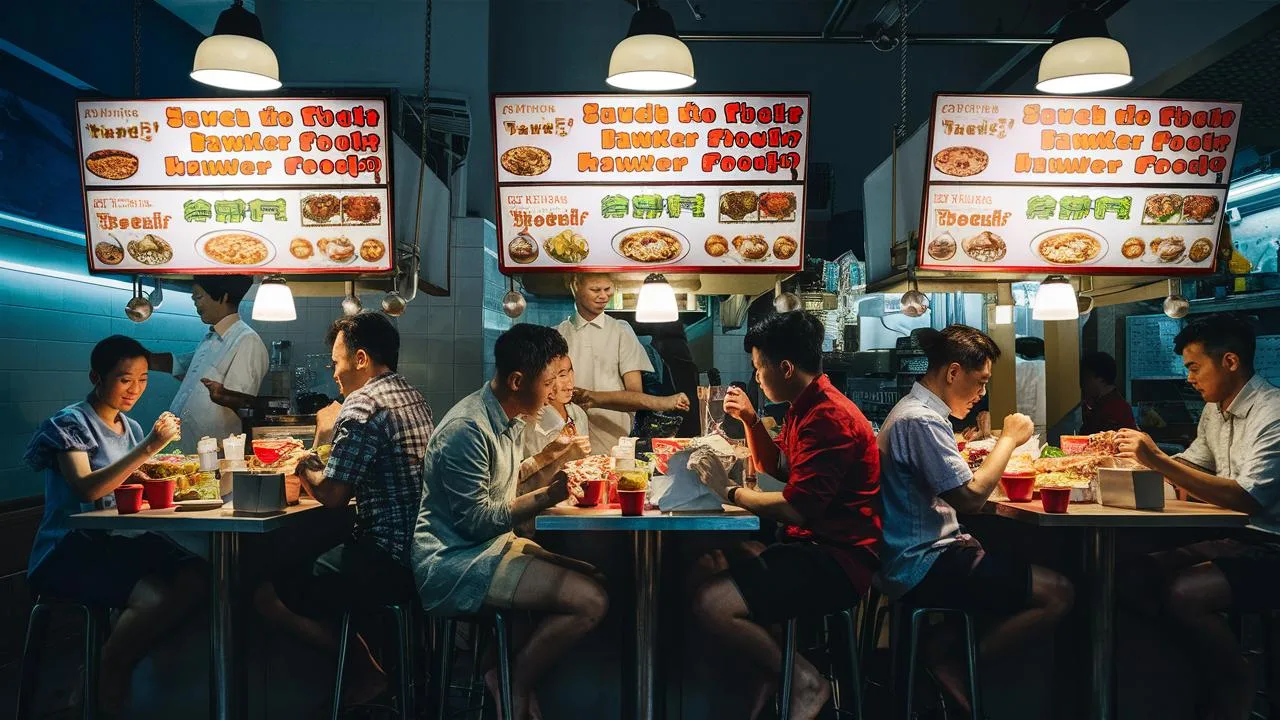
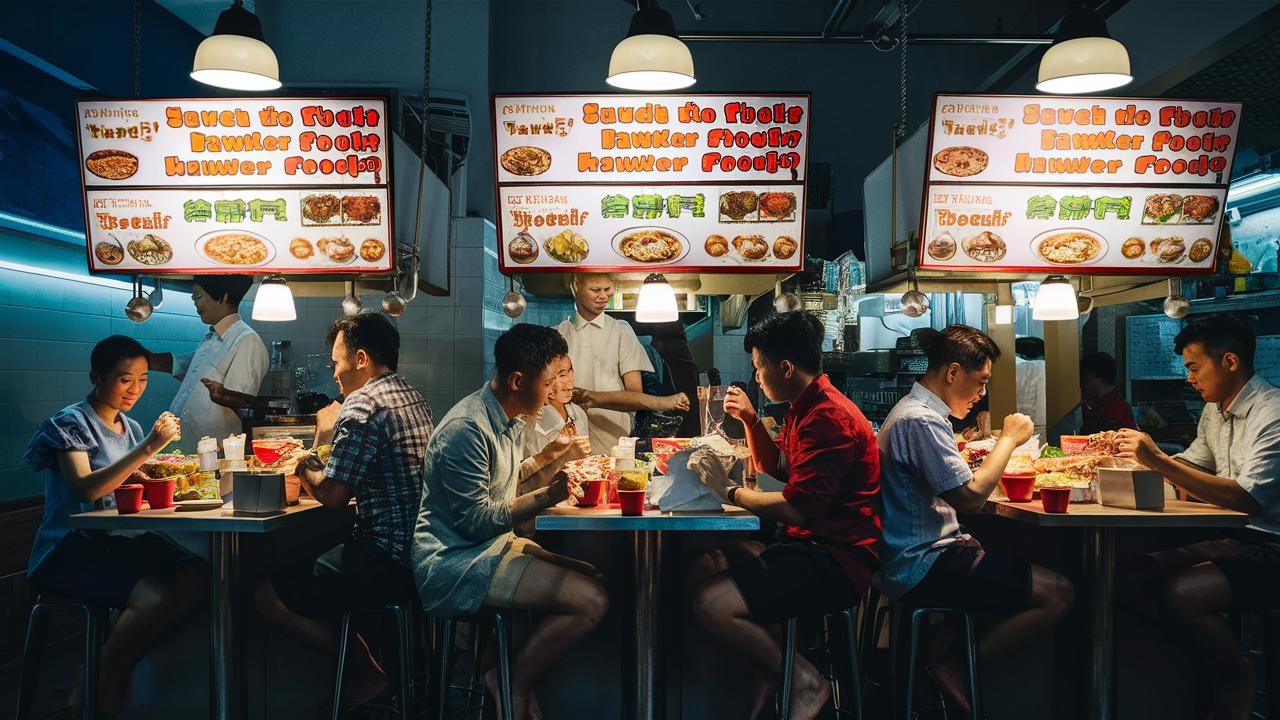
A hawker centre is a shared dining space containing many independently operated food and drink stalls. Each stall usually specializes in a small range of dishes, while customers sit in a common seating area. The format makes it possible to buy chicken rice, rojak, noodles, satay, dessert, and drinks from different vendors for the same table.

Singapore’s hawker culture is recognized by UNESCO as intangible cultural heritage. UNESCO describes hawker centres as community dining rooms where people from diverse backgrounds gather over affordable food. Read the official UNESCO overview of hawker culture in Singapore for the broader cultural context.

Before you queue

Do one lap of the centre before deciding. Look at displayed menus and prices, but also notice what diners are eating. A long queue can signal a popular stall, although it is not a guarantee that the food will match your taste.

At busy times, settle on your order before you reach the front. Many stalls have a fast workflow and limited space. You do not need perfect Singlish or Mandarin; clear English, the dish name, and a pointing gesture are usually enough. Keep your request short and ask one question at a time.

How to place the order

Start with the main item: “One chicken rice.” Add the portion: “small” or “large.” Then state changes: “no chilli,” “extra rice,” or “takeaway.” A simple sequence is:

Quantity + dish + size + customization + dine-in/takeaway

For example: “One fishball noodle, dry, small, no chilli, eating here.” If the stall uses a numbered menu, saying the number and dish name together reduces ambiguity.

Essential hawker words and phrases

Dabao / takeaway

Dabao means to pack food to take away. “One char kway teow, dabao” tells the seller you do not need dine-in crockery. “Takeaway” works too.

Eating here

Say “eating here” or “having here” when the stall asks whether the order is for dine-in. Some stalls use different plates, containers, or deposit arrangements.

Mai hiam

Mai hiam is commonly understood as “no chilli” or “don’t want spicy.” Plain English is perfectly acceptable and may be clearer when a dish contains several chilli components.

Kosong

Kosong means “empty” in Malay and indicates no sugar in familiar drink orders such as kopi o kosong. It does not automatically remove milk unless the rest of the order says so.

Tambah

Tambah means “add” or “more” in Malay. You may hear it when asking for an extra portion, although “add rice” or “extra noodles” is also clear.

How to order kopi and teh

Traditional coffee-shop drink names work like a formula. Kopi is coffee; teh is tea. The words that follow adjust milk, sugar, strength, and temperature.

  • Kopi: coffee with condensed milk.
  • Kopi O: coffee without milk, normally sweetened.
  • Kopi C: coffee with evaporated milk and sugar, using evaporated milk instead of the condensed milk in standard kopi.
  • Kopi kosong: coffee with condensed milk but without extra added sugar.
  • Kopi O kosong: black coffee without sugar.
  • Siew dai: less sweet.
  • Gah dai: sweeter.
  • Peng: iced.
  • Po: weaker or more diluted.
  • Gao: stronger or more concentrated.

Apply the same modifiers to teh. For example, teh C siew dai is tea with evaporated milk and less sugar. Recipes differ slightly by stall, so people managing allergies or blood sugar should ask directly rather than rely only on shorthand.

What is rojak? Rojak meaning and origins

Rojak is a mixed salad found in Singapore and across the region. The Malay word rojak literally means “mixture” or “eclectic mix,” reflecting both the dish’s diverse ingredients and its place in a multicultural food culture. Singapore commonly has two broad styles. Chinese-style rojak typically combines items such as fruit, vegetables, fried dough fritters, beancurd, and a dark sweet-savoury dressing, often topped with crushed peanuts. Indian rojak is a choose-your-own selection of fritters and other ingredients served with a reddish sauce.

Recipes vary by stall. If you have allergies, ask about peanuts, prawn paste, seafood, gluten, or other ingredients before ordering. Do not assume that a vegetable-heavy dish is vegetarian.

How to order Chinese rojak

Order by price or portion if the menu offers set sizes: “One small rojak.” Ask for chilli level and mention ingredients you cannot eat. Some stalls let you add extra dough fritters, beancurd puffs, or other components. Because the ingredients are tossed together in dressing, say exclusions before preparation begins.

How to order Indian rojak

At many Indian rojak stalls, you select pieces from a display using tongs and place them on a plate. The seller cuts and fries or reheats the selection, then serves it with sauce. Prices may be per piece, so watch the running total. Ask which items contain seafood, meat, or egg if that matters to you.

Seat-saving and table etiquette

Chope

You may see a tissue packet, umbrella, or small object placed on a table. This can mean the seat has been “chope”—reserved briefly while someone buys food. Respect the marker and look for another seat. At peak hours, share larger tables when space is tight, keep bags off spare chairs, and avoid occupying a table long after finishing.

When you are done, return your tray and used crockery to the designated station. Separate halal and non-halal items where the return stations instruct you to do so. Leaving the table ready for the next diner is part of the shared system.

Payment and collection

Many stalls accept cash and local digital payment methods, but availability varies. Carrying some Singapore dollars is sensible. Watch for signs showing accepted methods and do not assume every overseas card or wallet will work.

Some stalls hand food over immediately. Others give a number, receipt, buzzer, or table-delivery marker. Listen for your number and avoid blocking the collection counter while you wait.

Common first-time mistakes

  • Joining the wrong queue: ordering and collection lines may be separate.
  • Waiting until the counter to choose: decide earlier when the menu is visible.
  • Giving every instruction at once: lead with the dish and respond to the seller’s questions.
  • Assuming “not spicy” means no allergens: chilli, seafood, nuts, and sauces are separate issues.
  • Moving a tissue packet: it may be reserving a seat.
  • Leaving the tray behind: use the return point after eating.

Rojak-inspired Singapore designs

Like the dish, Singapore style can be an unapologetic mixture. Explore every current Rojak design:

Frequently asked questions

Can tourists order in English at Singapore hawker centres?

Yes. Clear English, menu numbers, and pointing are normally enough. Local phrases are useful but not required.

What does dabao mean?

Dabao means to pack food or drinks for takeaway. Say “dabao” when you do not plan to eat at the hawker centre.

What does rojak mean?

Rojak refers to a mixture and names mixed-salad dishes. Common Singapore versions include Chinese rojak and Indian rojak.

Is Singapore rojak vegetarian?

Not necessarily. Dressings or ingredients may contain prawn paste, seafood, egg, or meat, and peanuts are common. Ask the stall directly about dietary needs and cross-contact.

Do hawker centres accept cards?

Payment methods vary. Many stalls offer local digital payments, while some remain cash-focused. Carry some Singapore dollars and check the signs at each stall.

What does chope mean?

Chope means to reserve a seat or table temporarily, often by leaving a tissue packet or small personal item while buying food.

Order with confidence

The best approach is simple: decide before you reach the counter, state the dish first, clarify dietary needs, and follow the stall’s payment and collection system. You do not need fluent Singlish to enjoy a hawker centre. A concise order, patience, and respect for shared tables will take you a long way—and knowing what rojak, dabao, kopi, and chope mean makes the experience feel immediately more familiar.