
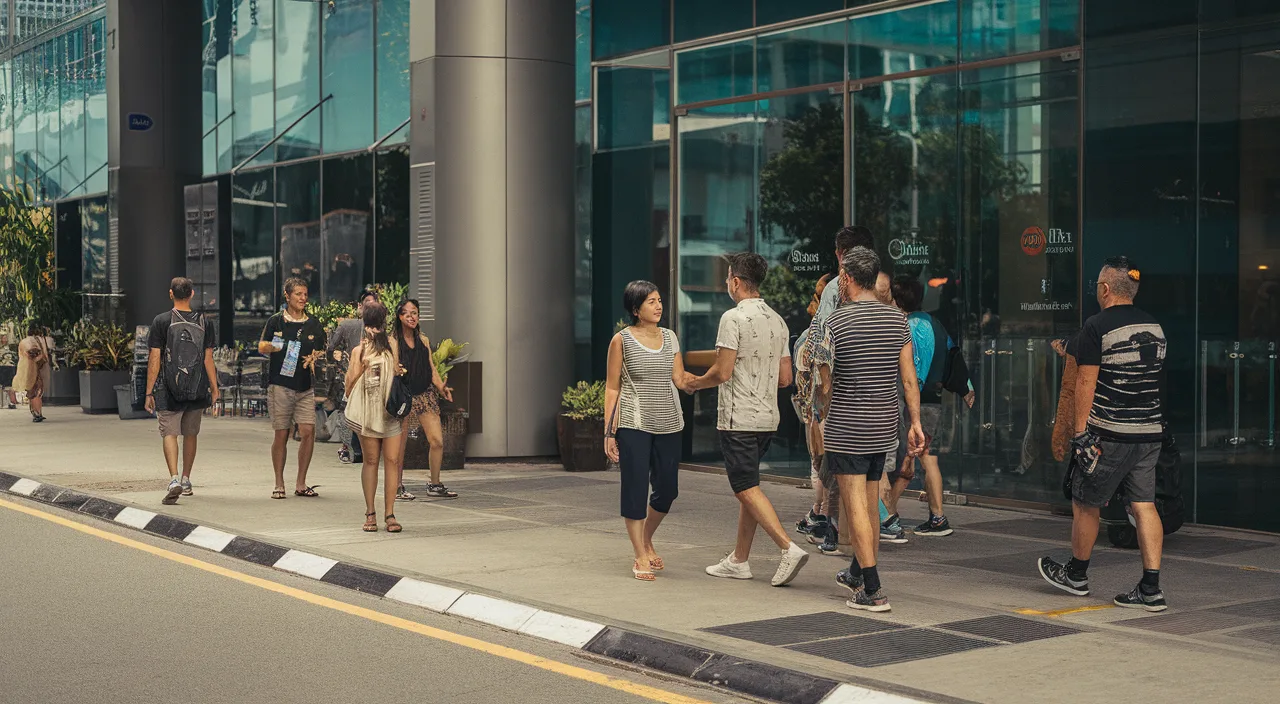
What does guai lan mean in Singapore slang?
In Singapore slang, “guai lan” (pronounced GWAH-ee LAHN) is a vivid term used to describe someone who is deliberately difficult, obnoxious, irritating, or has a perpetually sour and fault-finding attitude. It captures a specific type of petty, annoying behaviour that goes beyond mere rudeness to encompass a stubborn, often passive-aggressive, obnoxiousness.
-

Children, Chinese, Chinese New Year, KaoBeiKing, Quote, Singlish/Hokkien, Typography
$30.00 Select options This product has multiple variants. The options may be chosen on the product page

TL;DR: Guai Lan in a Nutshell
For those of you who need the quick low-down before diving into the nitty-gritty of Singlish nuances, here's the essence of "guai lan":
- Core Meaning: It describes a person or behaviour that is deliberately difficult, obnoxiously irritating, petty, or having a sour, fault-finding attitude. It's about being persistently troublesome or disagreeable.
- Origin: The term is Hokkien, with “guai” meaning "strange" or "weird" and “lan” being a Hokkien vulgar term for male genitalia. The combination evokes a sense of "weirdly annoying" or "obnoxiously irritating."
- Tone: Primarily negative, expressing frustration, annoyance, or disdain. However, context can sometimes lighten it, making it an exasperated observation rather than a direct insult, especially among close friends.
- Usage: Applied to individuals, actions, or even situations. You can say "he is very guai lan" or "that request is so guai lan."
- Key Characteristics: Expect complaining for no good reason, deliberate obstruction, finding fault in everything, nitpicking, being uncooperative, or a general unpleasant disposition. It's not about being loud or aggressive, but about being subtly, consistently annoying.
- Is it Vulgar? Yes, it contains a vulgar component from Hokkien. While widely understood and used in casual Singlish, it's best avoided in formal settings or when speaking with strangers, particularly those who might be easily offended. It's common amongst peers but can be seen as impolite by others.
So, the next time you hear "guai lan," you'll know it's not just a casual complaint; it's a specific, culturally rich descriptor of annoying behaviour that hits right at the heart of Singaporean exasperation.
Unpacking the "Guai Lan" Phenomenon: More Than Just Annoying
Ah, "guai lan." Just uttering the phrase brings a knowing nod from any Singaporean. It's one of those uniquely local terms that perfectly encapsulates a very specific type of human behaviour that crosses paths with us far too often. You can't quite translate it directly into English with a single word without losing a crucial layer of meaning. "Annoying," "obnoxious," "difficult," "petty," "nitpicky" – they all capture facets of it, but none quite grasp the full essence of "guai lan" like the original phrase does. It's a descriptor, an exasperated sigh, and sometimes, a resigned acceptance all rolled into one. It speaks to a certain deliberate, often passive-aggressive, obnoxiousness that makes life just that little bit harder for everyone involved, often for no apparent good reason other than the person's own disagreeable disposition.
Imagine someone who complains about the air-conditioning being too cold, then too warm, then too noisy, all within the span of fifteen minutes, refusing to acknowledge any attempts to address their issues. Or the colleague who meticulously finds a typo on page 50 of a 100-page report, not to be helpful, but to subtly undermine the presenter. These are the subtle, pervasive instances of "guai lan" that seep into the fabric of everyday Singaporean life. It's the person who makes a mountain out of a molehill, who argues for the sake of arguing, or whose default setting seems to be "disgruntled." To truly understand "guai lan meaning in Singapore slang," you need to look beyond the literal and delve into the lived experience of navigating such personalities in a dense, communal society like Singapore.
-
-
Graphic, Inspixe, Ladies, Mens, Quote, T-shirts, Typography
Price range: $30.00 through $38.00 Select options This product has multiple variants. The options may be chosen on the product page


The Linguistic Tapestry: Hokkien Roots
To truly grasp the punch of "guai lan," we need to delve into its etymology. This isn't just some random made-up word; it's deeply rooted in the Hokkien dialect, a significant linguistic thread in Singapore's multicultural tapestry. The first component, "guai" (怪), directly translates to "strange," "weird," or "peculiar." It implies something out of the ordinary, something that deviates from expected norms. Now, the second component, "lan" (𡳞), is where things get a bit more colourful – and vulgar. "Lan" is a Hokkien vulgar term for the male reproductive organ. Yes, you read that right. When you put these two together, you get a combination that, while not a direct literal translation, powerfully conveys "strangely obnoxious" or "weirdly irritating in a profoundly vulgar way." It's the kind of phrase that hits you right in the gut with its bluntness and its underlying sense of disgust or exasperation.
The inclusion of a vulgar term in "guai lan" is precisely what gives it its potent sting and differentiates it from milder terms like "annoying" or "difficult." It elevates the irritation to a level of profound displeasure, suggesting that the person's behaviour isn't just a minor inconvenience but is deeply, unpleasantly disagreeable. This Hokkien heritage is crucial because it highlights the informal, colloquial nature of the term. It's street language, commonly used among friends, family, and colleagues in casual settings, a testament to how deeply Singlish draws from its various linguistic wells – Malay, Chinese dialects, Tamil, and English – to create expressions that are uniquely resonant to the Singaporean experience. When someone calls another "guai lan," they're not just pointing out a minor flaw; they're expressing a deep, often exasperated, sentiment about truly tiresome behaviour that stands out for its sheer, stubborn unpleasantness. It’s part of the rich tapestry of "guai lan Singapore slang" that gives our local patois its distinctive flavour.
Nuance is Key: It's Not Always an Insult
Now, here's where the beauty of Singlish, and "guai lan," truly shines: nuance. While it generally carries a negative connotation of annoyance and frustration, the context, tone, and relationship between speakers can significantly shift its emotional weight. It's not always a direct, stinging insult. Sometimes, among close friends, "guai lan" can be used almost affectionately, a playful jab at someone's predictable quirks or a shared inside joke about a particular habit. Imagine your friend complaining loudly about having to walk an extra five steps to the hawker centre when you both know he's just being lazy. You might roll your eyes and say, "Aiyah, you so guai lan one!" – not out of genuine anger, but more out of exasperated endearment. It acknowledges their "guai lan" tendencies with a smile, a shared understanding that "that's just how they are."
This subtle shift highlights the informal social dynamics of Singapore. In a society that often values indirect communication and maintaining harmony, "guai lan" can sometimes serve as a vent, a way to express frustration without escalating it into outright confrontation. It's a shared code. When used playfully, it assumes a level of comfort and intimacy where both parties understand that the "insult" is not meant maliciously. However, this is a delicate balance. Use it with a stranger, an elder, or in a formal setting, and you risk being perceived as incredibly rude and disrespectful. The "is guai lan vulgar" question often hinges on this: while the term itself contains a vulgar root, its application can vary from truly offensive to mildly chiding, all depending on who says it, to whom, and in what situation. Navigating this spectrum is part of mastering Singlish and understanding the unwritten rules of social interaction in Singapore, where a single phrase can carry multiple emotional layers, reflecting the "local slang term" at its most complex.
The Core Meaning: Petty, Obnoxious, and Deliberately Difficult
At its heart, "guai lan" describes a person or behaviour that goes out of their way to be difficult, bothersome, or disagreeable. It's not accidental. It's a deliberate or ingrained pattern of behaviour that reflects a certain pettiness or a sour disposition. The person isn't just having a bad day; they seem to actively choose to make things harder for others or to maintain an unpleasant demeanour. This could manifest in endless complaining about trivial matters, nitpicking every detail, or deliberately obstructing progress because they feel like it. It's the kind of behaviour that leaves you feeling drained and exasperated, wondering why someone would actively seek to create friction. Understanding this core definition is key to appreciating why it's such a potent "Singlish insult" when aimed directly, or a weary observation when used to describe a trying situation. It truly highlights the essence of "what does guai lan mean" in a functional, everyday context.
It's About Attitude, Not Just Action
What truly sets "guai lan" apart from other descriptors of annoyance is its emphasis on attitude rather than just an isolated action. A person can do something annoying once, but to be "guai lan" suggests a consistent, pervasive disposition. It's not just about what they do, but how they approach every interaction, every task, every request. Their attitude is inherently cynical, critical, or stubbornly uncooperative. Think of the office colleague who, no matter what solution is proposed, will always find a flaw, not to genuinely improve things, but to demonstrate their own intellectual superiority or simply to be contrary. They might nitpick at grammar in an email that's largely informal, or refuse to compromise on a trivial detail that doesn't affect the outcome, simply because they want to exert control or be difficult.
This ingrained attitude is what makes dealing with a "guai lan" person so draining. It's not just about solving a problem; it's about navigating their perpetual state of dissatisfaction or deliberate obstruction. Their responses might be laced with passive aggression, sarcastic remarks, or an air of superiority that seeks to diminish others. It's a subtle form of resistance that wears people down over time. It can manifest as a constant grumbling, even when things are going well, or an inability to find joy or satisfaction in anything. This ingrained "local slang term" captures the essence of someone whose default setting is to make things challenging, not out of malice, but from a deeply rooted, unpleasant disposition. It's the "rude behaviour" that doesn't necessarily involve shouting or direct confrontation, but rather a slow, steady drip of negativity and obstruction that can be even more frustrating to endure.
The "Why" Behind the Guai Lan Behaviour
So, why do people behave in a "guai lan" way? While there's no single answer, and it's certainly not an excuse, understanding some potential underlying factors can shed light on this pervasive behaviour. Often, it stems from a place of insecurity or a perceived lack of control. By being difficult, a "guai lan" person might be attempting to exert power or command attention in situations where they feel powerless or overlooked. They might find a perverse satisfaction in creating friction, as it makes them feel significant or impactful, even if that impact is negative. It's a way of asserting their presence, even if it alienates others. Sometimes, it's simply a deeply ingrained habit, a personality trait that has developed over time, perhaps due to past negative experiences or a general cynicism about life. They might genuinely believe they are being "realistic" or "thorough," unaware of how their approach grates on others.
-
Graphic, Inspixe, Ladies, Mens, Quote, T-shirts, Typography
Price range: $30.00 through $38.00 Select options This product has multiple variants. The options may be chosen on the product page -
KaoBeiKing, Singlish/Hokkien, T-shirts, Typography, Valentines, Women
Price range: $30.00 through $38.00 Select options This product has multiple variants. The options may be chosen on the product page


Another factor could be a lack of empathy or emotional intelligence. A "guai lan" individual might not fully grasp the impact their constant complaining or nitpicking has on the morale and productivity of those around them. They might be so focused on their own grievances or perceived injustices that they become blind to the bigger picture or the feelings of others. Furthermore, in a high-pressure environment like Singapore, stress and frustration can sometimes manifest as "guai lan" behaviour. Individuals under immense pressure might lash out or become overly critical as a coping mechanism, even if it's an unhealthy one. While understanding the "why" doesn't excuse the behaviour, it helps to frame "guai lan" not just as a random act of annoyance, but often as a complex manifestation of internal struggles or personality traits, contributing to its status as a widely recognized "Singlish insult" when observed in others.
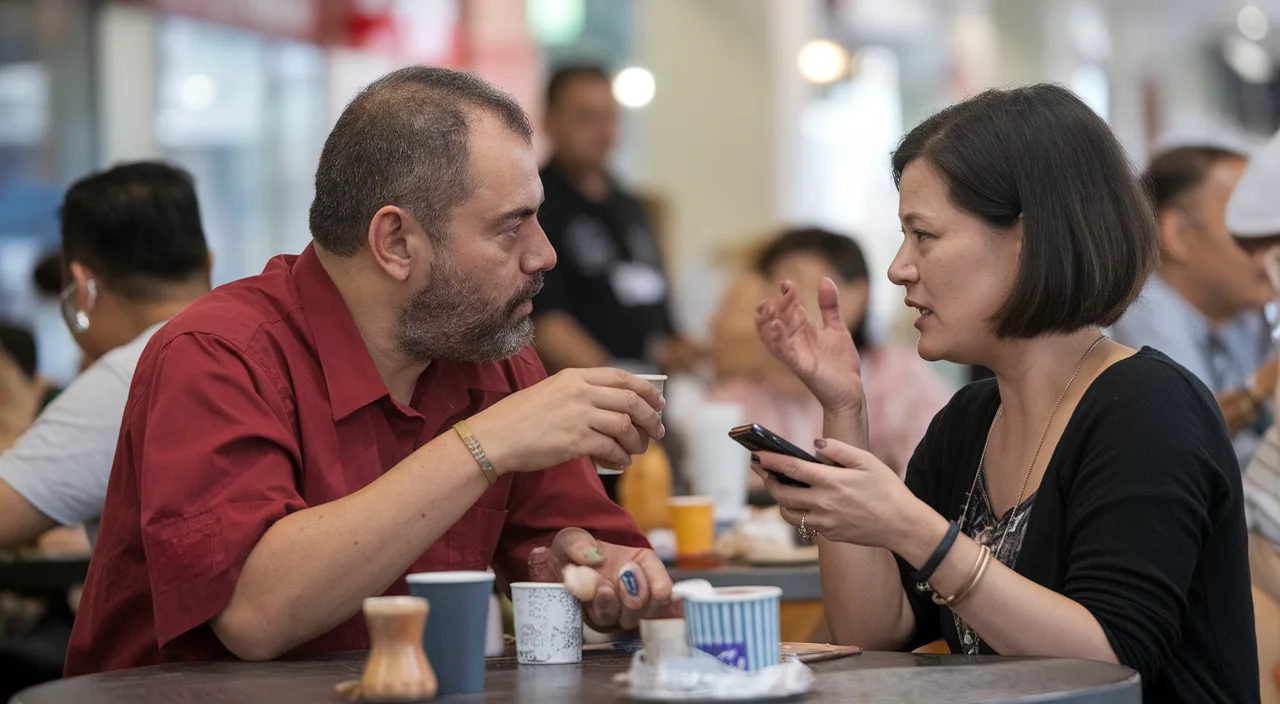
The Tone: Frustration, Disdain, or Affectionate Jest?
The beauty and complexity of Singlish lies in its ability to convey a spectrum of emotions through a single phrase, and "guai lan" is a prime example. While its literal components suggest a strong negative sentiment, the actual tone conveyed can range from outright, furious frustration to a wry, almost affectionate exasperation. Understanding this tonal spectrum is crucial for anyone trying to navigate the social intricacies of Singapore. When someone uses "guai lan," they're not just describing an action; they're communicating their emotional response to it, which can be deeply personal and context-dependent. This makes "guai lan meaning" a fluid concept, shaped by the speaker's intent and the listener's interpretation.
For instance, an enraged driver honking and muttering "Wah, that fella so guai lan!" clearly indicates intense frustration and disdain towards another driver's deliberate road hogging. There's no affection there. But a friend playfully admonishing another for their overly dramatic reaction to a minor inconvenience with "Eh, you super guai lan eh!" carries a much lighter, almost teasing tone. It's this versatility that makes "guai lan Singapore slang" such a rich and indispensable part of our everyday vocabulary. It allows for a nuanced expression of irritation that can be softened or sharpened based on the situation, the relationship, and the implicit understanding between the individuals involved. It's a testament to the power of a "local slang term" to go beyond simple definitions and tap into a shared emotional experience.
The Spectrum of Annoyance
Let's dissect the emotional spectrum that "guai lan" covers. On one end, you have outright anger and strong disdain. This is when a person's "guai lan" behaviour has genuinely crossed a line, causing significant inconvenience, stress, or emotional distress. In such cases, calling someone "guai lan" is a direct and potent insult, designed to express extreme displeasure. The tone might be sharp, the words clipped, and the body language tense. This often happens in situations of perceived unfairness, deliberate obstruction, or when someone is being unrepentantly petty despite repeated attempts at resolution. This is where "guai lan" truly functions as a "Singlish insult," carrying the full weight of its vulgar root.
Moving along the spectrum, we find a more common usage: exasperation and weary frustration. This is the "guai lan" that comes with a sigh and a shake of the head. It's when someone is predictably difficult, and you're just tired of dealing with it. You know they're going to complain, you know they're going to nitpick, and while it's annoying, it's not surprising. Here, "guai lan" serves as a shared commiseration, an acknowledgment of a difficult situation or person. The tone is less aggressive and more resigned, a communal understanding of a shared burden. For instance, queuing for food and the person in front of you takes an eternity to decide, arguing with the hawker over a minute detail, you might turn to your friend and whisper, "Wah lau, so guai lan one," and your friend instantly understands the shared frustration without a word more. This is a classic example of "rude behaviour" that causes general inconvenience.
Finally, at the far end, there's the occasional, almost affectionate jest, as mentioned earlier. This is rare and strictly reserved for very close relationships. It's a playful poke at a friend's endearing, if slightly annoying, quirks. The tone is light, often accompanied by a smile or a laugh, and there's an implicit understanding that no real offence is meant. This delicate balance means "what does guai lan mean" can change dramatically depending on the emotional landscape of the interaction.
When "Guai Lan" Becomes a Term of Endearment (Rarely, but it happens)
While "guai lan" is largely negative, there are specific, albeit rare, instances where it can almost be used with a touch of endearment, especially within extremely close-knit circles. This isn't a universal application, mind you, and requires a profound understanding of the relationship dynamics and shared history between individuals. It's less about the actual meaning of "guai lan" and more about the meta-commentary it provides on a known, tolerated, and sometimes even beloved quirk of a friend or family member. Imagine a sibling who always complains about family gatherings but is always the first one there, or a friend who perpetually finds fault with restaurant choices but secretly enjoys the meal. When you say, "Aiyah, you so guai lan lah," in these situations, it's often accompanied by a chuckle and a knowing look. It acknowledges their predictable "guai lan" tendencies, but with an underlying affection that accepts them despite, or perhaps because of, these quirks. It's a form of playful teasing, a recognition of their distinct personality that has become part of their charm within that specific social context. However, it's crucial to stress that this usage is incredibly niche and should not be attempted with anyone you don't share a deep, long-standing, and trusting relationship with, lest it be severely misunderstood as a genuine "Singlish insult" or "rude behaviour."
Usage in Real Singaporean Life: Scenarios and Examples
"Guai lan" isn't confined to abstract definitions; it's a living, breathing part of everyday Singaporean discourse. You'll hear it in the hawker centres, at the office, during family gatherings, and certainly online. Its versatility allows it to describe a wide array of situations and personalities, making it an indispensable term for expressing frustration or observing difficult behaviour. From the petty complaints that slow things down to the deliberate obstruction that tests one's patience, "guai lan" has a home in many a Singaporean's daily vocabulary. These real-life scenarios vividly illustrate "what does guai lan mean" in practical terms, showcasing its range from mild irritation to outright exasperation. The term "guai lan meaning" truly comes alive when you see it in action across different facets of local life, highlighting its significance as a "local slang term."
At the Kopitiam: The Hawker Stall Saga
The kopitiam, or hawker centre, is a quintessential Singaporean setting, and naturally, a prime stage for "guai lan" behaviour. Picture this: you're queuing for your favourite chai tow kway. The queue is long, people are hungry, and the hawker is sweating. Then, the person at the front of the line starts to order. Instead of a simple "one plate carrot cake, black, less chilli," they launch into a detailed, convoluted explanation of how their carrot cake should be cooked, insisting on a precise ratio of egg to radish, a specific char, and a particular amount of sweet sauce, all while critiquing the current batch. The hawker, a seasoned veteran, tries to be patient, but everyone else in line is sighing, rolling their eyes, and muttering under their breath, "Wah, that fella so guai lan!"
This is a classic "guai lan" scenario. The person isn't just being particular; they're being *deliberately* difficult, making a simple transaction complex, holding up the line, and asserting their demanding nature over the collective convenience. It's the kind of "rude behaviour" that, while not aggressive, shows a lack of consideration for others and an insistence on their own perceived importance, embodying the very essence of "guai lan meaning in Singapore slang." Another common example might be someone who complains incessantly about the cleanliness of the table, loudly criticising the staff, even after it's been wiped down, just to make a point or draw attention. Their endless fault-finding turns a pleasant dining experience into an ordeal for those around them, a prime example of "guai lan Hokkien" in action.
In the Workplace: Colleagues and Unspoken Rules
The workplace is another fertile ground for "guai lan" behaviour, often more insidious due to professional constraints. Here, "guai lan" can manifest as passive aggression, stubborn obstruction, or constant, non-constructive criticism. Imagine a team meeting where a colleague consistently shoots down every idea, not with alternative solutions or genuine concerns, but with a cynical "that won't work" or "we tried that before, it failed," without offering any constructive input. Or the manager who nitpicks every minor detail in a report, delaying its submission, not because the errors are critical, but because they enjoy wielding their authority or simply being difficult. This kind of "guai lan" behaviour stifles creativity, lowers morale, and slows down productivity, making the work environment toxic.
Another common scenario is the colleague who always finds an excuse to not help, or who makes a simple request incredibly complicated. You ask for a quick favour, and they respond with a list of reasons why it's impossible, or they make you jump through hoops for something that should be straightforward. "He's so guai lan, always making things difficult for no reason." This "rude behaviour" in the workplace isn't about outright conflict, but about a persistent, low-level irritation that wears down team spirit and efficiency. It's a specific type of "Singlish insult" that describes the character of someone who is professionally difficult and often brings their personal sour disposition into shared tasks, truly defining "what does guai lan mean" in a professional context.
Social Circles: Friends, Family, and Everyday Irritations
Even within social and family circles, "guai lan" rears its head, though often with a softer edge due to personal relationships. It's the friend who always complains about the choice of restaurant after everyone has agreed, even if they had input. "This food not nice, too expensive, next time don't come here." Or the family member who finds fault with every aspect of a meticulously planned gathering, from the seating arrangements to the choice of music. "Why this music so loud? Why don't have my favourite dish?" While these might seem like minor grievances, when they are constant and pervasive, they become "guai lan."
In these contexts, "guai lan" can sometimes be tolerated, or even become a running joke, if the person is otherwise loved and respected. "Aiyah, don't mind him, he's just being guai lan." However, even within these close ties, persistent "guai lan" behaviour can strain relationships, as constant negativity and fault-finding can be emotionally draining. It highlights how "guai lan meaning in Singapore slang" can adapt to different social environments, sometimes softening, but always retaining its core of deliberate irritation or stubborn unpleasantness, making it a powerful "local slang term."
Online Spaces: Keyboard Warriors and Forum Shenanigans
The anonymity of the internet has given "guai lan" behaviour a whole new platform to thrive. Online forums, social media comment sections, and messaging groups are rife with "guai lan" individuals, often referred to as "keyboard warriors." These are the people who will jump into any discussion to nitpick, argue for the sake of arguing, express undue cynicism, or derail conversations with irrelevant complaints. They might be overly critical of a simple photo post, finding a flaw where none was intended, or relentlessly debate a minor point, refusing to back down even when presented with facts. Their goal often seems to be to provoke, annoy, or assert their perceived intellectual superiority, rather than engage in constructive dialogue.
"Wah, this commenter so guai lan, just want to stir trouble." This usage is particularly common when describing someone who persistently posts negative, unhelpful, or deliberately provocative comments, often disguised as "constructive criticism" but clearly aimed at annoying others. The "is guai lan vulgar" question often gets tested here, as the online environment can embolden people to use such terms more freely. These "guai lan" online personalities contribute to a toxic environment, making digital spaces less enjoyable and productive for everyone else, epitomising "rude behaviour" in the virtual world and expanding the understanding of "what does guai lan mean" in contemporary contexts.
Beyond the Surface: Misunderstandings and Cultural Context
For someone unfamiliar with Singaporean culture and Singlish, "guai lan" can be a bewildering term. A direct translation simply doesn't capture its multifaceted meaning, and its vulgar root might lead to an oversimplified interpretation. Understanding "guai lan meaning in Singapore slang" requires more than just dictionary definitions; it demands an appreciation for the cultural nuances, the unspoken social rules, and the collective experiences that have given this term its unique place in our lexicon. It's about grasping why Singaporeans use this specific phrase to describe a particular type of "rude behaviour" that is both frustrating and, sometimes, comically predictable. This term, as a "local slang term," encapsulates a specific cultural observation that might not exist in the same way elsewhere.
Not Just "Rude": The Deeper Implications
While "guai lan" certainly encompasses rudeness, it's more specific and carries deeper implications than merely "being rude." Rudeness can be accidental, a lapse in manners, or a momentary display of anger. "Guai lan," however, implies a more consistent, often deliberate, and sometimes even inherent disposition towards negativity, obstruction, and pettiness. It's less about a breach of etiquette and more about a personality trait that makes someone perpetually difficult to deal with. A rude person might apologise and change their behaviour; a "guai lan" person is less likely to, as it's often deeply ingrained in their approach to life.
The term also suggests a certain lack of self-awareness or, conversely, a conscious choice to ignore social harmony for personal satisfaction. In a collective-oriented society like Singapore, where politeness and consideration for others are often valued, "guai lan" behaviour stands out as particularly irksome because it disrupts this delicate balance. It signifies someone who prioritises their own complaints, demands, or contrarian viewpoints over smooth interactions and mutual respect. This is why "what does guai lan mean" goes beyond a simple synonym for "rude" and delves into a more complex assessment of character and social impact. It's a specific "Singlish insult" that calls out not just an action, but a way of being that actively hinders collective well-being.

Variations and Related Expressions: Expanding Your Singlish Vocabulary
Singlish is a dynamic language, and while "guai lan" holds a special place, it's part of a broader family of expressions that convey similar, yet distinct, shades of annoyance, frustration, or "rude behaviour." Understanding these related terms not only expands your Singlish vocabulary but also allows you to pinpoint the exact nature of the irritation being described. While "guai lan meaning" covers a specific type of difficult behaviour, other phrases capture different facets of a trying situation or person. Exploring these helps to fully appreciate the rich tapestry of "guai lan Singapore slang" and its linguistic cousins, providing a more comprehensive answer to "what does guai lan mean" by contrasting it with similar local expressions.
"Kan Cheong" vs. "Guai Lan": Distinguishing Anxieties
It's easy to confuse someone who is "kan cheong" (紧张, pronounced KAHN-CHEE-ONG, meaning anxious or nervous) with someone who is "guai lan," but their core motivations are different. A "kan cheong" person might be overly worried, rush others, or create a sense of urgency, sometimes leading to annoying behaviour. For example, a "kan cheong" friend might constantly check the time and pressure everyone to leave early for an event, even if there's plenty of time. While this can be irritating, their underlying driver is anxiety or a fear of being late. Their intent isn't to be difficult but to manage their own stress.
A "guai lan" person, on the other hand, is driven by a desire to be difficult, to complain, or to obstruct. Their behaviour isn't rooted in anxiety but in a deliberate or ingrained disagreeable disposition. The "kan cheong" person might unintentionally annoy you by being frantic; the "guai lan" person might intentionally annoy you by being contrary. While both can be frustrating, one stems from a nervous temperament, the other from an obnoxious attitude. So, while a "kan cheong" person might make you feel stressed, a "guai lan" person makes you feel exasperated and often resentful, clearly differentiating their "rude behaviour."
"Jiak Liau Bee" and Other Food-Related Frustrations
Another related term, particularly in the context of food, is "jiak liau bee" (食了米, pronounced JEE-ahk LIAU BEE). This Hokkien phrase literally means "eaten rice" but is used idiomatically to describe someone who is very particular or fussy about their food, often to an annoying degree. They might complain about the texture, the seasoning, the temperature, or the presentation of dishes, sometimes excessively. While this can sometimes overlap with "guai lan" behaviour – especially if the fussiness becomes deliberately obstructive or critical – "jiak liau bee" specifically targets food pickiness. A "jiak liau bee" person might be difficult to dine with because of their numerous dietary restrictions or specific preferences. A "guai lan" person might also be "jiak liau bee," but their "guai lan" nature extends beyond just food to their general demeanour. The "jiak liau bee" is particular about what they consume; the "guai lan" is particular about everything, often just to make a point. This distinction helps to refine our understanding of "what does guai lan mean" when contrasted with other specific forms of annoying "rude behaviour."
When "Pai Kia" Crosses into "Guai Lan" Territory
"Pai kia" (歹囝, pronounced PAH-ee KEE-ah) is another Hokkien term, often translated as "bad kid" or "rascal." It typically refers to someone who is mischievous, naughty, or a troublemaker, often in a rebellious or delinquent sense. A "pai kia" might break rules, engage in petty vandalism, or be generally disobedient. While their actions can certainly be "rude behaviour" and cause annoyance, their primary motivation is often rebellion, a desire to flout authority, or simply youthful mischief.
Where "pai kia" can cross into "guai lan" territory is when their mischief becomes less about youthful rebellion and more about deliberate, sustained obstruction or a persistently sour and difficult attitude. If a "pai kia" grows up to be an adult who actively seeks to make things difficult, complains incessantly, or shows a consistent, uncooperative disposition, then they might also be described as "guai lan." The difference lies in the underlying intent and the nature of the difficulty. A "pai kia" might cause trouble; a "guai lan" person *is* trouble, specifically by being obnoxious and difficult. This contrast helps to further delineate the specific niche that "guai lan meaning in Singapore slang" occupies among other terms of disapproval, firmly establishing its place as a "Singlish insult" of choice for truly trying individuals.
How to Respond to Guai Lan Behaviour (or Being Called Guai Lan)
Navigating "guai lan" behaviour is an art form in Singapore. Whether you're dealing with someone who is being "guai lan" or, heaven forbid, someone has accused you of being "guai lan," understanding how to respond appropriately is key to maintaining social harmony and your own sanity. The "guai lan meaning" isn't always clear-cut, so your response depends heavily on context and relationship. It's about defusing the situation, protecting your peace, or, if needed, engaging in some self-reflection. Mastering these responses is an important part of understanding "guai lan Singapore slang" in a practical sense, especially considering the nuanced implications of this "local slang term."
Decoding the Accusation
If someone calls you "guai lan," the first step is to decode the accusation. Is it a playful jab from a close friend, or a genuine expression of frustration? The tone, their facial expression, and the situation are your primary clues. If it's from a friend with a laugh, they might just be playfully calling out one of your quirks. A simple "Aiyah, I know lah" or a self-deprecating joke might suffice. However, if the tone is serious, accompanied by exasperation or anger, it's a sign that your behaviour has genuinely annoyed them, and they might be feeling deeply frustrated by your actions. In such cases, dismissive laughter might only worsen the situation.
Consider the context: What did you do or say just before they called you "guai lan"? Were you complaining excessively? Nitpicking? Stubbornly refusing a reasonable request? Reflect on your actions. While "guai lan" is a strong "Singlish insult" with a vulgar component ("is guai lan vulgar?" yes, it is), when someone uses it seriously against you, it suggests that your "rude behaviour" has crossed a significant line. This is an opportunity for self-reflection and perhaps a change in approach, rather than an immediate defensive reaction. Understanding "what does guai lan mean" in this personal context is vital for self-improvement and better social interactions.
Strategies for Dealing with a Guai Lan Person
Dealing with a "guai lan" person requires a blend of patience, clear boundaries, and sometimes, strategic disengagement. Here are a few approaches:
- Acknowledge but Don't Engage: If their "guai lan" behaviour is minor (e.g., constant complaining), sometimes the best approach is to acknowledge their complaint without deeply engaging. "Oh, I see," or "Okay, noted," without getting drawn into a lengthy debate.
- Set Clear Boundaries: If their "guai lan" behaviour is obstructive or affecting your work/life, you need to set clear boundaries. "I understand your concern, but we need to move forward with this step now." Or, "I'm happy to discuss this, but not if the conversation becomes overly critical without solutions."
- Focus on Solutions, Not Complaints: A "guai lan" person often focuses on problems. Gently steer the conversation towards solutions. "Given that's your concern, what do you suggest we do?" This often puts the onus back on them to be constructive.
- Limited Exposure: If possible, limit your interaction with persistently "guai lan" individuals. Sometimes, self-preservation is key. If it's a colleague, find ways to collaborate efficiently while minimising direct exposure to their negativity.
- Maintain Composure: The "guai lan" person often thrives on eliciting reactions. Remaining calm and composed, even when provoked, can deny them the satisfaction of getting a rise out of you, thus deflating their "rude behaviour."
- Seek Mediation (If Appropriate): In professional settings, if "guai lan" behaviour is severely impacting productivity or morale, consider seeking advice from HR or a manager.
Self-Reflection: Am I Being Guai Lan?
This is perhaps the most uncomfortable but crucial part of understanding "guai lan." None of us are perfect, and it's entirely possible that, at times, we might inadvertently exhibit "guai lan" tendencies ourselves. When someone calls you "guai lan," or when you find yourself constantly frustrated by others, it's worth taking a moment for introspection. Am I being overly critical without offering solutions? Am I complaining incessantly about minor issues? Am I making things unnecessarily difficult for others? Is my default attitude often negative or contrarian? True "guai lan" individuals often lack self-awareness, genuinely believing they are being reasonable or simply "telling it like it is." However, if your actions consistently elicit exasperation or frustration from those around you, it might be a sign to re-evaluate. Acknowledging your own potential for "guai lan" behaviour is the first step towards fostering more positive and constructive interactions, ensuring you're not inadvertently contributing to the "rude behaviour" that "guai lan meaning in Singapore slang" so effectively describes. After all, nobody wants to be known as the "guai lan" person in the room.
The Guai Lan Grand Finale: A Singlish Staple
"Guai lan" is far more than just a casual "Singlish insult" or "local slang term." It's a cultural touchstone, a linguistic shorthand that encapsulates a specific, deeply frustrating human behaviour common in our dense, fast-paced island nation. From its Hokkien roots that lend it a raw, visceral punch, to its nuanced usage that can range from furious disdain to affectionate teasing, "guai lan" offers a window into the intricacies of Singaporean social dynamics and emotional expression. Understanding "guai lan meaning in Singapore slang" is to understand a slice of our everyday reality – the petty annoyances, the deliberate obstructions, and the collective exasperation that binds us. So, the next time you encounter a particularly stubborn or needlessly difficult situation, you'll have the perfect, powerful term to describe it, knowing you're part of a shared Singaporean experience. Just remember where and when to use it!