

When is it Most Dramatic to Drop an ‘Isit’? Here’s the Real Tea
If you’re Singaporean, you’ve heard it. Used it. Even abused it. ‘Isit’ — that tiny Singlish expression, just two syllables long, but packed with more passive aggression, disbelief, and sass than an entire season of your auntie’s drama serials. So, when is the perfect time to drop this dramatic Singlish phrase like it’s hot laksa? Read on lah.
TL;DR Summary:
- ‘Isit’ isn’t just a question — it’s a dramatic expression in Singaporean conversations.
- Best used in situations of mild sarcasm, exaggerated disbelief, or pure kaypoh energy.
- Play with tone and pause for maximum sass – think: “Oh, you going out with him again… isit?”
- Versatile across office tea, friend gossip, and family drama – available 24/7 for dramatic effect.
- Stick around and discover how to wield this power word in different local situations!
## Table of Contents
– The Intriguing World of Singlish Expressions
– Unlocking the Drama: When to Drop a ‘Isit’
– 
– Enhancing Conversations with Dramatic Singlish Phrases
– Embracing the Singaporean Culture through Language
– Tips for Using ‘Isit’ and Other Dramatic Expressions
– 
– Taking Your Communication to the Next Level
The Intriguing World of Singlish Expressions
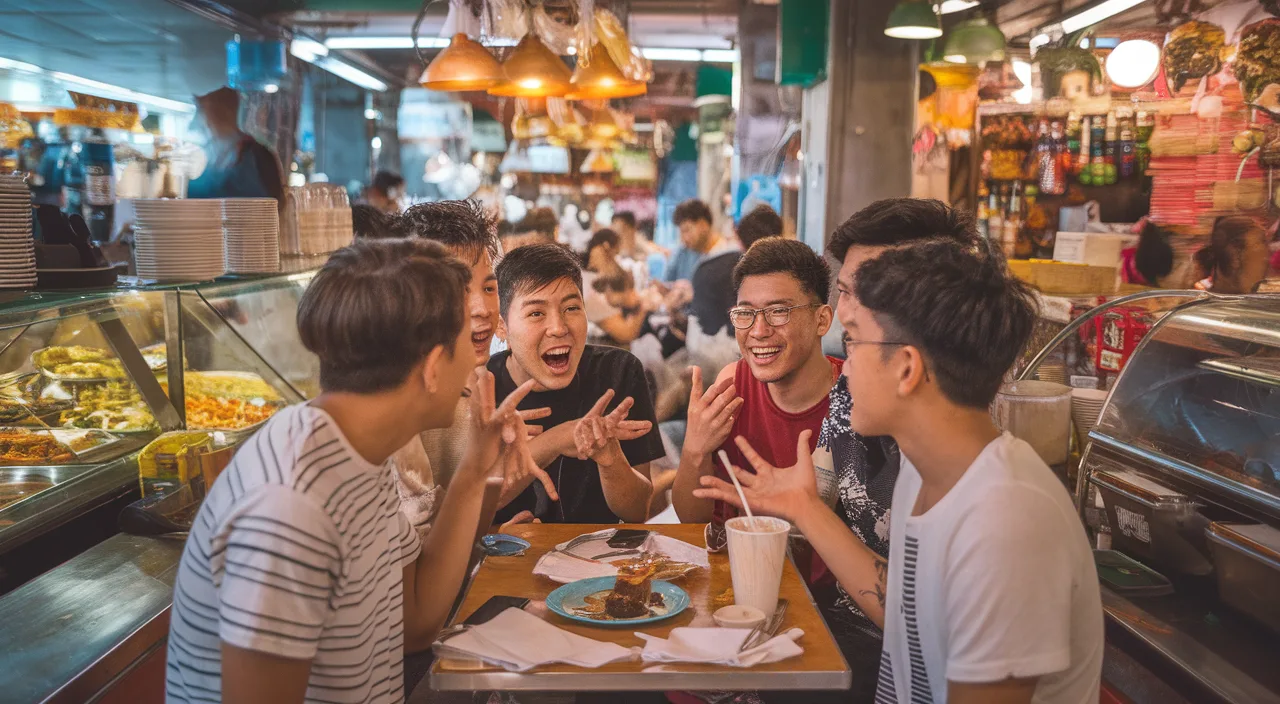
Singlish expressions aren’t just about slang — they’re a Who’s Who of local culture. This unique linguistic blend combines English, Malay, Hokkien, Cantonese, and Tamil into a cosy kopi-o mix. But out of all the dramatic phrases that slip into our daily conversations, “Isit” stands out for one juicy reason: it’s the Swiss Army knife of Singaporean expressions. It reacts, questions, annoys, and pokes fun, all at once.
Imagine these scenarios:
- Your colleague says they’re leaving the company — “Isit?”
- Your friend suddenly says she’s seeing her ex again — “Isit?”
- Your mother tells you she finished the kueh you hid in the fridge — “…Isit.”
Depending on tone, this single Singlish expression can convey pure disbelief, low-key judgment, or high-octane shade. The magic is in how you deliver it.
Unlocking the Drama: When to Drop a ‘Isit’
An ‘Isit’ delivers maximum dramatic impact when:
-

Chinese, Ladies, Mens, T-shirts
Price range: $30.00 through $38.00 Select options This product has multiple variants. The options may be chosen on the product page -

- You’re caught off-guard by a juicy revelation.
- Someone is obviously flexing, and you’re Not Having It™.
- You want to mock respectfully (but only slightly lah).
- It’s just Tuesday and you’re bored.
Example:
Friend: “I think my dog can sense ghosts.”
You: “…Isit.” (raise eyebrow for added flair)
This single-word reaction carries the weight of a thousand questions. It’s practically Singlish sarcasm in perfect packaging, making it one of the most versatile dramatic expressions in Singaporean culture.
Pro Tip:
Want to weaponize ‘Isit’ for dramatic flair? Master these variables:
- Pause: Add a beat before you say it. Dramatic tension FTW.
- Volume: Whisper it like you’re exposing a secret.
- Facial Expression: Deadpan or Channel 8-level exaggeration. Your choice.
Congrats. You’re now fluent in Passive-Aggressive Localese.
Enhancing Conversations with Dramatic Singlish Phrases
Besides ‘Isit’, there’s a whole arsenal of dramatic Singlish expressions that’ll take your Netflix-worthy reactions to Oscar level. Sprinkle these Singaporean phrases in your chats like seasoning on zi char.
- “Like real only.” – Translation: I don’t buy your BS.
- “Wah lao eh…” – For maximum frustration or disbelief.
- “Steady bom pi pi.” – Ultimate praise with a cheeky wink.
- “You think you who?” – Passive combat without throwing hands.
Each of these Singlish expressions enhances your emotional delivery. Pair them with ‘Isit’ and you’ve got drama levels worthy of a Channel 8 finale.
Embracing the Singaporean Culture through Language
‘Isit’ isn’t just about language mastery. It reflects our uniquely Singaporean way of expressing what we feel — without actually saying too much.
-
-
hashtag, KaoBeiKing, Quote, Singlish/Hokkien, T-shirts, Typography
Price range: $30.00 through $38.00 Select options This product has multiple variants. The options may be chosen on the product page

Growing up in Singapore means decoding these dramatic expressions instinctively. They’re like verbal kuehs — full of local flavour but with secret ingredients. You’re expected to know the tone, timing, and tension. No instruction manual, just vibes.
Fun Fact: ‘Isit’ used to blur generational lines. Your Ah Gong will say it. Your sec school students say it. Even your HR boss might say it (in Zoom calls, muted, but we saw their lips move).
Tips for Using ‘Isit’ and Other Dramatic Expressions
To drop an ‘Isit’ effectively, treat it like a mic drop moment in Singaporean conversations.
Checklist Before You Fire The ‘Isit’:
- Is the situation slightly ridiculous or suspicious?
- Will the other person get your tone, or will they take it personally?
- Are you ready to hold eye contact after the drop?
- Do you have a fast escape route (for safety)?
Besides ‘Isit’, also consider these tactical Singlish expressions:
- “Simi sai?” For full shock value.
- “Alamak.” When the drama is so strong, only this will do.
- “Bo jio.” Because FOMO deserves drama too.
Practice in front of a mirror or with your chicken rice seller. Same effect.
Taking Your Communication to the Next Level
Knowing how to use ‘Isit’ for maximum drama puts you on another level of Singaporean communication. You’re no longer just fluent in Singlish expressions — you’re expressive, cheeky, and culturally fluent.
Whether you’re responding to office gossip, reacting to a TikTok trend, or poking fun at your friend’s terrible dating choices, a well-timed ‘Isit’ can win you bonus tok kong points for cultural sass and dramatic flair.
So go forth, young padawan. Gossip with style. Question with spice. ‘Isit’ your way to greatness.
Final Thoughts
In a world where emojis and GIFs rule conversations, Singlish expressions like ‘Isit’ still remain undefeated in their ability to say so much with so little. The next time you hear something ridiculous, dramatic, or just plain fun, you know what to say — say it like you mean it.
“…Isit.”
Frequently Asked Questions
- Is ‘Isit’ always sarcastic?
Nope! It depends on tone. It can be genuine, sarcastic, surprised—or all three. - Can older Singaporeans use ‘Isit’ too?
Absolutely. ‘Isit’ bridges age gaps. Auntie or anak, all can use. - What’s the difference between ‘Isit’ and ‘Really?’?
‘Really?’ is just curious. ‘Isit’ carries flavour. It’s salted, spiced, roasted. - Is ‘Isit’ considered rude?
Only when said with obvious hostility. Otherwise, it’s cheeky fun. - Can I use ‘Isit’ in workplace settings?
Sure! But check your office culture first — dramatic Singlish not always HR approved. - Are there female vs male versions of ‘Isit’?
Nah. ‘Isit’ is beautifully unisex. And universally shady when needed. - What other words work like ‘Isit’?
Simi sai, Wah lau, and Like Real all come pretty close in dramatic zing.