

What is the Singaporean Slang ‘Cincai’ Really About?
The Singaporean slang ‘Cincai’ is a wonderfully versatile and deeply ingrained word in Singlish, primarily meaning “whatever,” “anyhow,” “doesn’t matter,” “随便 (suíbiàn)” in Hokkien/Mandarin, or “easy-going.” It expresses a sense of flexibility, nonchalance, or a lack of strong preference, often reflecting an adaptable and unfussy attitude.
TL;DR: The ‘Cincai’ Lowdown

You’ve heard it echoing through hawker centres, bouncing off office walls, and popping up in countless WhatsApp chats. ‘Cincai’ is one of those quintessential Singlish words that, once you get it, you’ll wonder how you ever lived without it. As a local cultural blogger, I’ve seen this word evolve and embed itself into our daily lives, shaping interactions in ways few other words can. It’s more than just a “whatever”; it’s a linguistic nod to our laid-back side, our practicality, and sometimes, our sheer inability to make a decision.
- Origin Story: Born from Hokkien and Teochew, it’s been marinated in local flavour over generations.
- Meaning Unpacked: It’s “anything goes,” “no preference,” or “just do it casually.” ‘Cincai meaning in Singlish’ is all about flexibility.
- Usage Scenarios: From food orders (“Just cincai lah, anything”) to task delegation (“Cincai do, no need perfect”), it’s everywhere.
- Cultural Insight: It reflects a pragmatic, sometimes agreeable, sometimes passive attitude that’s deeply woven into the ‘Cincai culture in Singapore’.
- Misunderstandings: ‘Cincai’ isn’t always lazy or uncaring. It can convey trust or a lack of fuss, but context is king!
- Comparing Slangs: It’s different from ‘Chope’ (reserving a seat) and ‘Chill’ (relaxing). We’ll dive into ‘Cincai vs. Chope’ and ‘Cincai vs. chill’.
- Benefits: It smooths over social interactions, promotes adaptability, and adds a unique local flavour to ‘Cincai in daily conversations’.
So, whether you’re a young professional navigating office politics or a Gen Z trying to sound extra authentic, understanding ‘Cincai’ is your next linguistic unlock. Let’s peel back the layers of this fascinating ‘Singaporean Slang ‘Cincai’’ and see why it’s so much more than just “whatever.”
The Genesis of Cincai
Every iconic Singlish word has a story, a linguistic lineage that traces back through the vibrant tapestry of Singapore’s multicultural past. ‘Cincai’ is no exception. It’s a word that didn’t just appear; it simmered, stewed, and finally emerged as a staple in our local lexicon. For anyone curious about ‘Origins of Cincai’, you’re looking at a fascinating journey of linguistic evolution, heavily influenced by the Hokkien and Teochew dialects, which are significant cornerstones of Singapore’s Chinese community.
A Glimpse into its Linguistic Roots
Growing up, I remember my grandma – a true blue Peranakan with a knack for colourful expressions – using “cincai” all the time. She’d say it with a shrug, often with a hint of good-natured resignation or playful indifference. The word itself, ‘随便’ (suíbiàn) in Mandarin, or ‘chhin-chhá’ in Hokkien, literally means “at will” or “as one pleases.” These dialectal roots are crucial to understanding ‘what is Cincai in Singlish’ today. Singapore’s linguistic landscape is a rich ‘rojak’ of Malay, English, Hokkien, Teochew, Cantonese, and Tamil, all blending to form Singlish. ‘Cincai’ is a prime example of this beautiful, organic fusion.
-
 $25.00 Select options This product has multiple variants. The options may be chosen on the product page
 -
KaoBeiKing, Quote, Singlish/Hokkien, T-shirts, Typography
Price range: $30.00 through $38.00 Select options This product has multiple variants. The options may be chosen on the product page


It’s not just about the direct translation; it’s about the spirit it carries. My grandma, like many of our elders, used it to convey a certain adaptability – a “don’t make a fuss, just get it done” mentality that was common in harder times. It was a practical word for practical people, embodying a willingness to go with the flow, to not be overly demanding. This historical context is vital; it’s not born out of laziness but often out of pragmatism and resourcefulness.
When you ask about ‘Origins of Cincai’, you’re essentially asking about the resilience and adaptability of our early settlers. They weren’t always in a position to be picky, so “cincai” became a quick, effective way to communicate flexibility and acceptance of what was available.
The Evolution of “Cincai” in Singlish
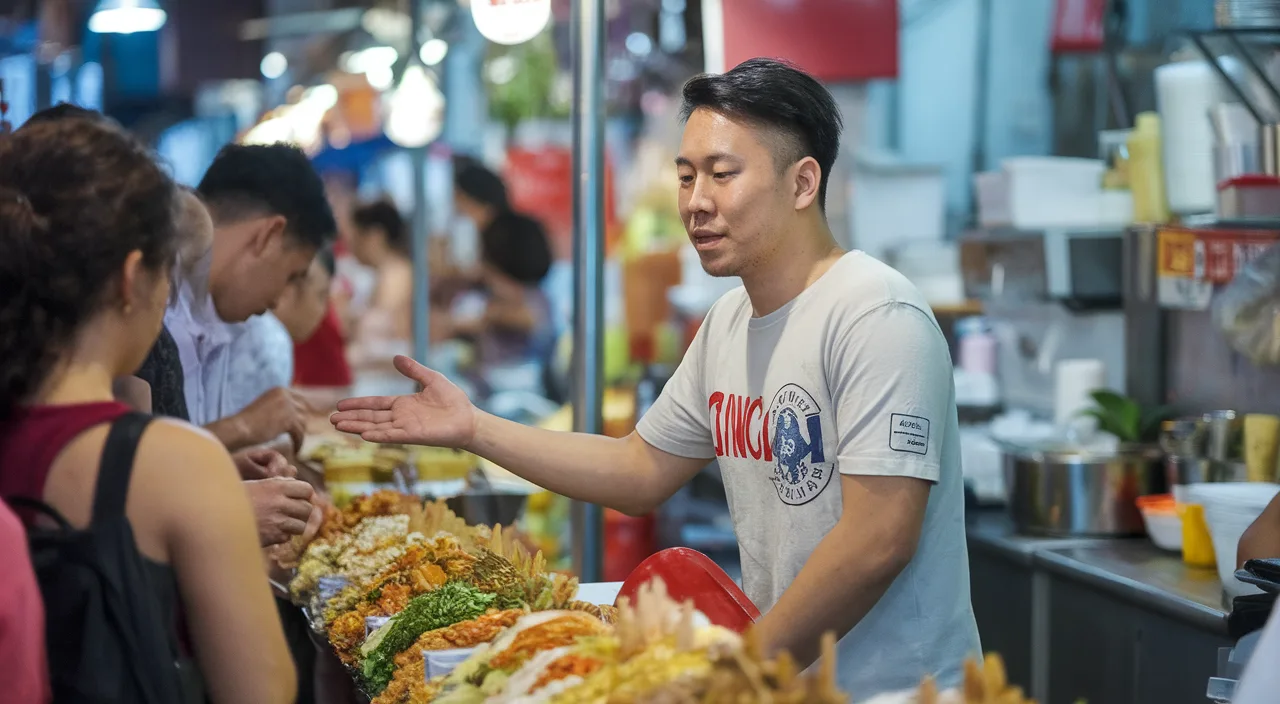
Over the decades, as Singapore modernised and Singlish solidified its place as our unofficial national language, ‘cincai’ didn’t just survive; it thrived. It morphed slightly in its usage and tone, gaining new layers of meaning relevant to contemporary Singaporean life. While its core meaning of “whatever” or “anyhow” remained, it expanded to encompass a broader spectrum of easy-going attitudes. In the bustling markets of my childhood, “Cincai” might be uttered by a hawker rushing an order, meaning “just put anything.” In a school setting, it could be a friend saying, “Cincai do the project, no need stress.”
This evolution highlights a core aspect of ‘Singaporean Slang ‘Cincai’’: its incredible adaptability. It’s a word that has flowed seamlessly from one generation to the next, taking on new shades while retaining its fundamental essence. It’s a testament to how language lives, breathes, and changes with its people, always reflecting the prevailing culture and social dynamics. This organic growth is what makes Singlish so vibrant and ‘cincai’ such an integral, irreplaceable part of it. It’s not just a word; it’s a historical echo, a cultural signpost, and a daily utterance all rolled into one.
Unraveling the Meaning of Cincai
So, we’ve talked about where ‘cincai’ came from, but now let’s really dig into ‘What is Cincai in Singlish’ in its full, glorious complexity. It’s a word that can be as simple as “whatever,” yet carry the weight of a cultural philosophy. Understanding its nuances is key to mastering Singlish and truly grasping the ‘Cincai culture in Singapore’.
What “Cincai” Truly Implies
At its heart, ‘cincai’ is an expression of flexibility, a readiness to adapt, and a lack of strong preference. When someone says, “Eat what? Cincai lah,” they’re not being difficult or disinterested. They’re saying, “I’m open to anything, surprise me, whatever you prefer is fine by me.” It implies trust in the other person’s choice or a general easy-going nature. It’s like the linguistic equivalent of a warm, familiar hug – “don’t worry about it, I’m cool.”
In practice, you’ll notice ‘cincai’ often appears when decisions are minor, when the stakes are low, or when someone genuinely doesn’t want to impose their will. It’s a social lubricant, often used to avoid unnecessary fuss or conflict. Think about it: if everyone has a strong opinion on everything, Singaporean gatherings would be even louder than usual! ‘Cincai’ allows for harmonious compromise, a gentle yielding in the face of multiple options.
It can also be used to describe a certain approach to a task, as in “Cincai do” meaning to do something casually or without excessive precision. This isn’t necessarily a negative – sometimes, “good enough” is indeed good enough, especially in less critical situations where perfection is neither required nor efficient. It’s about understanding the ‘cincai meaning in Singlish’ within its situational context.
-
KaoBeiKing, Quote, Singlish/Hokkien, T-shirts, Typography
Price range: $30.00 through $38.00 Select options This product has multiple variants. The options may be chosen on the product page -


The Nuances of Cincai’s Tone
This is where ‘cincai’ gets really interesting. Its tone is incredibly fluid and context-dependent. It can be:
- Relaxed and Easy-going: “Holiday where? Cincai, as long as got beach.” (Relaxed, agreeable)
- Indifferent or Unconcerned: “What project? Oh, cincai lah, not important.” (Can be perceived as dismissive, but sometimes genuinely means “it’s not a big deal.”)
- Trusting: “Order for me cincai, you know my taste.” (Trusts the other person’s judgment)
- Impatient or Annoyed (less common, but possible): When repeated questions become tiresome, a sharp “Cincai lah!” can imply “Just pick something, I don’t care!”
- Modest or Unassuming: “My drawing? Oh, cincai draw one.” (Downplaying effort or skill)
The speaker’s facial expression, body language, and vocal inflection are critical. A ‘cincai’ with a smile and a shrug is vastly different from one barked out with a scowl. As a young professional, I once had a colleague tell me to “cincai submit” a report. My initial thought was, “Does he want me to slack off?” But seeing his relaxed grin, I understood he meant “just get it done, don’t overthink the formatting.” It was a lesson in understanding the ‘cincai in daily conversations’ requires tuning into the “how” as much as the “what.”
Common Misunderstandings and When Not to Use It
Here’s what often happens: newcomers to Singlish, or even locals who haven’t fully internalised the subtle cues, might misinterpret ‘cincai’ as pure laziness or disrespect. If someone asks you to “cincai do” an important task – say, drafting a proposal for a major client – and you actually “cincai” it, you might find yourself in hot water. The nuance is that ‘cincai’ applies to situations where a casual approach is *acceptable*, not when quality or precision is paramount.
You definitely don’t want to be “cincai” when it comes to things like:
- Medical advice: “My doctor cincai prescribe medicine.” (Definitely not!)
- Serious commitments: “Marriage? Oh, cincai lah, later divorce.” (Absolutely not!)
- Professional deadlines for critical projects: “Project report? Cincai submit.” (Unless your boss is exceptionally laid-back, avoid this.)
- Safety protocols: “Safety checks? Cincai do.” (This is a recipe for disaster.)
The key is discernment. ‘Cincai’ thrives in informal settings, among friends, family, or trusted colleagues where an understanding of its flexibility is shared. When in doubt, especially in formal or high-stakes situations, it’s always safer to be explicit than to be “cincai.” It’s a wonderful word, but like all powerful tools, it must be used wisely to truly ‘benefit from using Cincai in Singapore’.
How to Incorporate Cincai in Your Everyday Conversations
Now that we’ve explored the origins and intricate meanings of ‘cincai’, it’s time for the fun part: learning ‘how to use Cincai in a sentence’ like a true blue Singaporean. This isn’t just about memorising phrases; it’s about internalising the spirit of the word so it rolls off your tongue naturally. Mastering ‘cincai in daily conversations’ will not only make you sound more local but also help you navigate social interactions with an authentic Singaporean charm.
Scenarios Where “Cincai” Shines
Imagine yourself in these classic Singaporean situations – this is where ‘cincai’ truly comes alive:
1. Ordering Food at a Hawker Centre:
- Friend: “What you wanna eat?”
- You: “Cincai lah, anything. As long as got rice.”
(Meaning: I’m not picky, I’ll eat whatever, just make sure it’s a rice dish.)
2. Planning a Hangout:
- Friend: “Movie or KTV tonight?”
- You: “Cincai, up to you. Both also good.”
(Meaning: I don’t have a strong preference, I’m happy with either option.)
3. Delegating a Minor Task:
- Colleague: “How should I format this simple internal memo?”
- You: “Cincai format, just make sure the info is clear.”
(Meaning: Don’t overthink the aesthetics, just get the core message across.)
4. Receiving a Compliment (with modesty):
- Friend: “Wah, your drawing so nice!”
- You: “Nah, cincai draw one only.”
(Meaning: Oh, it’s nothing special, I just did it casually. – A humble deflection.)
5. Expressing Trust in Someone Else’s Choice:
- Partner: “Which colour curtains should we get?”
- You: “Cincai, you choose lah. I trust your taste.”
(Meaning: I’m giving you full autonomy, I know you’ll make a good decision.)
These scenarios highlight how ‘cincai’ can facilitate smooth interactions, reduce decision fatigue, and express a genuine, amiable disposition. It’s an excellent tool for demonstrating your adaptability and making others feel comfortable, reinforcing the positive aspects of ‘Cincai culture in Singapore’.
Crafting Your “Cincai” Responses
The beauty of ‘cincai’ lies in its versatility. You can pair it with various particles to adjust its intensity and nuance. Here are a few ways to craft your ‘cincai’ responses:
- “Cincai lah”: The most common form, adds a softening, almost pleading or casual tone. (“Eat where? Cincai lah.”)
- “Cincai only”: Emphasises the “just casually” aspect, often used for modesty. (“Don’t praise me, cincai only.”)
- “Cincai can”: A direct affirmation of flexibility. (“Any time also cincai can.”)
- “Cincai you do”: Explicitly passes the decision or method to the other person. (“How to arrange this? Cincai you do, I trust.”)
Remember, the “lah” particle is your best friend when trying to sound authentic. It adds a local flavour and softens the statement, making it sound less abrupt. When you say “cincai lah,” it often comes across as more amiable than a blunt “cincai.” This is how ‘Cincai in daily conversations’ truly takes shape – with the right linguistic trimmings.
The Benefits of Using Cincai in Singapore
Beyond just sounding local, there are genuine ‘benefits of using Cincai in Singapore’ that contribute to smoother social dynamics and a more relaxed atmosphere:
- Reduces Decision Fatigue: In a world filled with endless choices, ‘cincai’ offers a polite way to cede decision-making, especially for trivial matters. It allows you to conserve mental energy for more important choices.
- Fosters Amiability: By showing you’re easy-going and not demanding, you come across as a more agreeable and approachable person. This helps build rapport in social and even professional settings.
- Promotes Adaptability: ‘Cincai’ is an ode to our collective ability to adapt – to new situations, unexpected changes, or simply going with the flow. It’s a recognition that not everything needs to be perfectly planned or executed.
- Strengthens Local Identity: Using ‘cincai’ authentically is a subtle yet powerful way to connect with fellow Singaporeans. It’s a shared linguistic secret, a cultural handshake that signals you’re part of the gang. For Gen Z and young professionals, it’s a badge of local cultural fluency.
- Avoids Conflict: Sometimes, expressing a strong preference can inadvertently lead to minor disagreements. ‘Cincai’ offers a graceful exit from potential friction, ensuring harmony prevails, which is highly valued in our collectivistic society.
It’s this blend of practicality and social grace that makes ‘cincai’ such a powerful word. It’s not just about “whatever”; it’s about “whatever works, let’s keep things smooth.”
Cincai vs. Chope: Deciphering the Differences
Singlish is a treasure trove of colourful expressions, and sometimes, two words might *seem* similar in their casual nature but carry vastly different meanings and cultural implications. Two such stalwarts are ‘cincai’ and ‘chope’. While both are instantly recognisable to any Singaporean, getting ‘Cincai vs. Chope’ right is crucial to avoid social gaffes. And let’s not forget another common comparison: ‘Cincai vs. Chill’.
“Cincai” vs. “Chope”: A Tale of Two Slangs
Alright, let’s clear the air. These two words, while equally integral to ‘Singaporean Slang ‘Cincai’’ and ‘Singaporean Slang ‘Chope’’ respectively, operate on completely different planes.
- Cincai (Meaning: Flexible, whatever, anyhow, no preference): As we’ve established, ‘cincai’ is about an easy-going attitude, a willingness to adapt, or a lack of strong opinion. It’s about “I don’t mind.”
- Chope (Meaning: To reserve a seat or spot): ‘Chope’, on the other hand, is about claiming something. It’s the act of reserving a table at a crowded hawker centre with a packet of tissues, a student card, or even a water bottle. It’s a uniquely Singaporean – and sometimes controversial – practice, especially during peak hours.
Example of ‘Chope’ in action:
- You: “Eh, go get food, I go chope table first.”
(Meaning: You go order, I’ll find and reserve a table for us.)
The core difference lies in agency. ‘Cincai’ gives agency away (“You decide, I’m flexible”), while ‘chope’ asserts agency (“This spot is mine!”). You can’t “cincai a seat” because that would imply you don’t care where you sit, not that you’re reserving it. Conversely, you wouldn’t “chope what to eat” if you’re open to anything; you’d say “cincai eat.” Understanding ‘Cincai vs. Chope’ is fundamental to navigating Singaporean social etiquette, especially around meal times!
Cincai vs. Chill: Understanding the Vibe
Another common comparison, especially among Gen Z, is ‘Cincai vs. chill’. While both convey a relaxed attitude, they are not interchangeable.
- Cincai: Focuses on flexibility, lack of preference, or an unrefined approach to a task. It’s about “whatever works.”
- Chill: Refers to a state of being relaxed, calm, or unwound. It’s about “relaxing.”
Example:
- Friend A: “We got no plans for Friday night, what to do?”
- Friend B (Cincai): “Cincai lah, movie also can, stay home also can.”
(Meaning: I’m flexible, no strong preference for the activity.) - Friend C (Chill): “I just want to chill at home tonight, too tired to go out.”
(Meaning: I want to relax and do nothing strenuous at home.)
You can be “cincai” about an activity, meaning you’re open to any suggestions, but you might not necessarily be “chilling” while doing it (e.g., “cincai work” doesn&t mean you’re relaxing while working, it means you’re doing the work casually). Conversely, you can “chill” at home, but that doesn’t mean you’re “cincai” about your plans for the evening – your plan *is* to chill. The distinction highlights the precision within Singlish, even with its seemingly casual vocabulary. ‘Cincai’ addresses the *approach* or *preference*, whereas ‘chill’ describes the *state* or *activity* itself.
The Influence of Cincai Culture in Singapore
‘Cincai’ is more than just a word; it’s a concept, a silent agreement, and a pervasive ‘Cincai culture in Singapore’ that shapes our daily interactions, attitudes, and even our collective identity. As a local cultural blogger, I’ve observed how this simple term encapsulates so much about the Singaporean spirit – our pragmatism, our adaptability, and our unique approach to life’s challenges and choices. It’s a phenomenon that resonates deeply, especially among Gen Z and young professionals who navigate a fast-paced world while trying to hold onto their roots.
“Cincai” Beyond Just a Word: A Lifestyle
The ‘Cincai culture in Singapore’ isn’t about being lazy or unmotivated; it’s about cultivating an easy-going mindset. It’s the philosophy of “don’t sweat the small stuff,” a tacit understanding that sometimes, things don’t need to be perfect to be good. This attitude is palpable in many aspects of Singaporean life:
- Food Scene: Our hawker culture thrives on “cincai” – you often just point, nod, and trust the hawker to serve you something delicious without a lengthy customisation order. It’s about simplicity and efficiency.
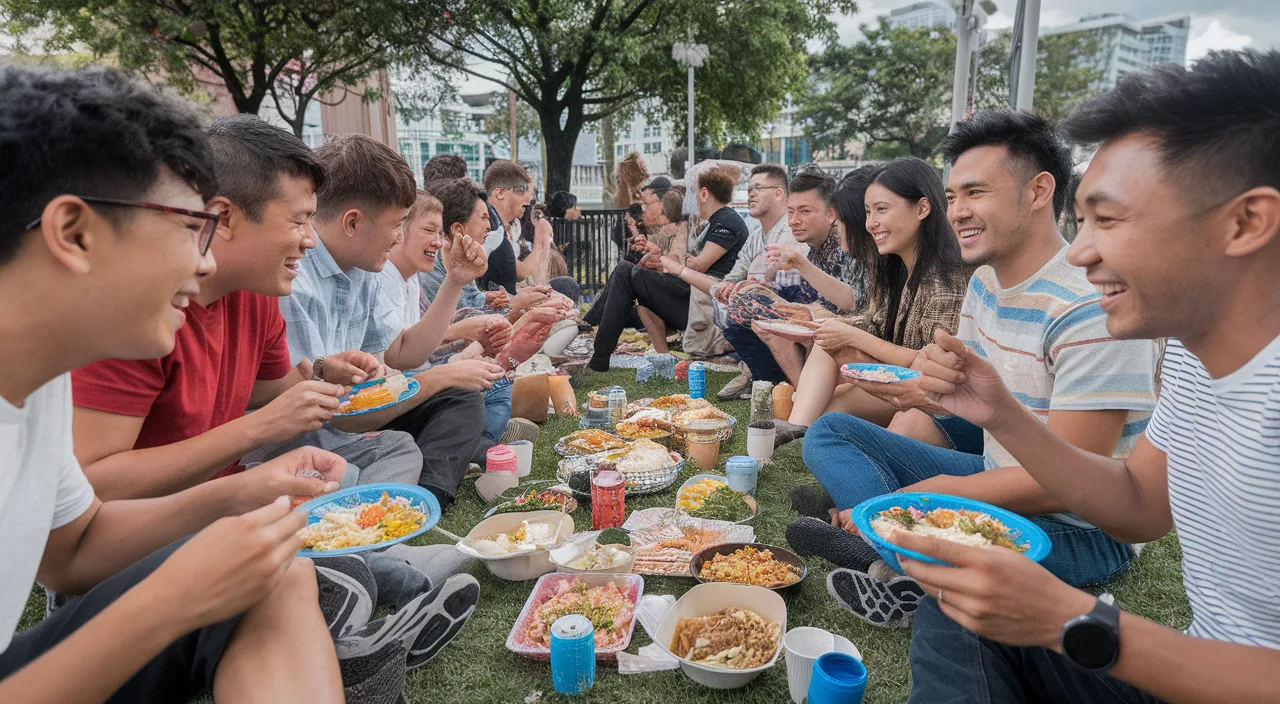
- Social Gatherings: When friends meet up, the perennial question of “where to go?” is often met with “cincai lah, anywhere also can.” This reduces friction and allows for spontaneous plans, embodying the flexibility that defines our social fabric.
- Workplace Dynamics (in informal settings): While professionalism is key, ‘cincai’ can sometimes ease informal tasks or foster a relaxed team environment. A “cincai do” for a non-critical internal task signals trust and reduces unnecessary pressure.
- Fashion & Style: Many Singaporeans, especially Gen Z, embrace a “cincai” style – comfortable, practical, and not overly fussy. It’s about looking good without trying too hard.
This isn’t a sign of apathy; it’s a reflection of our collective ability to adapt and find comfort in imperfection. It’s recognising that while striving for excellence is important, sometimes a “good enough” approach is more sustainable and less stressful. This mental agility is a cornerstone of ‘Benefits of using Cincai in Singapore’, allowing us to navigate the complexities of modern life with a lighter touch.
Personal Reflections on a “Cincai” Life
As a blogger who has lived and breathed Singaporean culture, ‘cincai’ has been a quiet constant in my life. I remember a particularly stressful period during university, juggling assignments and part-time work. My best friend, seeing me on the verge of a breakdown, just looked at me and said, “Eh, cincai lah. Just do your best, if not enough then not enough. Don’t kill yourself.” It wasn’t an endorsement of failure, but a gentle reminder to release the pressure, to accept that sometimes, a “good enough” effort is all you can give, and that’s perfectly fine.
That moment encapsulated the supportive, understanding side of ‘cincai’ culture. It taught me that sometimes, the most productive thing you can do is to step back, take a breath, and approach things with a slightly less rigid mindset. It’s about understanding priorities and knowing when to deploy that easy-going attitude. It’s about trusting that things will generally work out, even if they’re not meticulously planned down to the last detail. This perspective is invaluable for young professionals, often caught in the rat race, reminding them to find balance and not over-optimise every single aspect of life.
Embracing the Spirit of Adaptability
Ultimately, ‘Singaporean Slang ‘Cincai’’ is a testament to the nation’s spirit of adaptability. In a country that has rapidly transformed, we’ve learned to be flexible, to pivot, and to find solutions on the fly. ‘Cincai’ is the linguistic embodiment of this resilience. It’s about navigating an unpredictable world with a calm demeanor, acknowledging that not every variable can be controlled, and being okay with that.
For Gen Z and young professionals, embracing ‘cincai’ means understanding when to be precise and when to let go. It’s about mastering the art of the “good enough” in situations where perfection is the enemy of progress. It’s about fostering better social connections by showing you’re not high-maintenance. It’s about infusing your daily conversations with a touch of authentic local flavour, making you feel more connected to the vibrant pulse of Singapore. So, go forth, speak ‘cincai’ wisely, and truly immerse yourself in the rich tapestry of Singaporean culture. You’ll find that a little ‘cincai’ goes a long way in making life, and conversations, a whole lot smoother.
Final Thoughts
And there you have it, folks – the full download on ‘Singaporean Slang ‘Cincai’’! From its humble Hokkien beginnings to its pervasive presence in our daily chats, ‘cincai’ is truly a word that punches above its weight. It’s more than just an expression of “whatever”; it’s a window into the Singaporean soul, reflecting our adaptability, our pragmatism, and our unique approach to life’s many choices. For Singaporean Gen Z and young professionals, mastering ‘cincai’ isn’t just about sounding cool; it’s about truly understanding a fundamental aspect of our local language and culture. It’s a skill that will help you navigate everything from hawker centre orders to informal workplace discussions, always with a touch of authentic Singaporean charm. So next time you’re faced with a minor decision, or you just want to convey an easy-going vibe, don‘t be afraid to pull out a well-placed “cincai lah.” You’ll be speaking the language of our shared experience, one wonderfully flexible word at a time.
FAQ
What does Cincai mean in Singlish?
In Singlish, ‘Cincai’ primarily means “whatever,” “anyhow,” “doesn’t matter,” “easy-going,” or “no strong preference.” It conveys a sense of flexibility and adaptability, suggesting that the speaker is open to various options or that a casual approach is acceptable for a given task.
What are the origins of the word Cincai?
The word ‘Cincai’ originates from Chinese dialects, particularly Hokkien (‘chhin-chhá’) and Teochew, which both mean “at will” or “as one pleases” (similar to Mandarin ‘随便’ or suíbiàn). It became integrated into Singlish through the strong influence of these dialects among early Singaporean settlers.
How can I use Cincai appropriately in a sentence?
‘Cincai’ is best used in informal contexts. For example, when choosing food: “Eat what? Cincai lah, anything also can.” Or when expressing flexibility about plans: “Tonight go where? Cincai, up to you.” For tasks, “Cincai do, don’t need so perfect” implies a relaxed standard.
Is Cincai rude or lazy?
Not usually. While it can sometimes be interpreted as indifferent or lazy if used inappropriately, in most contexts, ‘Cincai’ expresses amiability, adaptability, and trust. The tone and context are crucial. It’s generally not rude when used for minor decisions or to convey an easy-going nature among friends and colleagues.
What’s the difference between Cincai and Chope?
‘Cincai’ means “whatever” or “no preference,” indicating flexibility. ‘Chope’ means “to reserve” a spot, typically a table at a hawker centre, often using a packet of tissues. They are distinct in meaning: ‘Cincai’ gives up choice, ‘Chope’ claims a spot.
Can Cincai be used in a professional setting?
In formal professional settings, it’s generally best to avoid ‘Cincai’ as it might convey a lack of seriousness or attention to detail. However, in informal workplace interactions among trusted colleagues, especially for minor tasks or scheduling, it can be used to show adaptability or an easy-going attitude, e.g., “Meeting time? Cincai, I’m free anytime.”
What are the cultural benefits of using Cincai in Singapore?
The ‘Cincai culture in Singapore’ promotes social harmony by reducing decision-making friction, fosters adaptability in a fast-paced environment, and builds rapport by signaling an easy-going and agreeable personality. It’s a way to connect with local identity and navigate daily life with a less stressful, more flexible mindset.