
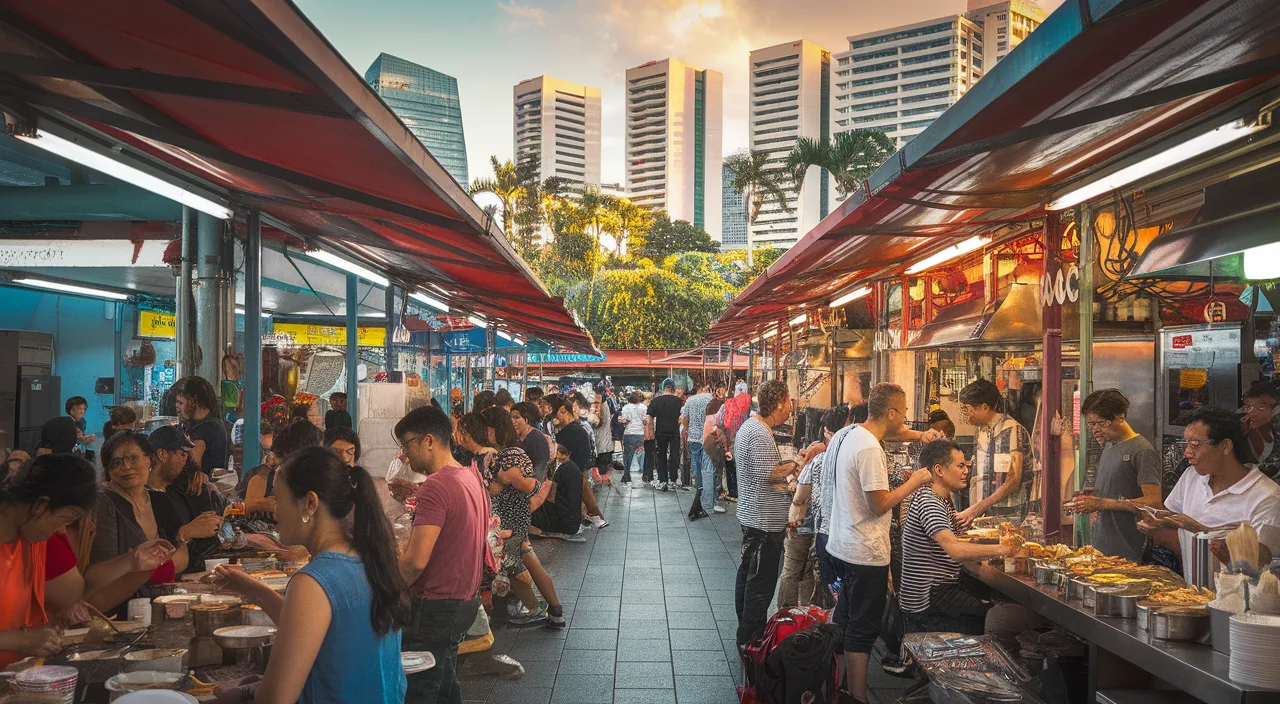
What Makes Singlish Phrases So Uniquely Singaporean, Lah?
Singlish phrases are the vibrant, dynamic heart of Singaporean communication, a unique blend of English, Malay, Hokkien, Cantonese, Tamil, and more, reflecting our island’s rich multicultural tapestry and historical journey. They are far more than just “broken English”; they are a deeply embedded cultural code that conveys nuance, emotion, and shared understanding in a way standard English simply cannot. From expressing delight with “shiok” to adding emphasis with “lah,” Singlish embodies our collective experiences, our quirks, and our unwavering sense of identity.
-

Brand, hokkien, Parody, Romper, singlish, Typography
$25.00 Select options This product has multiple variants. The options may be chosen on the product page

TL;DR: The Lowdown on Singlish, Lor!
For my fellow Singaporean Gen Z and young professionals, you know lahor not, Singlish isn’t just some archaic dialect our aunties and uncles speak. It’s living, breathing proof of our unique heritage, a linguistic superpower that instantly signals “I’m one of us!” But beyond the casual banter, there’s a whole universe of history and heart behind every “can lah,” “siao eh,” and “bojio.” This article dives deep into:
- The fascinating origins of Singlish, tracing its evolution through time.
- Why Singlish holds such profound cultural significance in our daily lives.
- A practical guide to common Singlish phrases, understanding their meaning, tone, and when to use them without sounding like a blur sotong.
- How Singlish shapes our Singaporean identity, binding us together across generations and backgrounds.
- The importance of preserving this linguistic treasure for our future.
So, whether you’re trying to impress your makan kakis, understand your grandma’s wisdom, or just want to feel more connected to home, let’s embark on this linguistic adventure. Because to truly understand Singapore, you need to understand Singlish.
The History of Singlish: From Origins to Evolution
Ah, the story of Singlish! It’s as layered and complex as our famous laksa. To talk about Singlish phrases without diving into their origins would be like eating chicken rice without the chilli – simply incomplete. The roots of Singlish stretch back to our colonial past, a fascinating linguistic melting pot that simmered and brewed over generations. When the British arrived, English became the administrative language, but it met a vibrant confluence of Malay, Hokkien, Cantonese, Teochew, Tamil, and various Indian languages already spoken by the diverse immigrant communities.
Here’s what often happens: when people from different linguistic backgrounds need to communicate quickly and effectively, a creole or pidgin language starts to form. This was the birth of Singlish. It wasn’t planned; it was organic, pragmatic, and utterly necessary. Early Singlish wasn’t a formal language; it was a street language, a lingua franca that allowed hawkers to sell, neighbours to chat, and children to play across ethnic lines.
-
-
Chinese, Chinese New Year, Ladies, Mens, T-shirts
Price range: $35.00 through $43.00 Select options This product has multiple variants. The options may be chosen on the product page


The evolution of Singlish in modern Singapore has been a dynamic journey. Post-independence, with nation-building efforts focusing on English as the main language of education and commerce, Singlish often faced a tricky position. It was sometimes seen as a hindrance to English proficiency, but ironically, it never stopped evolving. It adapted, absorbed new influences, and solidified its place in our collective consciousness. You’ll notice how new Singlish phrases pop up, often from current trends or even internet memes, showing its incredible adaptability. From the early days of simple grammatical structures borrowed from our mother tongues to the sophisticated nuances we use today, Singlish has always been a testament to our ability to innovate and integrate. It’s a language that mirrors our nation’s journey – constantly changing, yet always distinctly us.
In practice, you’ll find that Singlish isn’t static. It continues to be shaped by global influences, yet always retains that unmistakable Singaporean flavour. The beauty of its origins lies in its inclusivity; it’s a language built by everyone, for everyone who calls this island home. Understanding these origins helps us appreciate why Singlish phrases aren’t just random words, but echoes of our shared history and the unique circumstances that forged our identity.
Cultural Significance: Why Singlish Matters
Now, let’s get to the heart of the matter: the cultural significance of Singlish. Why do we cling to it so fiercely, despite the occasional ‘speak proper English’ lecture? Because Singlish phrases are the invisible threads that weave together the tapestry of our shared culture. They are the linguistic glue that binds us, creating an instant connection and a sense of belonging that transcends race, religion, or social status.
How Singlish reflects Singaporean diversity is truly remarkable. Think about it: a single Singlish phrase often carries echoes of Malay politeness, Hokkien pragmatism, Tamil expressiveness, and Chinese familial bonds. When you hear “lah,” “meh,” “lor,” “hor,” “mah,” or “leh” appended to a sentence, it’s not just a filler; it’s an entire universe of context, emotion, and subtle communication being conveyed. “Lah” can soften a command, express exasperation, or add friendly emphasis. “Lor” implies obviousness. “Hor” asks for confirmation. These particles are like emotional shortcuts, allowing us to communicate complex feelings with surprising efficiency.
In a society as multicultural as Singapore, Singlish serves as a common denominator. It’s the language of the hawker centre, the neighbourhood kopi tiam, the family gathering, and the late-night heart-to-heart with your best mates. When a Singaporean speaks Singlish, it’s an immediate signal of shared experience, a nod to collective understanding. It’s how we navigate unspoken social cues and express a nuanced spectrum of emotions that often get lost in standard English.
This linguistic camaraderie fosters social cohesion. When you hear someone drop a “bochup” or a “siao eh,” there’s an immediate recognition, a chuckle, a knowing look. It’s like being part of an exclusive club, even though practically every Singaporean is a member. The cultural significance of Singlish extends beyond mere communication; it reinforces our unique identity in a globalized world, providing a distinct voice that sets us apart while simultaneously bringing us closer together as a community. It’s not just about what we say, but how we say it, and what that ‘how’ reveals about who we are.
Common Singlish Phrases Explained: Your Pocket Guide to Everyday Speak
Alright, time for the fun part! Let’s dive into some iconic Singlish phrases that you’ll hear and use in everyday conversations. This isn’t just a list; it’s a guide to understanding the very soul of Singaporean communication style. The significance of Singlish in everyday conversations lies in its ability to add layers of meaning that simple English often misses.
-
Food, KaoBeiKing, Malay, Parody, Singlish/Hokkien, T-shirts, Typography
Price range: $30.00 through $43.00 Select options This product has multiple variants. The options may be chosen on the product page -
KaoBeiKing, Quote, Singlish/Hokkien, T-shirts, Typography
Price range: $30.00 through $38.00 Select options This product has multiple variants. The options may be chosen on the product page


1. Shiok (Pronounced: Shee-ork)
- Meaning: Fantastic, great, wonderful, delicious, satisfying, pleasurable. An exclamation of ultimate contentment.
- Tone: Enthusiastic, blissful, deeply appreciative. It’s almost always positive.
- Usage: “That chilli crab was so shiok!” “After a long day, a cold beer is truly shiok.”
- Situations: Eating amazing food, feeling refreshed, experiencing something incredibly good, a perfect moment.
- Misunderstandings: Non-Singaporeans might miss the sheer depth of satisfaction conveyed. It’s stronger than just “nice.” It’s an internal feeling exploding outwards.
- Variations: Sometimes used with an extended ‘o’ for extra emphasis: “Shiiiioook!”
- Responses: “Confirm plus chop, shiok!” “Wah, you know good food, hor!”
2. Lah
- Meaning: A versatile particle with no direct English translation, used for emphasis, exasperation, affirmation, softening, or simply to make a sentence sound more natural.
- Tone: Highly context-dependent. Can be friendly, urgent, dismissive, playful, or explanatory.
- Usage:
- Affirmation: “Can lah!” (Of course, it can!)
- Emphasis: “Eat your food lah!” (Come on, eat your food!)
- Softening: “Just take it lah.” (Please just take it.)
- Exasperation: “Aiyah, what to do lah?” (Oh dear, what can be done?)
- Situations: Ubiquitous in almost any casual conversation. Essential for sounding like a true local.
- Misunderstandings: Foreigners often overuse it or use it in the wrong context, making it sound forced or awkward. It’s about subtle nuance. It’s not a comma.
- Variations: Often combined with other particles like “lah hor,” “lah leh.”
- Responses: Depends on the context. If used for affirmation, a simple agreement. If for exasperation, a sympathetic nod.
3. Kiasu (Pronounced: Kee-ah-soo)
- Meaning: A Hokkien term literally meaning “fear of losing.” It describes a competitive, often opportunistic, and sometimes selfish behaviour driven by the desire to get the most or not be left out.
- Tone: Often humorous and self-deprecating when describing oneself, or critical/observational when describing others.
- Usage: “Everyone rushing for the freebie? So kiasu, lah!” “Must book early, otherwise confirm no seats, so better be kiasu.”
- Situations: Queuing for sales, grabbing free samples, competitive academic environments, vying for limited resources.
- Misunderstandings: Can be seen as purely negative by outsiders. While it has its downsides, it’s also a driver for efficiency and getting things done in a competitive environment. It’s a core trait, both celebrated and lamented.
- Variations: “Kiasuism” (the noun). Sometimes used ironically.
- Responses: “Cannot lah, if not kiasu then later lose out!” “True, true, Singaporeans very kiasu one.”
4. Makan (Pronounced: Mah-kahn)
- Meaning: The Malay word for “eat” or “food.” In Singlish, it’s widely used as a verb and a noun.
- Tone: Casual, friendly, often communal.
- Usage: “Let’s go makan!” (Let’s go eat!) “Where got good makan around here?” (Where is there good food?)
- Situations: Planning meals, inviting friends out for food, discussing dining options, describing a meal. It’s intertwined with Singapore’s food culture.
- Misunderstandings: Fairly straightforward, but non-Malay speakers might not realise its origin. Its integration into daily speech highlights our multicultural linguistic blend.
- Variations: “Makan kaki” (eating buddy), “makan time” (mealtime).
- Responses: “Jio me lah!” (Invite me!) “Confirm plus chop!”
These are just a few examples, but they illustrate how Singlish phrases are packed with cultural context and a particular way of seeing the world. They’re not just words; they’re little stories.
Impact of Singlish on Singaporean Identity: More Than Just Words
The impact of Singlish on Singaporean identity cannot be overstated. It’s not merely a convenient way to communicate; it’s a fundamental pillar of our collective self-perception. In a globalized world, where cultures can easily blur, Singlish acts as a powerful anchor, grounding us in our unique heritage.
For many of us, Singlish is the language of home, the sound of family, and the comfort of familiarity. It’s the language we use to complain about the weather, celebrate a good meal, or share a secret with a trusted friend. This deep emotional connection means that speaking Singlish isn’t just about uttering words; it’s about affirming who we are, where we come from, and our shared experiences.
You’ll notice that Singlish fosters a strong sense of belonging. When Singaporeans meet abroad, the moment one hears the other drop a “wah lao eh” or a “siao on,” an immediate bond forms. It’s an unspoken understanding, a recognition of shared cultural DNA. This powerful connection is vital for maintaining a cohesive national identity amidst our rich ethnic diversity. It allows us to communicate beyond the literal, understanding the nuances and unspoken contexts that only a fellow Singaporean would grasp.
Furthermore, Singlish offers us a distinct voice on the global stage. While proficiency in standard English is crucial for international engagement, our ability to switch to Singlish among ourselves provides a unique cultural identifier. It’s a linguistic badge of honour, signaling our Singaporean-ness to each other and to those curious enough to learn. It reflects our pragmatism, our humour, and our collective spirit. The nuances in Singlish phrases allow for levels of casualness, intimacy, and humour that standard English often struggles to capture without lengthy explanations. It’s efficient, expressive, and inherently Singaporean.
It’s important to acknowledge that this doesn’t diminish our command of English. Rather, it enriches our linguistic landscape, allowing us to code-switch seamlessly, adapting our communication to suit the context. The impact of Singlish on Singaporean identity is therefore one of enrichment, cohesion, and self-definition – a linguistic testament to our resilience and unique spirit.
Preserving Singlish for Future Generations: Our Linguistic Legacy
As a local cultural blogger, this is a topic very close to my heart. Preserving Singlish for future generations isn’t just about holding onto an old habit; it’s about safeguarding a vital part of our linguistic legacy and cultural heritage. In a rapidly evolving world, there’s always the concern that unique cultural elements might fade away, especially if they’re perceived as less ‘formal’ or ‘proper’.
However, we’ve seen a wonderful resurgence of pride in Singlish, particularly among younger Singaporeans. Our Gen Z and young professionals are embracing Singlish phrases, not just as casual slang, but as a legitimate and cherished expression of our identity. This is crucial. For any language or dialect to survive, it must be used, appreciated, and passed down. We need to encourage this appreciation, understanding that fluency in English and an appreciation for Singlish are not mutually exclusive. In fact, they can coexist beautifully, each serving its own purpose.
One way to ensure its preservation is to continue using it in appropriate contexts – with family, friends, and in cultural spaces. Share your favourite Singlish phrases with those who might be less familiar, explain the nuances, and celebrate its expressive power. Organisations and individuals are also doing fantastic work, from creating online Singlish dictionaries to producing creative works that incorporate Singlish, like local films, plays, and even music. These efforts help to document, validate, and popularize Singlish, making it accessible and relevant to younger generations.
Moreover, understanding the cultural and historical context of Singlish is key to its preservation. When we know why certain phrases exist and what they represent, we foster a deeper respect and connection to them. This article, hopefully, contributes to that understanding, showing that Singlish is a complex, rich, and meaningful part of our heritage.
Our linguistic legacy is a gift, a reflection of everything that makes us uniquely Singaporean. Let’s make sure that future generations can still say “shiok,” “lah,” and “bojio” with the same pride and understanding that we do today. Let’s not let our Singlish phrases become mere footnotes in history, but rather, keep them alive and thriving in the everyday conversations that define us.
Final Thoughts
So, there you have it, my fellow Singaporeans. Singlish is far more than just a collection of catchy phrases; it’s a living, breathing testament to our vibrant history, our rich multiculturalism, and our shared identity. From its pragmatic origins to its profound impact on how we connect and express ourselves, Singlish phrases encapsulate the very essence of what it means to be Singaporean. It’s our linguistic fingerprint, unique and irreplaceable. Let’s continue to embrace it, understand it, and pass it on, ensuring that the “so shiok, so powerful, so Singapore” spirit of Singlish continues to thrive for generations to come. Keep calm and speak Singlish, lah!
Frequently Asked Questions About Singlish Phrases
1. Is Singlish a real language?
Yes, Singlish is widely recognized as a distinct creole language that has evolved in Singapore, combining elements of English with Malay, Chinese dialects (Hokkien, Cantonese, Teochew), and Tamil. It possesses its own unique grammatical structures, vocabulary, and phonetic patterns, making it a fully functional and expressive linguistic system.
2. Should I use Singlish in formal settings?
Generally, it’s advisable to use standard English in formal settings such as business meetings, job interviews, or academic presentations. Singlish is best reserved for informal conversations with friends, family, and other Singaporeans where it fosters camaraderie and cultural connection. Knowing when to code-switch is a key aspect of communication in Singapore.
3. How can I learn more Singlish phrases?
The best way to learn Singlish phrases is through immersion! Listen to how locals speak in everyday situations, watch Singaporean TV shows or films, and engage in conversations with Singaporeans. There are also online dictionaries, YouTube channels, and cultural blogs (like this one!) dedicated to explaining Singlish nuances and usage.
4. Is Singlish ‘bad English’?
No, Singlish is not ‘bad English.’ It is a distinct language that coexists with standard English in Singapore. While it borrows heavily from English, it has developed its own rules and expressions. Viewing it as merely ‘bad English’ misunderstands its origins as a contact language and its role as a marker of Singaporean cultural identity.
5. Does using Singlish hinder English proficiency?
The relationship between Singlish and English proficiency is complex. While some argue that over-reliance on Singlish might affect mastery of standard English grammar and vocabulary, many Singaporeans are adept at code-switching – fluently navigating both languages depending on the context. The key is to be proficient in both and understand when to use each appropriately.
6. What are some unique grammatical features of Singlish?
Singlish has several unique grammatical features. For instance, it often omits ‘to be’ verbs (“He very smart”), uses topic-comment structures (“This food, very nice”), employs particles like ‘lah,’ ‘meh,’ ‘lor’ for emphasis or mood, and uses reduplication for intensification (“hot hot,” “sian sian”). It also uses specific loanwords integrated into its sentence structure.
7. Why is it important to preserve Singlish?
Preserving Singlish is important because it is a significant part of Singapore’s cultural heritage and national identity. It reflects our unique multicultural history, fosters a sense of belonging and community among Singaporeans, and provides a distinct voice in a globalized world. It’s a living testament to our linguistic creativity and resilience.