
What does ‘Tio stuck’ truly mean in Singlish?
Ah, ‘Tio stuck’ – one of those delightfully versatile Singlish phrases that manages to paint a picture with just two words. Simply put, ‘Tio stuck’ refers to being caught in a difficult, awkward, or undesirable situation, often inadvertently, and from which escape feels challenging or impossible.
-

Graphic, KaoBeiKing, T-shirts, Valentines
Price range: $30.00 through $38.00 Select options This product has multiple variants. The options may be chosen on the product page

TL;DR: Your Quick Guide to ‘Tio Stuck’ and Singlish
You know that feeling when you’re caught between a rock and a hard place? Or maybe you’ve been ambushed by an unexpected social dilemma? That, my friends, is prime ‘Tio stuck’ territory. This iconic Singaporean word isn’t just about literal physical entrapment; it’s a profound, often humorous, encapsulation of life’s little (and big) pickles.
- ‘Tio stuck’ means being in a tricky, awkward, or inescapable situation, usually due to circumstances or minor miscalculations.
- It’s versatile! Use it for traffic jams, social faux pas, work dilemmas, or even a video game boss you can’t defeat.
- The tone can range from lighthearted exasperation to genuine frustration, always with a touch of local resignation.
- Originating from Hokkien (‘tio’ meaning ‘to be hit by’ or ‘to encounter’) and English (‘stuck’), it perfectly blends our linguistic heritage.
- Understanding ‘Tio stuck’ is a gateway to appreciating the nuanced, witty, and deeply cultural way Singaporeans communicate, making it a must-know among popular Singlish phrases for Singaporean Gen Z and young professionals.
Understanding ‘Tio Stuck’: More Than Just a Phrase
When you hear a Singaporean sigh, shake their head, and mutter, “Heng ah, I tio stuck,” you know something’s gone sideways. It’s a phrase that carries the weight of a collective groan, a shared experience of life’s minor (and sometimes major) inconveniences. But what exactly makes ‘Tio stuck’ so… sticky?
Meaning: The Essence of Being Caught
At its core, ‘Tio stuck’ means ‘to be caught in a difficult situation’ or ‘to be trapped.’ The word ‘tio’ comes from Hokkien, meaning ‘to be hit by,’ ‘to encounter,’ or ‘to suffer from.’ When combined with the English ‘stuck,’ it creates a vivid image: you didn’t *choose* to be stuck, you *were hit by* the state of being stuck. It implies a degree of involuntariness, a circumstance that befell you rather than one you actively sought out.
Think about it. If you say, “I am stuck in traffic,” it’s a statement of fact. But “I tio stuck in traffic, sia!” carries a lament, a dramatic flair, an almost personal affront from the traffic gods. It’s the difference between a neutral observation and a relatable complaint, peppered with a dash of local colour.
-
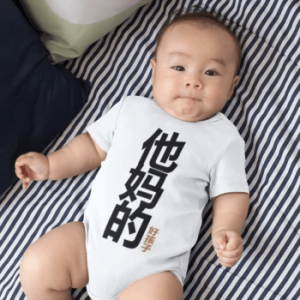
Chinese, KaoBeiKing, Quote, Romper, Typography
$25.00 Select options This product has multiple variants. The options may be chosen on the product page -
KaoBeiKing, Men, Parody, T-shirts, Typography
Price range: $30.00 through $38.00 Select options This product has multiple variants. The options may be chosen on the product page
Tone: Witty Resignation and Shared Frustration
The tone of ‘Tio stuck’ is incredibly flexible, but it almost always carries a touch of witty resignation. It can be:
- Lighthearted exasperation: “Wah, I tio stuck in this endless queue for bubble tea, confirm late for dinner.”
- Genuine frustration: “My project got tio stuck, the client keep changing mind!”
- Sympathetic understanding: “Aiyoh, you tio stuck with this boss again? Never mind, ganbatte!”
- Humorous self-deprecation: “Trying to assemble IKEA furniture, now I tio stuck. Should have just bought pre-assembled.”
It’s rarely used in anger, but rather with a sense of shared understanding. When one person declares they’re ‘tio stuck,’ others often nod in empathy, perhaps even offering a solution or a commiserating “aiyoh.” Here’s what often happens: you relay a story of being ‘tio stuck,’ and your friends immediately get it, often chiming in with their own ‘tio stuck’ moments. It’s a linguistic shorthand for complex predicaments.
Usage: Navigating Life’s Hurdles
In practice, you’ll notice ‘Tio stuck’ being deployed in an impressive array of situations:
- Traffic & Commute: “ERP jam, I tio stuck on the PIE again.” (An everyday Singaporean lament).
- Social Dilemmas: “My mum trying to matchmake me with her friend’s son, I tio stuck lor.” (The universal young adult struggle).
- Work & Studies: “My coding bug tio stuck, can’t figure out why it’s not working!” (The programmer’s nightmare).
- Personal Finances: “Spend too much on 11.11 sale, now my wallet tio stuck.” (A relatable Gen Z woe).
- Even Games: “This boss too strong, I tio stuck at this level for hours.” (The gamer’s cry of despair).
The beauty is its broad applicability. It perfectly encapsulates the feeling of being unable to move forward, whether physically, mentally, or emotionally. It’s not about being a victim; it’s about acknowledging a temporary impasse with a uniquely Singaporean twist.
Situations: When and Where It Fits
You wouldn’t use ‘Tio stuck’ in a formal business presentation (unless you’re trying to be playfully subversive, which is a whole other level of Singlish mastery). Its natural habitat is casual conversation among friends, family, and colleagues who share a common cultural understanding. It thrives in:
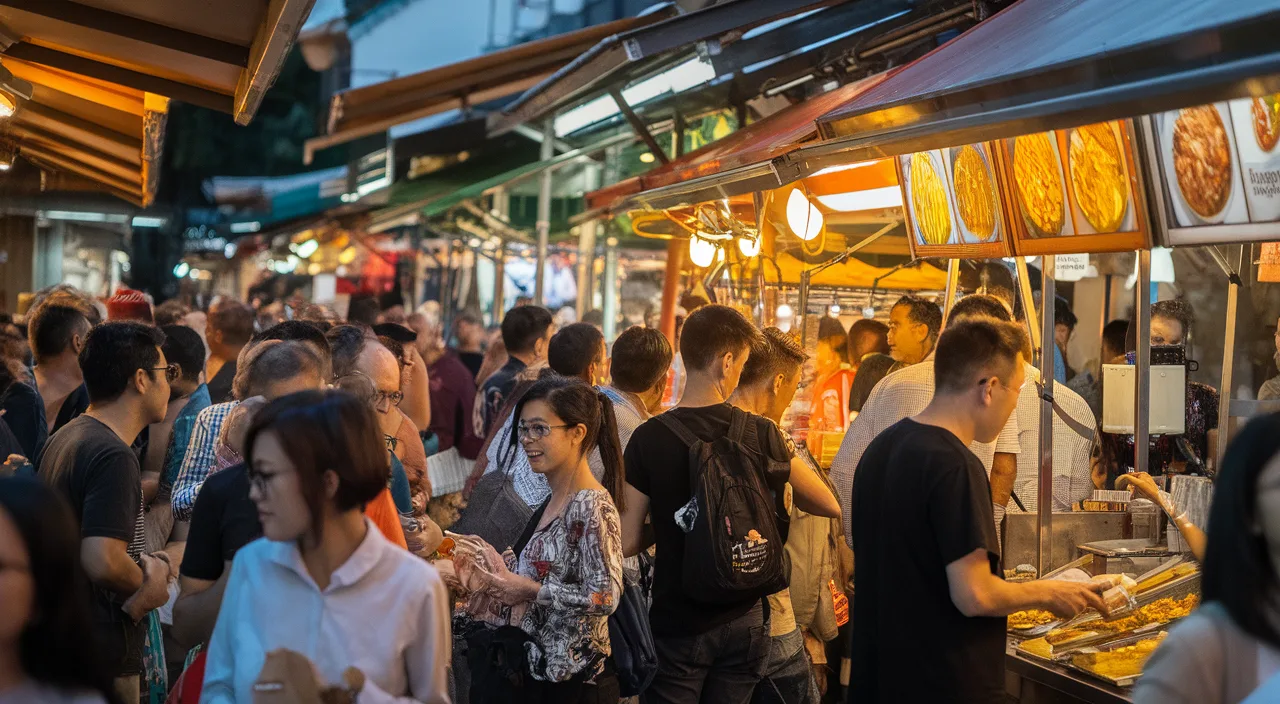
- Hawker centres, where you’re ‘tio stuck’ deciding between chicken rice and laksa.
- Family gatherings, when you’re ‘tio stuck’ answering nosy questions about your love life.
- Office pantries, discussing projects that are ‘tio stuck’ due to bureaucracy.
- Online chats and social media, where a simple ‘tio stuck’ can convey a wealth of frustration or humour.
It’s a phrase of solidarity, a verbal high-five that says, “Yeah, I get it. Life can be like that.”
Misunderstandings: The Perils of Non-Native Use
For newcomers to Singapore, ‘Tio stuck’ can be a head-scratcher. They might interpret it literally, thinking someone is physically trapped. “Oh no, should I call for help?” they might wonder, when all you meant was your laptop froze. The key is the ‘tio’ – it adds that layer of passive misfortune, making it less about being ‘stuck by choice’ and more about ‘being affected by being stuck.’
Another common misunderstanding is misjudging the tone. A non-local might use it too dramatically or in a context where a simple ‘stuck’ would suffice, losing the witty, understated resignation that makes ‘Tio stuck’ so charming. It’s like trying to perfectly mimic a local accent – you might get the words right, but the feeling is off.
-
$25.00 Select options This product has multiple variants. The options may be chosen on the product page
-
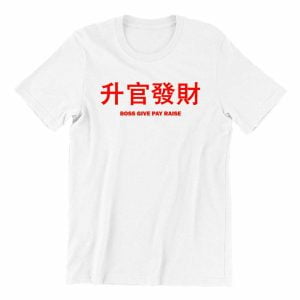
Chinese, Chinese New Year, Ladies, Mens, T-shirts
Price range: $30.00 through $38.00 Select options This product has multiple variants. The options may be chosen on the product page

Variations: Other Ways to Express the Predicament
While ‘Tio stuck’ is iconic, Singlish offers other ways to describe being in a pickle:
- ‘Jialat’: This means ‘terrible’ or ‘in a bad state.’ If your situation is really dire, it’s ‘jialat lor!’
- ‘Kantang’: While literally meaning ‘potato,’ it’s used to describe someone who is very ‘Westernised’ or not very street-smart, sometimes implying they are ‘stuck’ in their non-local ways.
- ‘Bo bian’: Meaning ‘no choice’ or ‘can’t be helped.’ Often, when you’re ‘tio stuck,’ you’re also ‘bo bian.’
These variations show the richness of Singaporean slang, each offering a slightly different shade of meaning to the general predicament of being caught.
Responses: The Singaporean Nod of Understanding
How do Singaporeans react when someone says they’re ‘tio stuck’? More often than not, you’ll get a sympathetic response:
- “Aiyoh, really? So how now?” (Concerned inquiry)
- “Bo bian lah, sometimes like that one.” (Resigned acceptance)
- “Want me to help you think?” (Offer of assistance)
- “Hahahaha! You always tio stuck!” (Good-natured teasing, especially among close friends)
These responses highlight the communal aspect of Singlish. It’s a language that fosters connection, allowing for instant understanding and shared experiences, even in the face of life’s little frustrations. When you use ‘Tio stuck’ correctly, you’re not just speaking words; you’re speaking a cultural language of empathy and shared struggle, making you instantly relatable to any local.
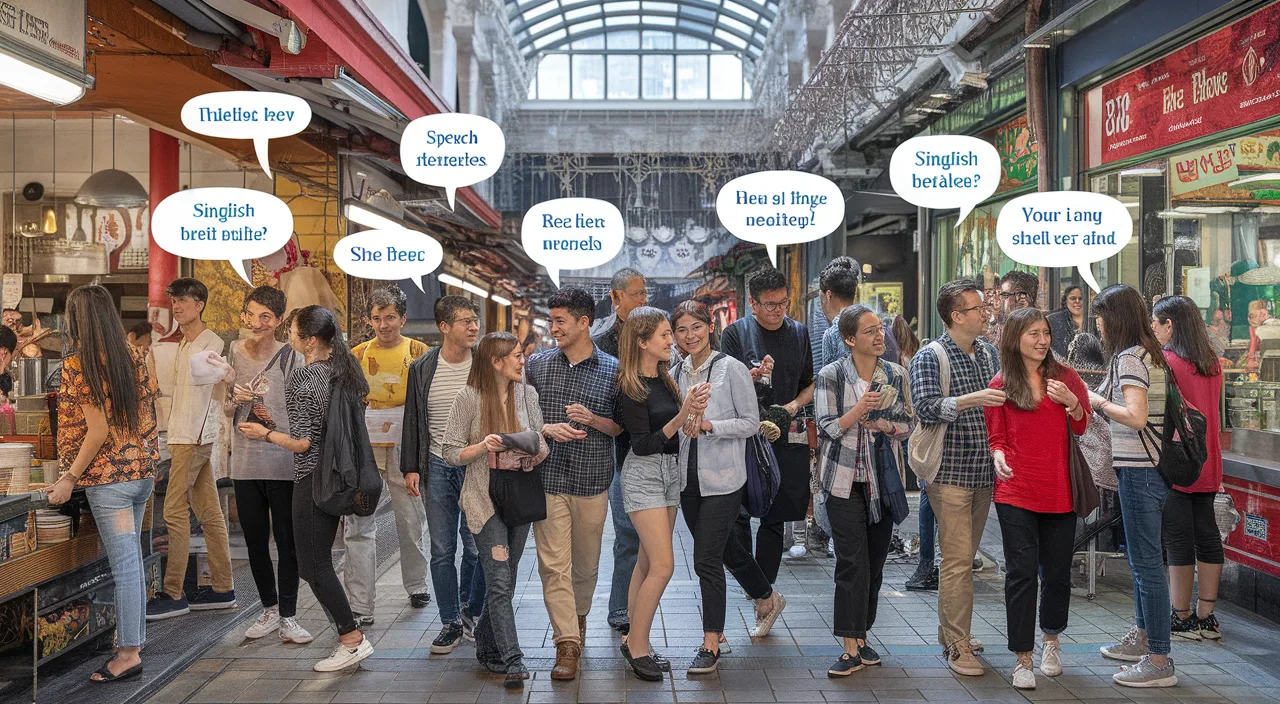
Where Our Words Come From: A Linguistic Journey
The Melting Pot: Exploring the Origins of Singaporean Slang Phrases
Ever wondered why Singlish sounds the way it does? It’s not just broken English; it’s a living testament to Singapore’s unique history and multicultural fabric. Our slang is a linguistic tapestry woven from the threads of Malay, Chinese dialects (Hokkien, Cantonese, Teochew, Mandarin), Tamil, and of course, English. It’s a beautiful, chaotic, and incredibly efficient language system that truly reflects who we are.
The roots of Singapore slang run deep, back to our colonial past when various immigrant communities settled here. Imagine a bustling port city, teeming with merchants and labourers from all corners of Asia, all trying to communicate. English became the lingua franca, but it was quickly seasoned with the flavours of the mother tongues. Here’s where the magic happened: words and grammatical structures from different languages began to fuse, creating a new, vibrant form of communication.
For instance, many of our common particles – ‘lah’, ‘lor’, ‘meh’, ‘mah’ – are borrowed from Malay and Chinese dialects. These aren’t just filler words; they convey nuances of emotion, certainty, or exasperation that a simple English sentence can’t quite capture. ‘Sure-boh?’ (from Hokkien ‘boh’ meaning ‘no’) is infinitely more direct and punchy than ‘Are you sure or not?’.
My grandmother, for example, often uses phrases that are steeped in Hokkien. She’d say, “You eat finish, then go play lah!” – ‘finish’ here being a direct translation of the Hokkien ‘zong’ or ‘wan,’ meaning completed. It’s practical, concise, and perfectly understood by generations of Singaporeans. This linguistic inheritance is something many competitor articles overlook, focusing on mere definitions rather than the organic evolution and personal connections.
This blending wasn’t a formal process; it was organic, evolving on the streets, in hawker centres, and within homes. The British tried to ‘correct’ it, but Singlish, like a resilient orchid, just kept blooming, adapting, and becoming more uniquely ours. It’s a powerful symbol of our resilience and adaptability, a language that bends to suit our needs and expresses our collective identity.
Understanding these origins isn’t just an academic exercise; it’s about appreciating the heritage embedded in every casual “walao eh” or “sian.” It tells the story of immigrants building a nation, learning to speak across cultural divides, and forging a common ground through shared expressions. It’s a linguistic DNA that connects us all, from the oldest kampung resident to the youngest Gen Z TikToker. Each popular Singlish phrase, each iconic Singaporean word, carries echoes of our past, making our present conversations richer and more meaningful.
Level Up Your Lingo: Top 10 Must-Know Singlish Expressions for Daily Life
Now that you’ve got a handle on ‘Tio stuck’ and the fascinating origins of our unique Singaporean expressions, it’s time to arm yourself with more popular Singlish phrases. Mastering these isn’t just about sounding local; it’s about understanding Singlish culture at a deeper level and navigating daily conversations with authentic flair. Here are 10 essentials that Gen Z and young professionals use every single day:
- Lah: The quintessential Singlish particle.
- Meaning: Adds emphasis, affirmation, exasperation, or a softened command. It’s a verbal comma, an exclamation mark, and a shrug all rolled into one.
- Usage: “Okay lah,” “Cannot lah,” “Go lah!”
- Example: “No worries, I can help you with that lah.” (Assurance)
- Sian: Feeling utterly bored, tired, or fed up.
- Meaning: A pervasive sense of weariness, often spiritual or mental.
- Usage: “This meeting so long, sian already.”
- Example: “Homework piling up, totally sian.”
- Shiok: Super enjoyable, fantastic, delicious.
- Meaning: A feeling of immense pleasure or satisfaction, usually sensory.
- Usage: “This char kway teow so shiok!”
- Example: After a long day, a cold drink is truly “shiok.”
- Walao / Walao eh: An exclamation of surprise, exasperation, or admiration.
- Meaning: Derived from Hokkien, it’s a versatile expression of strong emotion.
- Usage: “Walao eh, you finished all the food!”
- Example: “Walao, this new phone camera so good!”
- Chiong: To rush, to charge forward with intensity.
- Meaning: Often used in the context of rushing work, studies, or even a game.
- Usage: “Last minute exam prep, must chiong tonight.”
- Example: “Let’s chiong the project deliverables by Friday.”
- Bo bian: No choice, cannot be helped.
- Meaning: A resigned acceptance of an inevitable situation.
- Usage: “Boss say must work overtime, bo bian lor.”
- Example: “The MRT broke down, bo bian, just take bus.”
- Kiasu: A fear of losing out; competitive, often to an extreme.
- Meaning: Derived from Hokkien (‘kia’ – afraid, ‘su’ – lose). It’s a deep-seated Singaporean trait.
- Usage: “Why you queue so early? So kiasu!”
- Example: “Grab a good seat early, don’t want to be kiasu.”
- Leh: A particle indicating a question, a plea, or sometimes a slight hesitation.
- Meaning: Often softens a request or adds a questioning tone.
- Usage: “Can you pass me that, leh?”
- Example: “You sure, meh?” (Note: ‘meh’ is a stronger form of questioning doubt)
- Pang gang: To knock off work.
- Meaning: Derived from Cantonese ‘pong gong,’ it’s the official term for finishing work for the day.
- Usage: “What time you pang gang today?”
- Example: “Can’t wait to pang gang and chill.”
- Aiyoh / Aiyah: An exclamation of surprise, pain, dismay, or resignation.
- Meaning: Highly versatile, conveying a range of emotions similar to ‘oh dear’ or ‘ouch’.
- Usage: “Aiyoh, I forgot my wallet!”
- Example: “Aiyah, never mind, we try again.”
These phrases are more than just words; they’re windows into the Singaporean psyche. They allow for a depth of expression that pure English often lacks, conveying not just meaning, but also emotion and cultural context. Using them correctly shows that you’re not just a resident, but a true local, fluent in the unspoken rhythms of our everyday lives. It’s how we connect, how we empathize, and how we share our unique Singaporean identity.
Speaking Our Soul: The Cultural Importance of Singlish in Singapore
If you ask any Singaporean, young or old, about Singlish, you’ll likely get a passionate response. It’s more than just a language; it’s a heartbeat, a collective memory, and a badge of identity. The cultural importance of Singlish in Singapore cannot be overstated. It is truly the language of our soul, binding together a diverse population in a way that no other language can.
For Singaporean Gen Z and young professionals, Singlish is the language of authenticity. It’s what you speak when you’re truly comfortable, letting your guard down with friends over kopi. It’s the language of jokes that only locals truly get, the shared understanding of a common upbringing. When we use unique Singaporean expressions, we’re not just communicating information; we’re reinforcing our bonds, affirming our shared experiences, and celebrating our distinct heritage.
Think about a local movie or a stand-up comedy special. The moments that truly hit home, that elicit the loudest laughs or deepest sighs of recognition, are almost always delivered in Singlish. It’s because these popular Singlish phrases carry a weight of cultural context and emotional nuance that a literal translation simply cannot convey. They tap into our collective consciousness, reminding us of our childhood, our hawker centre adventures, and the unique challenges and joys of living in this little red dot.
Singlish serves as a powerful unifier. In a country built on multiculturalism, with four official languages, Singlish transcends ethnic and linguistic divides. Whether you’re Malay, Chinese, Indian, or Eurasian, the core of Singlish grammar and lexicon is understood by all. It’s the common tongue on the street, the language of the common man, and a democratic medium that levels the playing field, allowing everyone to participate in our vibrant local discourse.
Beyond communication, Singlish is also a shield, a subtle way to differentiate ourselves from the rest of the world. When you hear another Singaporean overseas, the instant connection often starts with a shared Singlish phrase, a knowing glance that says, “Ah, you’re one of us.” It fosters a sense of belonging, a quiet pride in our distinctiveness. This sense of shared identity, nurtured through our unique language, is crucial in a globalized world where cultural erosion is a constant threat.
Some might argue that Singlish hinders our command of standard English. While that debate continues, what’s undeniable is its role in shaping our national character. It encourages creativity, flexibility, and a certain pragmatic directness in communication. It’s a reflection of our ability to adapt, to blend, and to create something new and efficient from diverse influences – qualities that have defined Singapore’s success.
Ultimately, understanding Singlish culture is about understanding Singapore itself. It’s about appreciating the wit, the warmth, the resilience, and the sheer vibrancy of our people. Every ‘lah’, every ‘shiok’, every ‘tio stuck’ is a testament to our journey, a celebration of our identity, and a vital thread in the rich fabric of our nation. It’s not just how we speak; it’s who we are.

Mastering the Art of Singlish Flow
Beyond Words: Navigating Singlish in Real-World Conversations
You’ve learned the meanings, you understand the cultural weight – now it’s time to put Singlish into action. Navigating Singlish in real-world conversations is an art form, especially for Singaporean Gen Z and young professionals who want to sound authentic without coming across as forced. It’s about more than just stringing popular Singlish phrases together; it’s about context, nuance, and understanding the unspoken rules of engagement.
Here’s what often happens: a non-native speaker might try to inject a lot of Singlish into their speech, but the timing or tone feels off, making it sound unnatural. In practice, you’ll notice that true Singlish flow isn’t about constant slang; it’s about strategic placement. It’s the punctuation, the emotional colouring, the shared inside joke that makes a conversation truly Singlish.
Practical Tips for Using Singlish Correctly:
- Start Small, Think Big: Don’t try to transform your entire vocabulary overnight. Begin by sprinkling in particles like ‘lah’, ‘lor’, ‘mah’ to add flavour to your sentences. They’re low-risk and high-impact. Once comfortable, introduce iconic Singaporean words like ‘shiok’ or ‘sian’.
- Context is King: This is perhaps the most crucial rule. Singlish thrives in informal settings – with friends, family, at hawker centres, or during casual office chats. It’s generally not appropriate for formal business meetings, client presentations, or official government interactions. Knowing when to switch between Singlish and Standard English is a hallmark of a truly bilingual Singaporean.
- Observe and Imitate: Pay attention to how locals use Singlish. Listen to their rhythm, their intonation, and most importantly, the situations in which they deploy specific phrases. How do they express ‘tio stuck’? What tone do they use for ‘walao eh’? Mimicry is a powerful learning tool.
- Embrace the Directness: Singlish is often more direct than Standard English, reflecting a pragmatic culture. “Can you help me?” might become “Help me can?” or “Help me, please.” This isn’t rude; it’s efficient.
- Don’t Force It: If it doesn’t feel natural, don’t force it. Authenticity resonates more than an awkwardly deployed ‘lah’. Your confidence in using a few phrases correctly will go further than stumbling through many.
- Understand the Emotional Layer: Many Singlish expressions carry a strong emotional charge. ‘Sian’ isn’t just ‘boring’; it’s ‘deeply, soul-crushingly boring.’ ‘Shiok’ isn’t just ‘delicious’; it’s ‘ecstatically delicious.’ Grasping this emotional depth is key to truly understanding Singlish culture.
Decoding Unspoken Meanings and Non-Verbal Cues:
Singlish communication extends beyond words. A slight shrug accompanying “bo bian lor,” a raised eyebrow with “sure-boh?” – these non-verbal cues are integral. When someone says they’re ‘tio stuck’ and sigh, the sigh itself tells you more about the severity of their predicament than the words alone. Learning to read these signals will help you not just speak Singlish, but also *understand* it on a deeper, more empathetic level.
For example, if a friend says, “This new project very challenging, I tio stuck a bit lah,” accompanied by a slight frown, they’re looking for empathy or maybe advice. If they say, “Aiyoh, my data tio stuck, cannot load Netflix!” with a playful roll of the eyes, they’re probably just looking for commiseration.
Learning Singlish is an immersive experience. It’s about listening, observing, engaging, and not being afraid to make mistakes. Every misstep is a learning opportunity, a chance to refine your understanding of these unique Singaporean expressions. By actively participating in conversations, asking for clarification (“What does ‘tio stuck’ mean in this context?”), and embracing the fluidity of the language, you’ll find yourself seamlessly integrating into the vibrant linguistic tapestry of Singapore. It’s a journey, not a destination, and one that promises rich cultural rewards.
Final Thoughts
Stepping into the world of Singlish is like unlocking a secret level in the game of life in Singapore. From the exasperated charm of ‘Tio stuck’ to the joyful declaration of ‘shiok,’ these unique Singaporean expressions are far more than just slang; they are the very sinews of our cultural identity. For Singaporean Gen Z and young professionals, mastering these popular Singlish phrases isn’t merely about linguistic fluency; it’s about forging deeper connections, understanding the nuances of local life, and embracing the vibrant, witty spirit that makes Singapore so truly special.
We’ve journeyed through the historical origins that have shaped our language, delved into the specific meanings and intricate usage of phrases like ‘Tio stuck,’ equipped you with a top 10 list for your daily conversations, and explored the profound cultural importance that Singlish holds in our collective soul. Remember, Singlish is a living, breathing language, constantly evolving, much like our nation itself. It’s pragmatic, colourful, and deeply personal, reflecting our shared experiences and our resilient spirit.
So, go forth and speak with confidence! Engage in banter, share your ‘tio stuck’ moments, and relish the ‘shiok’ feeling of a well-placed Singlish phrase. By understanding Singlish culture, you’re not just learning a language; you’re embracing a heritage, celebrating a community, and becoming an even more integral part of the Singapore story. Don’t be ‘tio stuck’ in silence – let your Singlish shine!
FAQ
Here are some frequently asked questions about ‘Tio stuck’ and Singlish:
- What are some common misunderstandings about “Tio stuck”?
Non-locals often take “Tio stuck” literally, assuming physical entrapment. However, it usually refers to being caught in a difficult or awkward situation (traffic, social dilemma, work problem) from which escape is challenging, often carrying a tone of resignation or exasperation rather than panic. - Can “Tio stuck” be used in formal situations?
Generally, no. “Tio stuck” is part of informal Singlish and is best reserved for casual conversations among friends, family, or close colleagues. Using it in formal settings might be perceived as unprofessional or inappropriate. - How did Singlish expressions like “Tio stuck” evolve?
Singlish phrases like “Tio stuck” evolved from the linguistic melting pot of Singapore’s history. “Tio” comes from Hokkien (meaning ‘to be hit by’ or ‘to encounter’), while “stuck” is English. This blending of English with various Chinese dialects, Malay, and Tamil created a unique, efficient, and culturally rich patois over generations. - What other Singlish phrases are good for beginners?
For beginners, focus on versatile particles and common expressions. Start with “lah” (for emphasis/softening), “shiok” (fantastic), “sian” (bored/fed up), “walao eh” (exclamation), and “bo bian” (no choice). These will significantly enhance your understanding and ability to engage in local banter. - Why is Singlish important to Singaporean culture?
Singlish is crucial to Singaporean culture because it serves as a unique marker of national identity and a powerful unifier across diverse ethnic groups. It fosters a sense of belonging, enables authentic expression of local experiences, and reflects the multicultural history and pragmatic spirit of the nation. It’s how Singaporeans connect on a deeper, emotional level. - How can foreigners learn Singlish effectively?
Foreigners can learn Singlish effectively through immersion. Listen actively to locals in casual settings (hawker centres, public transport), observe non-verbal cues, and try incorporating simple particles like “lah” or “lor” first. Don’t be afraid to ask for clarification, and watch local TV shows or listen to local podcasts to pick up natural usage and context. - Is Singlish officially recognized in Singapore?
Singlish is not officially recognized as a formal language in Singapore, which promotes Standard English for official communication and education. However, its cultural significance and widespread use in informal settings are undeniable and widely acknowledged by the populace.