
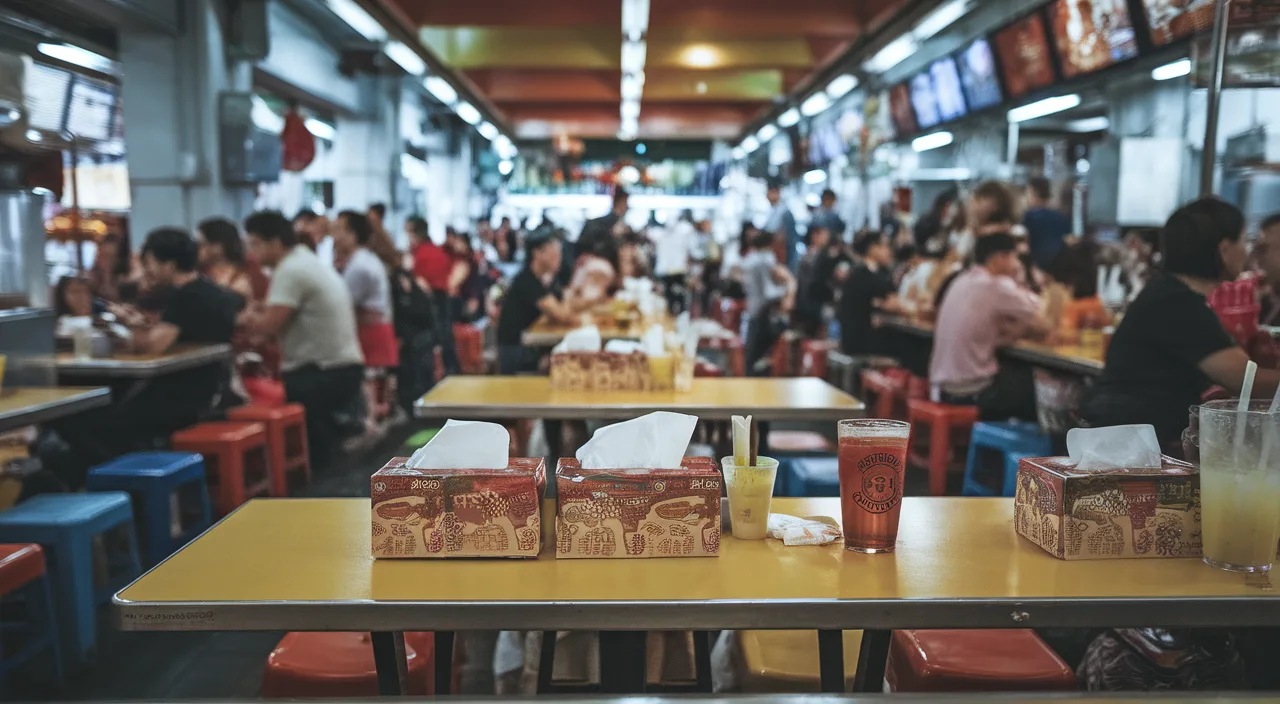
What Does ‘Chope’ Mean? Singapore’s Unique Seat Reservation Culture
Short answer: ‘Chope’ is our very own Singaporean way of saying, “This seat is mine!”—done with anything from a tissue packet to an umbrella. What comes next? A side-eye if you take the seat, and possibly a viral Reddit rant.
-

Graphic, KaoBeiKing, T-shirts, Valentines
Price range: $30.00 through $38.00 Select options This product has multiple variants. The options may be chosen on the product page
- What is ‘chope’: Local slang for reserving a seat, usually in hawker centres.
- Common tools of the trade: Tissue packets, umbrellas, name cards, even water bottles.
- Where it happens: Mostly at crowded food centres and kopitiams during lunch hour battles.
- Social etiquette: Don’t touch the ‘chope’. Just… don’t.
- Cultural significance: It’s not just convenience, it’s identity—part of our Singlish culture and uniquely Singaporean habits.
Why ‘Chope’ is Essential Singlish Culture in Singapore
If you’ve ever wondered “what does chope mean” while visiting Singapore, you’re witnessing one of our most beloved survival tactics. When Singaporeans say, “Eh bro, faster chope table, I go order liao!” we’re talking about the ancient art of seat reservation that’s deeply embedded in our Singlish culture.
To a foreigner, it might seem bizarre—like, why would someone leave a lone pack of tissue on a hawker centre table as if it’s some sacred protection spell? But for us locals, that innocent square of paper screams, “This is MY spot. Don’t anyhow sit here ah.”
This choping practice isn’t just practical in our kiasu society—it’s cultural, emotional, and represents quintessential Singaporean habits. Let’s dive into this unique aspect of Singapore culture and discover how it all began, what the unwritten rules are, and how not to get into a chope confrontation at lunchtime.
The Origin Story: How ‘Chope’ Became Part of Singapore Culture
So where did this charming behaviour come from? The term ‘chope’ most likely evolved from the English word “chop,” which back in colonial days referred to a stamp or seal of approval. Over time, it transformed into a uniquely Singlish verb that defines modern Singaporean habits: to ‘chope’ means to lay claim, to reserve, to dominate a seat like it’s prime real estate in Toa Payoh Central.
-
hashtag, KaoBeiKing, Quote, Singlish/Hokkien, T-shirts, Typography
Price range: $30.00 through $38.00 Select options This product has multiple variants. The options may be chosen on the product page -
KaoBeiKing, Parody, Singlish/Hokkien, T-shirts, Typography
Price range: $30.00 through $38.00 Read more

Before tissue packs became the go-to choping tool, old-timers used umbrellas, name cards, and even newspapers—yes, physical hardcopy newspapers—to mark their territory. The logic was beautifully simple: if it’s there, I’m coming back. Don’t play-play.
The practice really exploded in the ’90s when tissue packets became the weapon of choice. They’re cheap, portable, and perfectly capture our “civilised but defensive” approach to space-saving. Plus, aunties selling tissues outside MRT stations suddenly found themselves supporting Singapore’s unofficial reservation ecosystem.
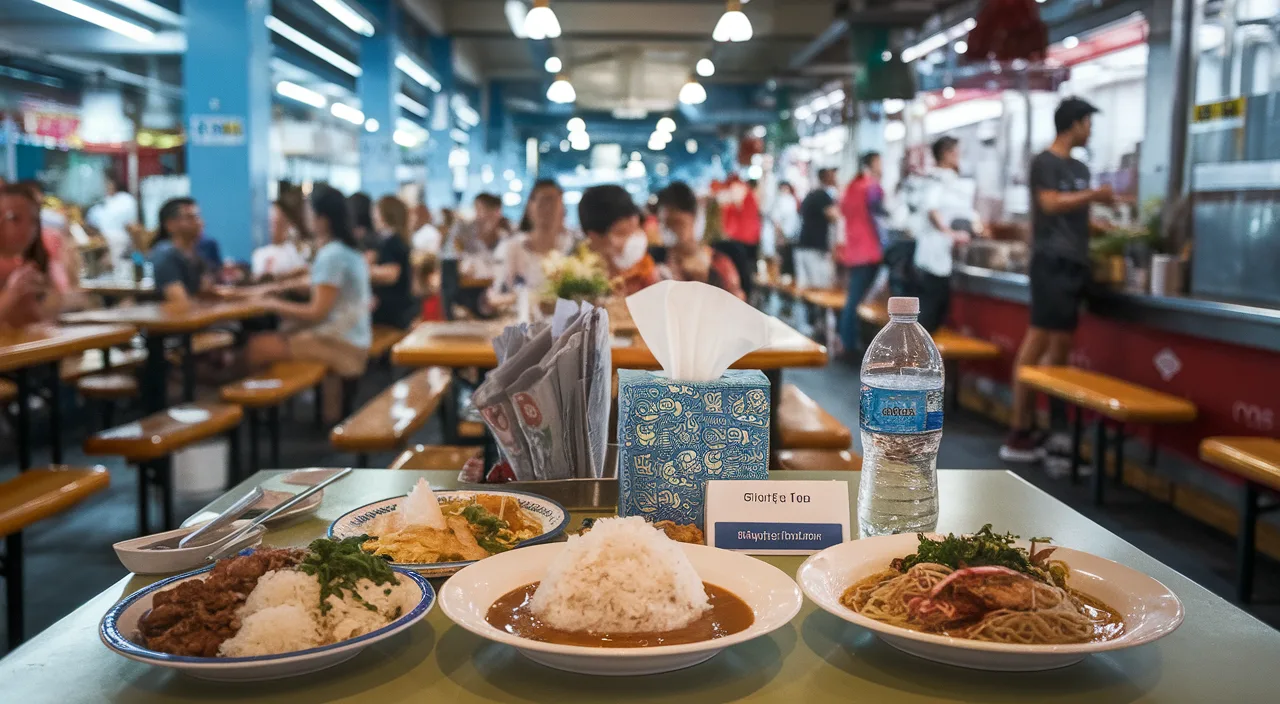
Choping Etiquette: The Sacred Rules of Singapore Seat Reservation
Here’s where Singlish culture gets fascinating. While choping is widely accepted across Singapore, there are strict rules—mostly unwritten, but break them and risk the wrath of one angry uncle or auntie who knows their choping etiquette.
Rule #1: Timing is everything in choping culture
Lunch hour transforms hawker centres into battlefields. If you reach the food centre at 12:30PM, good luck finding any unchoped seats. At 12:01PM, you still got chance—IF you chope quickly and efficiently.
Rule #2: Only legitimate choping items allowed
Tissue packets = universally valid. Name card = old-school but perfectly acceptable. Laptop = definitely reserved. Half-eaten chicken rice? Gross, but yes, also completely legitimate in Singapore culture.
Rule #3: Respect the chope or face social consequences
Removing someone’s tissue packet is like declaring war. Don’t do it unless you want death stares and maybe a STOMP headline reading “Inconsiderate Person Removes Chope Item, Sparks Hawker Centre Drama”.
Rule #4: No fake choping allowed
That lonely tissue placed at 11:45AM, with no owner in sight until 12:20PM? We see you. Everyone in Singapore hates this abuse of choping culture. The unspoken rule is 10–15 minutes max—any longer and your chope expires like half-boiled eggs left out too long.
-
-
KaoBeiKing, Men, Parody, T-shirts, Typography
Price range: $30.00 through $38.00 Select options This product has multiple variants. The options may be chosen on the product page
Creative Choping Methods: Beyond the Classic Tissue Packet
While tissue packets remain the most iconic symbol of Singapore’s choping culture, creativity abounds in our little red dot when it comes to seat reservation methods.
- Umbrellas: Extremely common during rainy season; one umbrella secures one precious seat.
- Office lanyards: Popular among CBD professionals. Practical and signals “I’m just nearby ordering my yong tau foo!”
- Pokka green tea bottles: Cheap, heavy enough not to blow away—a classic choping move that screams efficiency.
- Face masks: The pandemic introduced this new wave of chope-ers. The sanitised version of Singapore culture adaptation.
- Baby strollers: If someone’s choped with their baby stroller, just move on. You definitely won’t win this territorial battle.
Different generations bring different choping methods—but we all share one spirit: efficiency and silent territorial dominance that defines authentic Singaporean habits.
Real Choping Stories: What Locals Experience Daily
You can’t truly understand Singapore’s choping culture without hearing from the people who’ve lived through countless seat reservation battles.
Jason, 29: “I once left my laptop bag choping a table at Tanjong Pagar hawker centre. Came back after getting my fish soup, someone was sitting there using my bag as a footrest. I just diam diam takeaway lor.”
Meryl, 24: “During uni days, we used to chope study tables with our water bottles for lunch sessions. Then some boomer uncle scolded us, said we’re abusing Singapore’s choping system! Wah, kena stunned sia.”
Uncle Lim, 63: “Back in my day, newspaper and name card were enough for choping. Now must compete with everybody—office people, students, even delivery riders chope like experts. Too much competition lah in this Singapore culture.”
These stories reveal not just the diversity in choping styles, but how deeply rooted this practice is in our daily Singaporean habits. It’s not just about convenience—it’s nostalgia, strategy, and cultural identity all wrapped into one humble tissue pack.
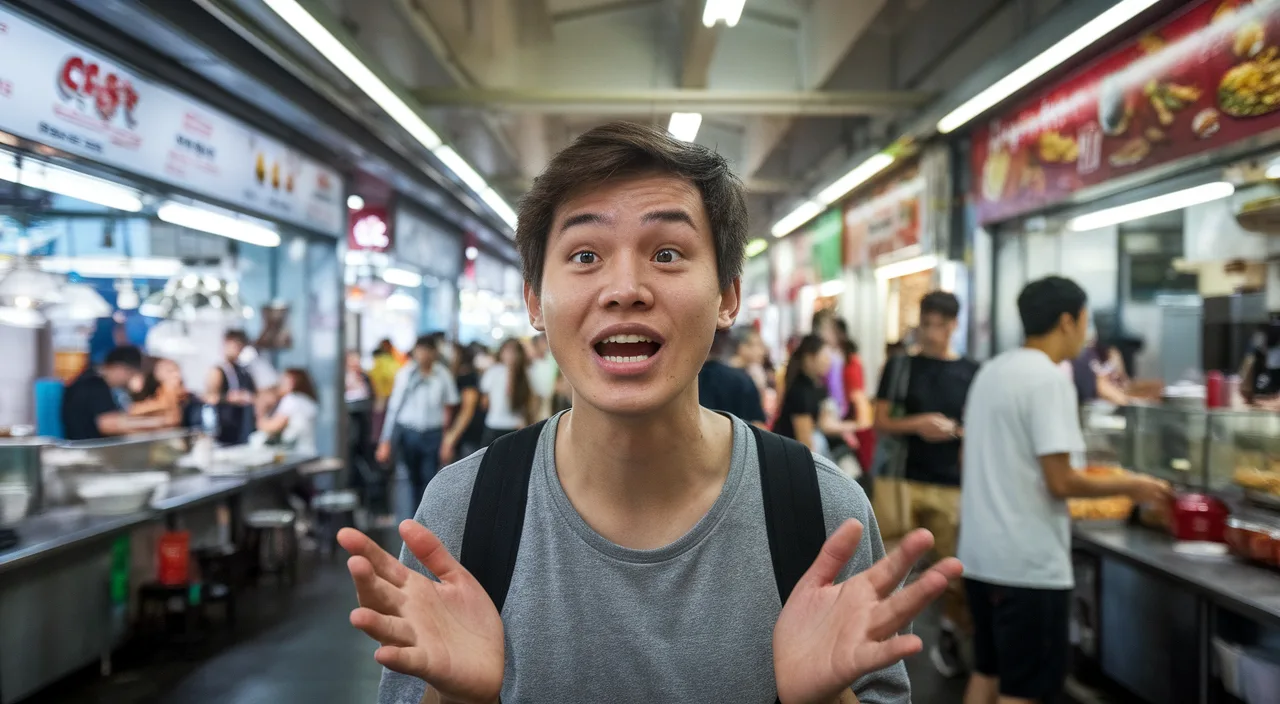
Why Choping Culture Defines Singapore’s Social Identity
Here’s the thing—Singapore’s choping culture isn’t just a quirky behaviour that amuses tourists. It’s a mirror reflecting who we are as Singaporeans. It showcases our love for efficiency, our need to claim precious space in a crowded city, and yes, it reveals aspects of our famously kiasu nature.
But beyond the practical benefits, choping culture represents something deeper about Singlish culture—it demonstrates our shared understanding of social boundaries, collective politeness, and trust in unspoken community rules that govern daily Singaporean habits.
So what happens after Singaporeans successfully chope their seats? We makan, we live our lives, and we naturally pass these essential survival tactics to the next generation. Don’t be shy about embracing this aspect of Singapore culture—bring extra tissue packets next time you visit our hawker centres. You never know when you’ll need to stake your claim in our beautifully chaotic food scene.
Frequently Asked Questions about ‘Chope’ Culture
- Q: Is it rude to ignore a chope item?
A: Yes! Unless the item looks abandoned for a long time, it’s better not to touch it. - Q: Can foreigners use choping methods or only locals?
A: Anyone can chope, but do it with care and local etiquette in mind. Blend in! - Q: What happens if my choped seat is taken?
A: Most times you can kindly say it was choped. If they refuse, either take it outside (not recommended) or move on and let karma handle it. - Q: Do any places ban choping?
A: Some cafes and private eateries discourage it, but hawker centres usually allow. - Q: Why don’t people just wait in line for seats like overseas?
A: Singaporeans are efficient. Waiting wastes time. ‘Chope’ save time = can eat faster = win. - Q: What’s the weirdest item ever used to chope?
A: I’ve seen people use a slipper, a Barbie doll, and even a half-peeled banana. Never underestimate Singapore’s creativity.