
What Is the Singlish Word That Says What English Can’t?
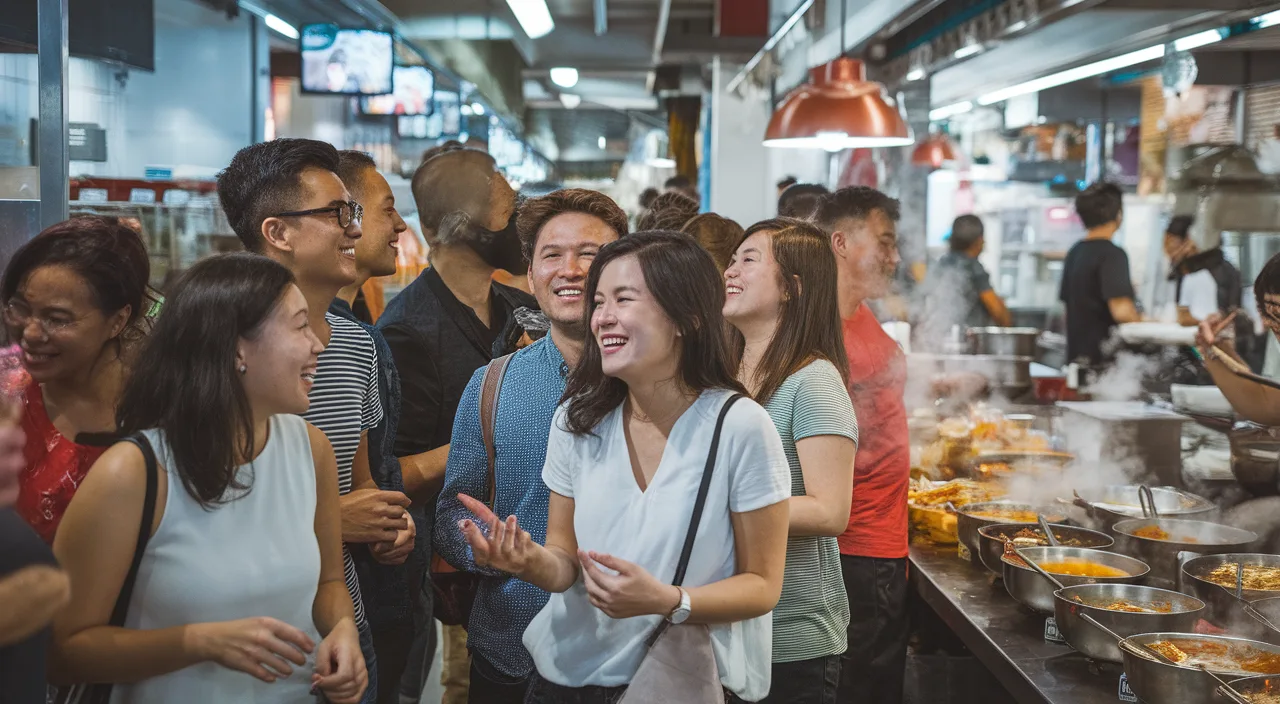
Ah, the million-dollar question: what’s that powerful Singlish word that hits where English misses? Truth is—it’s not just one word. Singlish expressions like “lah,” “shiok,” “sian,” and “lagi best” each unlocks emotions, context, and humour that English can’t capture without a whole essay. These unique Singapore expressions are embedded with soul, texture, and uniquely local slang that make them irreplaceable. Let’s just say… if English were a Prim and Proper British Auntie, Singlish would be her wildly expressive, heart-on-sleeve kopi auntie tearing tissue to chope seats at the hawker centre.
-

Children, Chinese, Chinese New Year, KaoBeiKing, Quote, Singlish/Hokkien, Typography
$30.00 Select options This product has multiple variants. The options may be chosen on the product page

TL;DR: Why Singlish Hits Different
- Uniquely local: Singlish words reflect real Singaporean life, struggles, and quirks.
- Cultural power: Local slang expressions like “sian” communicate emotional states more precisely than English ever could.
- Community connector: Speaking Singlish builds instant rapport with locals—yes, even when you kena scolded.
- Multilingual mashup: It’s a fusion of Malay, Hokkien, Tamil, Cantonese, Teochew, and English—what other language can claim that?
- Practical usage: You’ll learn when and how to drop a “lah” or “can meh?” in your daily convo without sounding like a blur sotong.
Why Singlish Is More Than Just Local Slang
To compare understanding Singlish with English is like comparing sambal with mayonnaise—sure, both ‘sauces’ but woah, the flavour profiles so different. Singlish is more than just colloquial English. It’s an emotional, cultural, and social badge interwoven with how we live and who we are. It’s how we tell someone off, express gratitude, or share joy, without needing full sentences.
Think about it. Why say, “I’m quite tired and frustrated today,” when you can simply sigh and go, “Wah, damn sian.” Economy of words, but power in meaning!
Exploring the Origins of Singlish
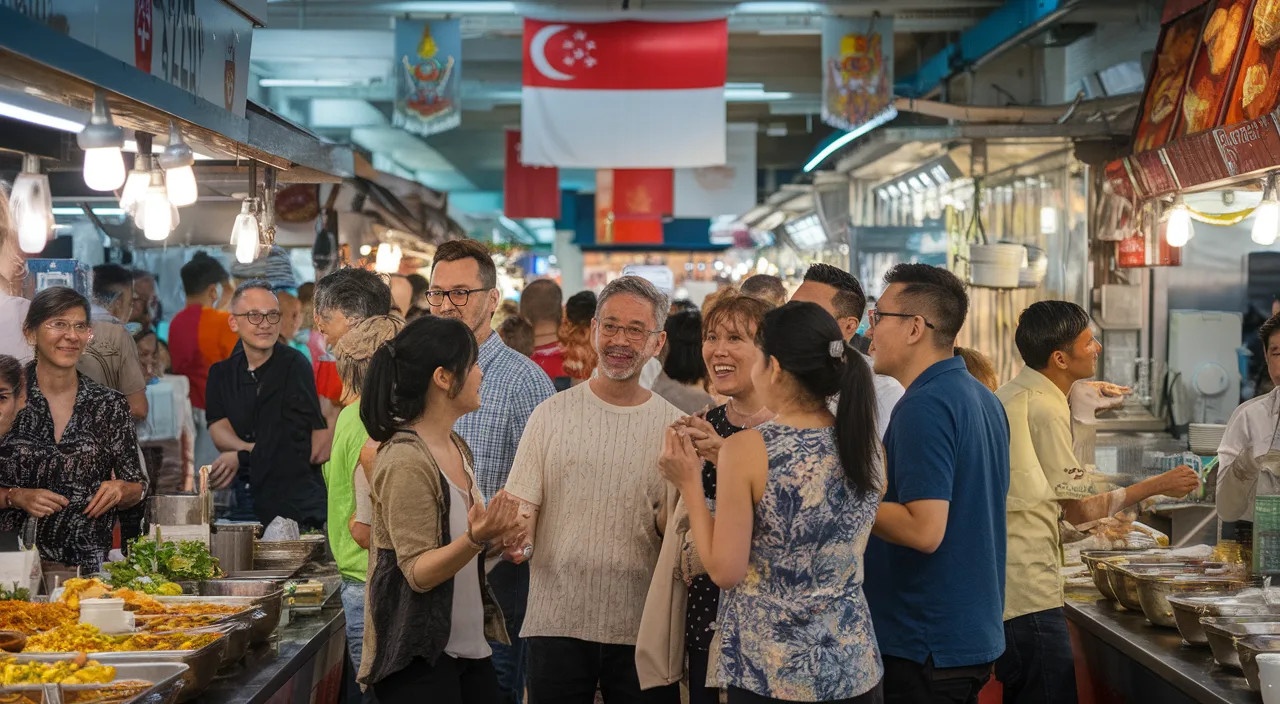
Understanding Singlish didn’t just suddenly pop up like bubble tea shops in the late 2000s. Its roots go deep, sprouting from Singapore’s colonial past, multiethnic society, and trade port origins. Over time, it evolved into a creole mix: English gave it structure, Hokkien gave it punch, Malay added flow, Tamil lent versatility, and Cantonese sprinkled in flavour.
-
$25.00 Select options This product has multiple variants. The options may be chosen on the product page
-
Chinese, Chinese New Year, Ladies, Mens, T-shirts
Price range: $30.00 through $38.00 Select options This product has multiple variants. The options may be chosen on the product page


Some examples?
- From Hokkien: Paiseh (embarrassed)
- From Malay: Makan (to eat)
- From Tamil: Jaga (to guard or take care)
This linguistic rojak not only reflects our racial and cultural diversity but reinforces it every time we open our mouths.
Decoding the Unique Singapore Expressions
Let’s move from the history books to the streets. This is where Singlish really sings—when the kopi aunty greets you with “One teh-C kosong, can?”, and you reply “Can lah.”
Popular Singlish Expressions and Their Meanings
You’ve probably heard these local slang phrases before—but do you know what makes them truly untranslatable?
- “Lah” – The all-time MVP of Singlish particles. It softens, emphasises, teases. Example: “Don’t do like that, lah.”
- “Shiok” – A pure expression of pleasure or shiokness. “This chicken rice damn shiok!”
- “Sian” – The best way to say “This sucks” without saying it. “So much work, damn sian.”
- “Kena” – To get hit by something (literal or figurative). “Kena fine again lah!”
- “Bo jio” – The classic expression when you didn’t get invited. “You all go eat hotpot and bo jio me??”
Each of these unique Singapore expressions can’t be replaced by one English word. If you try to translate, the power, context, and cheekiness just vanish like your last cube of kaya toast.
The Cultural Significance of Understanding Singlish in Singapore
Some people used to say Singlish is ‘broken English’—but anyone who has felt the sting of “aiyah you blur like sotong” knows there’s nothing broken about it.
Why Singlish Is an Integral Part of Singaporean Identity
It’s how we express our shared experiences. Getting stuck in the MRT jam, queuing halfway around the block for bubble tea, tahan-ing NS. There’s a Singlish phrase or unique expression for every one of these scenarios—an instant shorthand that says, “You’re one of us.”
When ex-Singaporeans overseas hear local slang, it sparks a pang of longing stronger than the smell of pandan cake. It’s not just language. It’s memory, home, and belonging all rolled into one rojak sentence.
-
Graphic, Inspixe, Ladies, Mens, Quote, T-shirts, Typography
Price range: $30.00 through $38.00 Select options This product has multiple variants. The options may be chosen on the product page -
KaoBeiKing, Singlish/Hokkien, T-shirts, Typography, Valentines, Women
Price range: $30.00 through $38.00 Select options This product has multiple variants. The options may be chosen on the product page


Even in local media—TV, YouTube, TikTok—these unique Singapore expressions are everywhere. Why? Because they’re funny, fast, and real. They’ve got that flavour you can’t bottle, not even if you slap an NTUC price sticker on it.
How to Embrace Local Slang in Your Everyday Conversations
Whether you’re born and bred in Jurong or just moved to Singapore, adding understanding Singlish to your daily convo game is like adding sambal to your nasi lemak—it just levels up the experience.
Tips for Using Singlish Effectively and Appropriately

- Start small: Begin with one or two words like “lah” or “can.” Test the waters.
- Know the tone: “Sian” sounds whiny, “Shiok” sounds satisfying, “Bo jio” sounds betrayed. Tone is key.
- Watch local content: Youtube channels with locals using unique Singapore expressions will sharpen your ear.
- Practice makes perfect: Try saying, “Today really sian leh.” out loud. Own it!
- Respect the space: Local slang is casual—it’s best for informal settings or with close company. Don’t anyhow use in formal biz emails hor!
It’s okay to make mistakes. Locals appreciate the effort. Unless you go overboard and add “lah lah lah” like a broken record—then you asking for it.
Final Thoughts: The Word That Holds a Nation’s Heart
So, which is the ultimate Singlish word that says what English can’t? Is it “lah”? “Leh”? “Shiok”? Truth is, it’s all of them – or maybe just “can.” Context is everything, and understanding Singlish wraps up our emotions, frustrations, and pride inside these pithy gems.
Mastering these unique Singapore expressions means understanding Singapore—and that’s a journey that doesn’t need Google Translate, just kopitiam chats, late-night mamak sessions, and a willing ear. So go ahead, try it:
“Today weather shiok or not?”
Can?
FAQs About The Singlish Word That Says What English Can’t
- Q: Is Singlish a real language?
A: Yes! It’s an English-based creole with Malay, Hokkien, Tamil, Cantonese, and Teochew influences. It’s a legitimate mode of communication used by millions of Singaporeans daily. - Q: Are Singlish words only used in informal settings?
A: Mostly, yes. Understanding Singlish fits best in casual conversations. You wouldn’t use it in a corporate email, but speaking it with friends shows cultural connection. - Q: What are some iconic local slang words for beginners to learn?
A: Try “lah,” “leh,” “meh,” “sian,” “shiok,” and “can.” These are versatile and easy to pepper into convo naturally. - Q: Why are unique Singapore expressions important to locals?
A: They bind us. They reflect our multicultural roots and common experiences. It’s more than slang—it’s identity, history, and heart. - Q: How can expats learn local slang correctly?
A: Listen more than you speak at first. Watch local shows, mimic tone and rhythm, and check with a Singaporean friend if unsure.