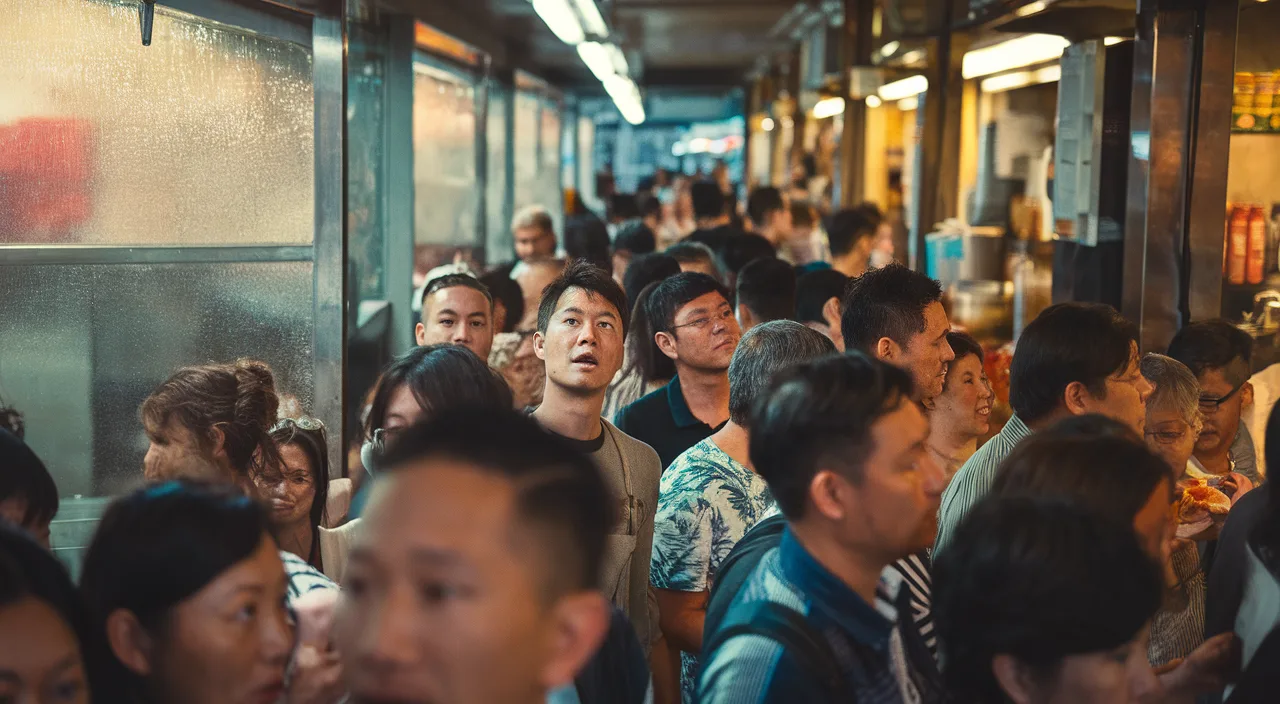
“Face like cannot tahan” means someone’s expression visibly says, “I cannot take this anymore.” In Singapore, the phrase may describe discomfort, frustration, exhaustion, awkwardness or comic defeat. It is usually an observation about how a person looks—not proof of what they are feeling—so tone and context matter.
Face Like Cannot Tahan Meaning, Word by Word
The phrase is easy to understand once it is separated into its parts:

- Face like means “the person’s expression looks as though…”
- Cannot marks inability or reaching a limit.
- Tahan refers to enduring, bearing or tolerating something.
Malaysia’s official Pusat Rujukan Persuratan Melayu dictionary includes senses connected with bearing hardship and being able to endure. In informal Singapore English, cannot tahan therefore works much like “cannot stand it”, “cannot take it” or “have had enough”.
The full wording is not best treated as a rigid dictionary idiom. It is a natural descriptive frame: a speaker sees an expression and comments that the face looks as if its owner cannot endure the situation.
What the Phrase Can Communicate
The same words can point to several different states. The face may suggest:
- Physical discomfort: heat, spice, fatigue, pain or a difficult workout.
- Mental overload: too many instructions, deadlines or problems arriving at once.
- Social awkwardness: a long speech, uncomfortable silence or embarrassing conversation.
- Comic exaggeration: a friend reacting dramatically to a minor inconvenience.
This flexibility is why the expression is vivid. It does not diagnose the person; it paints a quick picture of an observable reaction.
-

hashtag, KaoBeiKing, Quote, Singlish/Hokkien, T-shirts, Typography
Price range: $30.00 through $38.00 Select options This product has multiple variants. The options may be chosen on the product page -
hokkien, Quote, Romper, singlish, Typography
$25.00 Select options This product has multiple variants. The options may be chosen on the product page


Natural Examples in Singapore Conversations
Spicy food
A: “He ordered extra chilli but now his face like cannot tahan.”
B: “Pass him some water lah.”
The joke is about the visible mismatch between confidence and reaction.
After a difficult workout
A: “Third set only and my face already like cannot tahan.”
B: “Rest first. Form more important.”
Here the speaker describes themself, which usually makes the humour safer.
During a long meeting
A: “Everyone’s face like cannot tahan already.”
B: “Let’s take five minutes.”
The phrase becomes a useful cue to respond rather than merely roast the room.
When the situation is genuinely serious
A: “She looks pale and cannot tahan.”
B: “Don’t joke—ask if she needs help.”
If the person may be ill, panicking or in pain, direct concern is better than commentary.

Funny, Sympathetic or Rude? Tone Decides
| Situation | Likely tone | Better response |
|---|---|---|
| A close friend overreacts to mild spice | Playful | Joke gently, then offer water |
| A colleague looks exhausted | Potentially sympathetic | Ask whether they need a break |
| A stranger appears distressed | Risky or intrusive | Avoid mocking; offer help if appropriate |
| Someone has genuine pain or anxiety | Insensitive if joked about | Use clear, caring language |
Among close friends, a smile and shared context can make the phrase sound warm. Said loudly about a stranger, the same words may feel like ridicule. The safest rule is simple: joke about the situation, not someone’s vulnerability.
Cannot Tahan, Buay Tahan and Face Like Cannot Tahan
Cannot tahan directly states that a person cannot endure something: “This heat, I cannot tahan.” Buay tahan is another locally familiar form with a similar practical meaning. Face like cannot tahan shifts the focus from a spoken complaint to a visible expression.
- “I cannot tahan the noise.” — the speaker states their own limit.
- “He buay tahan already.” — someone says he has reached his limit.
- “His face like cannot tahan.” — someone infers the limit from his expression.
That last sentence should stay an inference. A facial expression can be misread, so avoid presenting your guess as certainty.
How to Use It Without Sounding Mean
- Know the relationship. Friendly banter works best with people who already understand your tone.
- Check the stakes. Heat and mild spice can be funny; pain, grief and panic are not punchlines.
- Prefer self-description. “My face like cannot tahan” is less likely to embarrass someone else.
- Follow observation with care. Ask “You okay?” or “Need a break?” when the discomfort may be real.
- Switch registers when needed. In formal or high-stakes settings, say exactly what you observe.
Why the Phrase Sounds So Singaporean
Singapore’s everyday speech frequently blends English structures with vocabulary from the region’s languages. The Singapore Tourism Board’s visitor guide to Singlish describes how local speech draws on multiple linguistic influences and compresses meaning efficiently.
If you want the broader context, read KaoBeiKing’s guide to what Singlish is. The key lesson is not to copy a phrase mechanically. Listen for relationship, tone and situation.
Formal Alternatives
In customer service, healthcare, safety instructions, reports or professional email, replace slang with the exact observation:
- “He looks uncomfortable.”
- “She appears overwhelmed.”
- “They seem frustrated by the delay.”
- “Would you like to pause for a few minutes?”
- “Please tell me if you feel unwell.”
Clear language is more useful whenever someone must make a decision or provide assistance.
Frequently Asked Questions
What does face like cannot tahan mean?
It describes someone whose facial expression suggests they are struggling, uncomfortable, frustrated or close to their limit. The phrase is usually an observation about the person’s look, not a literal claim that they cannot cope.
Is face like cannot tahan an official Singlish expression?
It is better understood as a natural, compositional Singapore English phrase than as a fixed dictionary entry. Speakers combine face like with cannot tahan to describe what an expression appears to communicate.
What does tahan mean?
Tahan is a Malay word associated with enduring, bearing or tolerating something. In informal Singapore English, cannot tahan commonly means cannot stand it, cannot endure it or have had enough.
Can the phrase be funny?
Yes. Friends may use it playfully when someone reacts dramatically to spicy food, heat, a difficult workout or an awkward situation. Tone and relationship decide whether the joke feels friendly.
When can face like cannot tahan sound rude?
It can sound rude when it mocks real pain, anxiety, disability, exhaustion or distress, or when it is said about a stranger. Describe the situation directly when someone may genuinely need help.
What is a formal alternative?
Use precise Standard English such as “He looks uncomfortable”, “She appears overwhelmed”, “They seem frustrated” or “Would you like to take a break?”